Lanka deploys troops to filling stations as queues for fuel lengthen
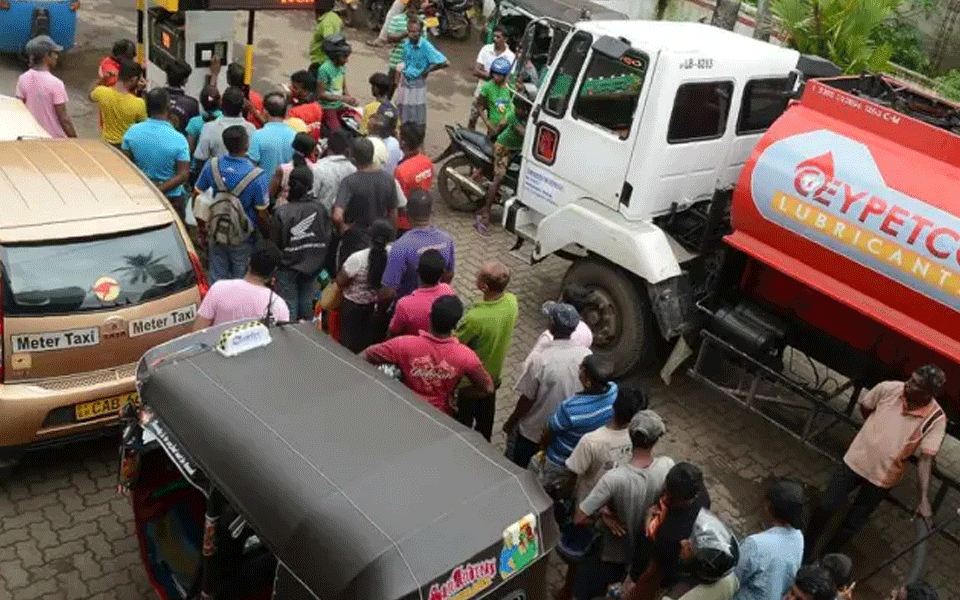
Colombo (PTI): Sri Lanka on Tuesday deployed military personnel at state-run petrol pumps to monitor and manage fuel distribution amidst a shortage that led to serpentine queues of consumers outside filling stations.
The island nation is facing an acute economic and energy crisis triggered due to shortage of foreign exchange. A sudden rise in prices of key commodities and fuel shortage forced tens of thousands of people to queue for hours outside petrol filling stations. People are also facing long hours of power cuts daily.
Unarmed soldiers were seen at fuel retail stations run by state-owned Ceylon Petroleum Corporation (CPC) on Tuesday morning.
We decided to deploy military personnel at petrol sheds to tackle unwanted situations where people are taking fuel in cans to do business, energy minister Gamini Lokuge told reporters here.
They will ensure that fuel is being distributed fairly amongst the people," he said.
The troops are deployed at fuel retail stations where serpentine queues were seen for weeks.
At least four deaths have been reported as people queued up for fuel. Of the four deaths, three were of senior citizens who died of exhaustion on Saturday while waiting in long queues outside petrol filling stations for over six hours in torrid heat, and one was due to a stabbing that followed a scuffle at the fuel line on Sunday.
The forex crisis halted smooth import of fuel, cooking gas and most essentials. The government has sought Indian credit lines to ensure supply of essentials, including fuel.
Last week India announced to extend a USD 1 billion line of credit to Sri Lanka as part of its financial assistance to help the country deal with the economic crisis. New Delhi had extended a USD 500 million line of credit to Colombo in February to help it purchase petroleum products.
Meanwhile, angry citizens accused the government of formulating short- sighted policies, which they said caused the crisis.
Sri Lanka is facing its all-time worst foreign exchange crisis after the pandemic hit the nation's earnings from tourism and remittances. By December last, the reserves position had plummeted to just one month's imports or a little over USD 1 billion.
The forex crisis triggered the energy shortage as Sri Lanka experienced loss of foreign reserves to fund imports on top of heavy international debt servicing obligations.
Sri Lanka had over USD 7.5 billion in debt payments to meet at the beginning of this year. A USD 500-million payment was made in January amidst calls from experts to default in order to fund imports.
Another USD 1 billion international bond payment is due in July.
Let the Truth be known. If you read VB and like VB, please be a VB Supporter and Help us deliver the Truth to one and all.
Maharashtra sets up state vaccination task force to strengthen immunisation programme

Mumbai (PTI): The Maharashtra government has set up a State Vaccination Task Force to strengthen the regular immunisation programme and review the progress of related campaigns, a health department official said on Monday.
The State Vaccination Task Force will comprise at least 29 members and will be headed by the administrative head of the health department, he informed.
The government has also constituted separate district-level and municipal vaccination task forces to improve implementation and address challenges at the grassroots level, he said.
Municipal task forces, chaired by respective civic commissioners, have been constituted in view of the vast urban population in Maharashtra and the role of civic bodies in implementing different health programmes.
The district-level task forces will function under the chairmanship of collectors.
"Complete immunisation of children at the appropriate age is an extremely simple, cost-effective and highly effective measure to reduce child mortality and the prevalence of diseases among kids. Immunisation is a powerful tool for reducing illness in children," maintained the official.
To ensure full vaccination of all children, the state government implements various campaigns from time to time as per the central government guidelines, he pointed out.
"Active participation and cooperation of other relevant government departments are essential (in making these campaigns successful)," according to the official.
The state-level body will review the regular immunisation programme, associated campaigns and vaccine-preventable diseases in detail. It will also conduct focused assessments of high-risk districts and municipal corporations, including vacancies at district, municipal and sub-district levels, availability of cold chain equipment, resource gaps and training requirements, he noted.
The state task force will review allocation and utilisation of funds for immunisation and ensure timely action by officers concerned based on reports from district and municipal task forces and state-level monitoring mechanisms, the official said.
It will also ensure active coordination and participation of other government departments in immunisation drives, while district and municipal task forces will carry out similar functions at their respective levels, the official added.