Latest Southern California quake causes damage, injuries

Los Angeles: A quake with a magnitude of 7.1 jolted much of California, cracked buildings, set fires, broke roads and caused several injuries while seismologists warned that large aftershocks were expected to continue.
The quake preceded by Thursday's 6.4-magnitude temblor in the Mojave Desert was the largest Southern California quake in at least 20 years and was followed by a series of large and small aftershocks, including a few above magnitude 5.0.
There is about a 1-in-10 chance that another 7.0 quake could hit within the next week, said Lucy Jones, a seismologist at the California Institute of Technology and a former science adviser at the U.S. Geological Survey.
The chance of a 5.0-magnitude quake "is approaching certainty," she added.
However, the quake was unlikely to affect fault lines outside of the area, Jones said, noting that the gigantic San Andreas Fault was far away.
The quake struck at 8:19 p.m. and was centered 11 miles from Ridgecrest in the same areas where the previous quake hit. "These earthquakes are related," Jones said, adding that the new quake probably ruptured along about 25 miles of fault line.
The quake was felt as far north as Sacramento, as far east as Las Vegas and as far south as Mexico. The area in and around Ridgecrest, already trying to recover from the previous temblor, took the brunt of damage.
State Route 178 in Kern County was closed by a rockslide, and video showed a stretch of roadway had sunk. A fire at a mobile home park burnt several trailers.
But Kern County Fire Chief David Witt said there had been no immediate reports of building collapses or deaths, although injury reports sent paramedics scrambling.
"We know of no fatalities. There have been a lot of ambulance calls for help," Kern County Fire Chief David Witt said at a news conference. "We're launching a lot of people ... I am very confident that we can take care of the situation." San Bernardino County firefighters reported cracked buildings and one minor injury.
In downtown Los Angeles, 150 miles away, offices in skyscrapers rolled and rocked for at least 30 seconds. Andrew Lippman, who lives in suburban South Pasadena, was sitting outside and reading the paper when Friday's quake hit.
"It just started getting stronger and stronger, and I looked into my house and the lamp started to sway. I could see power lines swaying," he said.
"This one seemed 45 (seconds)... I'm still straightening pictures." Gov. Gavin Newsom activated the state Office of Emergency Services operations center "to its highest level." "The state is coordinating mutual aid to local first responders," he said.
Disneyland in Orange County and Six Flags Magic Mountain in Santa Clarita closed their rides.
An NBA Summer League game in Las Vegas was stopped after the quake. Speakers over the court at the Thomas & Mack Center continued swaying more than 10 minutes after the quake.
In Los Angeles, the quake rattled Dodger Stadium in the fourth inning of the team's game against the San Diego Padres.
"Everyone was jumping over us to leave," said Daniel Earle, 52, of Playa del Rey, who was sitting with his wife in the stadium's reserve level.
"People were freaking out," he said. "There was a concession guy, and he actually was really cool because he was really calm. He's like, 'Relax. Tranquilo. Relax. Tranquilo,' and people were looking around." "My wife was holding us, like squeezing. I'm surprised my arm is still here. She was squeezing into it so hard," Earle said.
However, the game continued.
The quake came as communities in the Mojave Desert tallied damage and made emergency repairs to cracked roads and broken pipes from the earlier quake.
Hours earlier, seismologists had said that quake had been followed by more than 1,700 aftershocks and that they might continue for years.
Jones said aftershocks from the new main quake could occur for three years. Earlier Friday, Los Angeles had revealed plans to lower slightly the threshold for public alerts from its earthquake early warning app.
But officials said the change was in the works before the quake, which gave scientists at the California Institute of Technology's seismology lab 48 seconds of warning but did not trigger a public notification.
"Our goal is to alert people who might experience potentially damaging shaking, not just feel the shaking," said Robert de Groot, a spokesman for the USGS's ShakeAlert system, which is being developed for California, Oregon and Washington.
The West Coast ShakeAlert system has provided non-public earthquake notifications on a daily basis to many test users, including emergency agencies, industries, transportation systems and schools.
Late last year, the city of Los Angeles released a mobile app intended to provide ShakeAlert warnings for users within Los Angeles County.
The trigger threshold for LA's app required a magnitude 5 or greater and an estimate of level 4 on the separate Modified Mercali Intensity scale, the level at which there is potentially damaging shaking.
Although Thursday's quake was well above magnitude 5, the expected shaking for the Los Angeles area was level 3, de Groot said.
A revision of the magnitude threshold down to 4.5 was already underway, but the shaking intensity level would remain at 4. The rationale is to avoid numerous ShakeAlerts for small earthquakes that do not affect people.
"If people get saturated with these messages, it's going to make people not care as much," he said.
Let the Truth be known. If you read VB and like VB, please be a VB Supporter and Help us deliver the Truth to one and all.
Karnataka Lokayukta to register case, probe Bowring wall collapse
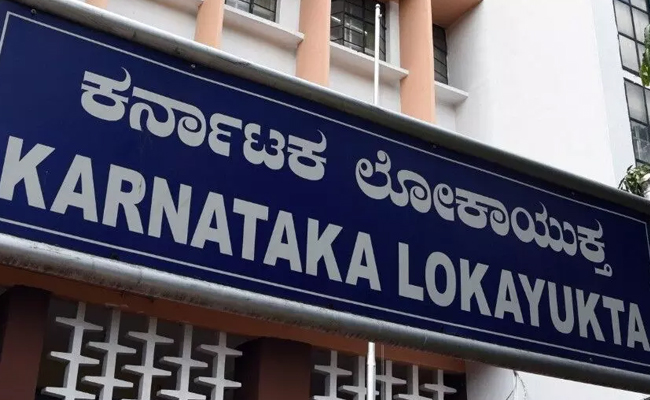
Bengaluru (PTI): Karnataka Lokayukta Justice B S Patil on Thursday took serious note of the compound wall collapse at Bowring and Lady Curzon Hospital in the city that killed seven people, and announced registration of a case on its own while warning of action against officials found responsible.
The Lokayukta, who visited the site and conducted an inspection, expressed strong displeasure over the incident and questioned the inaction of authorities, even as police and emergency teams had earlier rushed to the spot to rescue victims trapped under the debris following heavy rain, strong winds and a hailstorm on Wednesday evening.
“I will now register a suo motu case. This is not just about this one incident — such incidents must not occur anywhere in the state or the city in the future,” Justice Patil told reporters.
Seven people, including a six-year-old girl, were killed and seven others injured when the compound wall collapsed as rain-battered victims had taken shelter near it, according to police. The victims included people from Kerala who were in the city on a study tour.
Calling for systemic accountability, the Lokayukta said, “Dilapidated buildings and weakened compound walls, especially in areas with public access, must first be identified. They must either be repaired, demolished, or rebuilt.”
He added that responsibility would be fixed on officials of the BBMP and the concerned departments.
Justice Patil said that hearings would be conducted and preventive action initiated, while also probing those responsible for it, how the incident could have been prevented, and why it was not prevented.
A Scene of Crime Officers (SOCO) team and a Forensic Science Laboratory (FSL) team also inspected the site, while police cordoned off Kovil Street to facilitate the probe.
Deputy Chief Minister D K Shivakumar said the government had initiated measures following the rain-related incidents and stressed preparedness.
“Since last night we have initiated measures regarding the rains. When it rains heavily, we must be prepared, and we are working towards that,” he told reporters here.
On the wall collapse, Shivakumar said, “I will not directly blame any officials. It was an old wall, and trees had grown alongside it. Due to that pressure, it collapsed.”
The Deputy CM said instructions had been issued to identify such vulnerable structures and clear areas around them, including relocating street vendors.
Karnataka Medical Education Minister Sharan Prakash Patil said a technical assessment had been ordered.
“This is a very serious matter. Innocent people have been affected. We are issuing directions to the engineers to find out why this compound wall collapsed and to assess its structural strength,” he told reporters after inspecting the spot.
The Minister noted that the wall was ‘very old’ and required thorough examination to prevent recurrence.
Speaking to reporters, Congress president Mallikarjun Kharge asked the Karnataka government to take precautions to ensure that incidents like the collapse of the Bengaluru government hospital compound wall, which caused loss of life, should not repeat.
Meanwhile, addressing a press conference, Shivajinagar MLA Rizwan Arshad said the collapse raised questions about construction and maintenance practices.
“If a wall collapses within 25 years of its construction, it needs to be examined -- whether there was any technical issue, or if anything was altered inside, weakening it. All this can only come out through a technical investigation,” he said.
The Congress MLA also called for wider structural audits across the city, stating that all such structures, whether private or government, must be audited.
He urged citizens to support victims, saying it was a collective responsibility in times of crisis.