Lok Sabha elections: Severe heat wave predicted in many states during second phase of polling
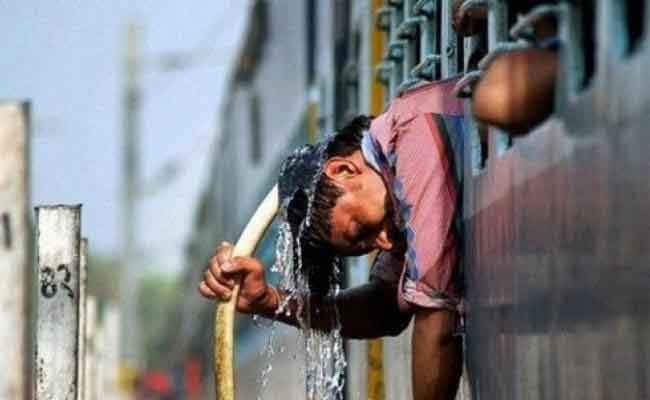
New Delhi (PTI): Lakhs of voters will have to bear the searing heat when they step out to exercise their franchise in the second phase of the Lok Sabha elections on Friday.
The India Meteorological Department (IMD) on Thursday warned of heatwave to severe heatwave conditions in parts of West Bengal, Odisha, Bihar, Jharkhand, Andhra Pradesh, Telangana, Karnataka and Uttar Pradesh during the next five days.
It has issued a red warning for West Bengal and Odisha and an orange alert for Bihar and parts of Karnataka.
The Met office said high humidity could add to people's inconvenience in Tripura, Kerala, coastal Karnataka, Tamil Nadu, Puducherry, Assam, Meghalaya and Goa.
Voters in 88 Lok Sabha constituencies in 13 states and Union Territories will exercise their franchise during the second phase of the elections on Friday.
Kerala's 20 seats, 14 in Karnataka, 13 in Rajasthan, eight each in Uttar Pradesh and Maharashtra, six in Madhya Pradesh, five each in Bihar and Assam, three each in Chhattisgarh and West Bengal, and one each in Tripura, Jammu and Kashmir, and Manipur will go to polls in the second phase.
High-velocity winds, light rain and thunderstorms could provide temporary relief from the hot weather in parts of Maharashtra, Madhya Pradesh and Chhattisgarh on Friday, the weather office said.
The ongoing heatwave spell is the second this month.
Heatwave conditions have been prevailing in Odisha since April 15 and in Gangetic West Bengal since April 17, according to the Met office.
The IMD also said warm night conditions are likely in Odisha during April 27-29. High night temperatures are considered dangerous because the body doesn't get a chance to cool down.
Increasing nighttime heat is more common in cities because of the urban heat island effect, in which metro areas are significantly hotter than their surroundings.
The threshold for a heat wave is met when the maximum temperature of a weather station reaches at least 40 degrees Celsius in the plains, 37 degrees in the coastal areas, and 30 degrees in the hilly regions, and the departure from normal is at least 4.5 notches.
A severe heat wave is declared if the departure from normal exceeds 6.4 notches.
Amid the prevailing but weakening El Nino conditions, the IMD had earlier warned of extreme heat during the April-June period, coinciding with the seven-phase Lok Sabha elections.
Voting for the first phase took place on April 19.
The Met office has said four to eight heatwave days are expected in different parts of the country in April against a normal of one to three days. Ten to 20 heatwave days are expected against a normal of four to eight in the entire April-June period.
The areas and regions predicted to witness a higher number of heatwave days are Madhya Pradesh, Gujarat, Odisha, Andhra Pradesh, Madhya Maharashtra, Vidarbha, Marathwada, Bihar and Jharkhand. Some places may record more than 20 heatwave days.
The intense heat could strain power grids and result in water shortages in parts of India.
Global weather agencies, including the IMD, are also expecting La Nina conditions to develop later in the year.
El Nino conditions -- periodic warming of surface waters in the central Pacific Ocean -- are associated with weaker monsoon winds and drier conditions in India. La Nina conditions -- the antithesis of El Nino -- lead to plentiful rainfall during the monsoon season.
In a mid-April update, the IMD said India would experience above-normal cumulative rainfall in the 2024 monsoon season with La Nina conditions, expected to set in by August-September, being the dominant factor.
The monsoon is critical for India's agricultural landscape, with 52 per cent of the net cultivated area dependent on it. It is also crucial for replenishing reservoirs critical for drinking water apart from power generation across the country.
Let the Truth be known. If you read VB and like VB, please be a VB Supporter and Help us deliver the Truth to one and all.
Speaker Khader dismisses BJP's charges of 'delay' in swearing-in of Jeevaraj as MLA
Bengaluru (PTI): Karnataka Assembly Speaker U T Khader on Wednesday rejected opposition BJP's allegations of delaying the swearing-in of D N Jeevaraj as MLA, asserting that the process was being handled strictly in accordance with constitutional provisions and rules.
BJP candidate Jeevaraj, who had lost the 2023 Sringeri Assembly election to Congress leader T D Raje Gowda, was declared elected late Sunday night after reverification and recounting of postal ballots in compliance with a High Court order.
The recount reduced 255 votes from Gowda's tally, overturning his earlier victory margin of 201 votes and reversing the result.
The recount followed an election petition filed by Jeevaraj.
Addressing reporters, Khader maintained that there was no delay in administering the oath to Jeevaraj, who was declared elected from the Sringeri Assembly constituency after a High Court-ordered recount of postal ballots.
“Where have we delayed? The application was submitted at 11 am. If an application is given in the morning and by evening someone says it’s delayed — how is that a delay?” he said, dismissing the allegations.
The Speaker said the matter involved 'technical issues' that required examination before fixing a date for oath-taking.
“When such a matter comes, we also need to examine it and take a decision as per rules. If an application is given in the morning, at least 24 hours must be given,” he said.
Khader stressed that his role was bound by the Constitution and not influenced by political considerations.
“When an elected MLA asks for time, we must give it under the Constitution and law. Can we refuse? No, we have to give it,” he said, rejecting suggestions that he was acting under party pressure.
He also underlined the need for trust in democratic institutions amid the controversy.
“A democracy and parliamentary system must function on trust. Without that, how can democracy be strengthened? Trust is essential,” he said, cautioning against creating suspicion around constitutional positions.
On claims that the delay was linked to the ongoing political and legal dispute over the recount, Khader said the issue did not fall within his purview.
“My responsibility is to act as per the Constitution and rules. I will ensure that whatever is due to them is done as soon as possible,” the Speaker explained.
He said he had already communicated his position when contacted and would formally inform the concerned parties. “There is no delay, nor any intention to delay. I will discharge my duties as per the Constitution,” he said.
Khader also pointed to possible legal complications in hastily administering the oath.
“If I give the oath to one person and tomorrow the court declares someone else the winner, what happens then? Will it automatically cancel? Will confusion arise?” he asked, indicating the need for due diligence.
On concerns that Jeevaraj had lost over two years of tenure, the Speaker said representation was linked to that constituency rather than an individual.
“Whoever becomes the MLA represents the constituency. Benefits are not given to an individual,” he said, adding that issues of alleged irregularities should be examined by the Election Commission.
The remarks come after the Leader of Opposition BJP in the Karnataka Assembly, R Ashoka on Wednesday accused the Speaker of 'deliberately' delaying the oath and approached Governor Thaawarchand Gehlot seeking intervention, even suggesting that the Governor administer the oath if required.
Chief Minister Siddaramaiah termed the process 'Vote Dacoity' by Jeevaraj and said an FIR has been registered against the newly elected Sringeri MLA.
Defending the recount process, Jeevaraj denied allegations of tampering, while the High Court has stayed an FIR filed against him in connection with the postal ballot issue.