Lula defeats Bolsonaro to again become brazil's president
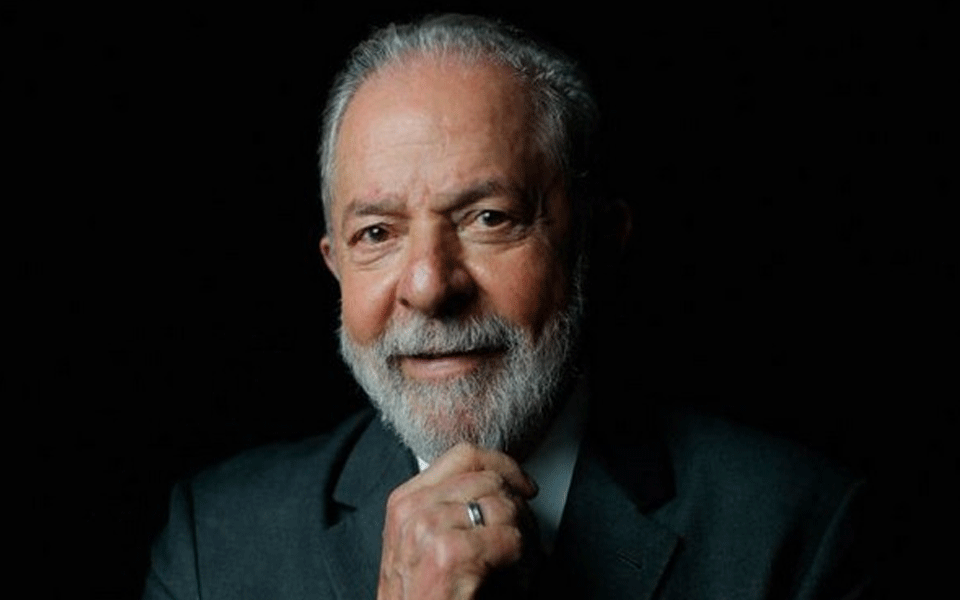
Sao Paulo (AP): Brazil's electoral authority said Sunday that Luiz In cio Lula da Silva of the leftist Worker's Party defeated incumbent Jair Bolsonaro to become the country's next president.
With 98.8 per cent of the votes tallied in the runoff vote, da Silva had 50.8 per cent and Bolsonaro 49.2 per cent, and the election authority said da Silva's victory was a mathematical certainty.
Da Silva the country's former president from 2003-2010 has promised to restore the country's more prosperous past, yet faces faces headwinds in a polarised society.
It is a stunning return to power for da Silva, 77, whose 2018 imprisonment over a corruption scandal sidelined him from that year's election, paving the way for then-candidate Bolsonaro's win and four years of far-right politics.
His victory marks the first time since Brazil's 1985 return to democracy that the sitting president has failed to win reelection. His inauguration is scheduled to take place on January 1.
Thomas Traumann, an independent political analyst, compared the results to US President Joe Biden's 2020 victory, saying da Silva is inheriting an extremely divided nation.
"The huge challenge that Lula has will be to pacify the country," he said. "People are not only polarised on political matters, but also have different values, identity and opinions. What's more, they don't care what the other side's values, identities and opinions are."
Bolsonaro had been leading throughout the first half of the count and, as soon as da Silva overtook him, cars in the streets of downtown Sao Paulo began honking their horns. People in the streets of Rio de Janeiro's Ipanema neighbourhood could be heard shouting, "It turned!"
Da Silva's headquarters in downtown Sao Paulo hotel only erupted once the final result was announced, underscoring the tension that was a hallmark of this race.
"Four years waiting for this," said Gabriela Souto, one of the few supporters allowed in due to heavy security.
Outside Bolsonaro's home in Rio de Janeiro, ground-zero for his support base, a woman atop a truck delivered a prayer over a speaker, then sang excitedly, trying to generate some energy. But supporters decked out in the green and yellow of the flag barely responded. Many perked up when the national anthem played, singing along loudly with hands over their hearts.
Most opinion polls before the election gave a lead to da Silva, universally known as Lula, though political analysts agreed the race grew increasingly tight in recent weeks.
For months, it appeared that da Silva was headed for easy victory as he kindled nostalgia for his presidency, when Brazil's economy was booming and welfare helped tens of millions join the middle class.
But while da Silva topped the October 2 first-round elections with 48 per cent of the vote, Bolsonaro was a strong second at 43 per cent, showing opinion polls significantly underestimated his popularity. Many Brazilians support Bolsonaro's defence of conservative social values and he shored up support in an election year with vast government spending.
Bolsonaro's administration has been marked by incendiary speech, his testing of democratic institutions, his widely criticised handling of the COVID-19 pandemic and the worst deforestation in the Amazon rainforest in 15 years. But he has built a devoted base by defending conservative values and presenting himself as protection from leftist policies that he says infringe on personal liberties and produce economic turmoil.
Da Silva is credited with building an extensive social welfare programme during his 2003-2010 tenure that helped lift tens of millions into the middle class as well as presiding over an economic boom. The man universally known as Lula left office with an approval rating above 80 per cent; then US President Barack Obama called him "the most popular politician on Earth."
But he is also remembered for his administration's involvement in vast corruption revealed by sprawling investigations. Da Silva's arrest in 2018 kept him out of that year's race against Bolsonaro, a fringe lawmaker at the time who was an outspoken fan of former US President Donald Trump.
Da Silva was jailed for for 580 days for corruption and money laundering. His convictions were later annulled by Brazil's top court, which ruled the presiding judge had been biased and colluded with prosecutors. That enabled da Silva to run for the nation's highest office for the sixth time.
For months, it appeared that he was headed for easy victory as he kindled nostalgia for his presidency, when the economy was booming and welfare helped tens of millions join the middle class.
Da Silva has pledged to boost spending on the poor, reestablish relationships with foreign governments and take bold action to eliminate illegal clear-cutting in the Amazon rainforest.
Carlos Melo, a political science professor at Insper University in Sao Paulo, compared the likely political climate to that experienced by former President Dilma Rousseff, da Silva's hand-picked successor after his second term.
"Lula's victory means Brazil is trying to overcome years of turbulence since the reelection of President Dilma Rousseff in 2014. That election never ended; the opposition asked for a recount, she governed under pressure and was impeached two years later," said Melo.
Let the Truth be known. If you read VB and like VB, please be a VB Supporter and Help us deliver the Truth to one and all.
CM Siddaramaiah alleges ‘criminal conspiracy’ in Sringeri recount, vows legal action
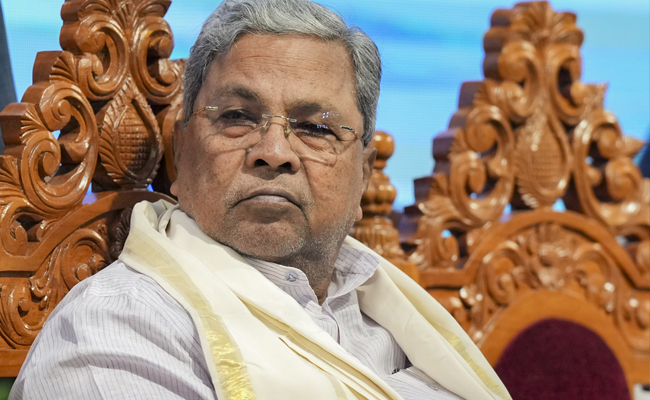
Bengaluru (PTI): Alleging a “criminal conspiracy” by BJP candidate D N Jeevaraj in the Sringeri Assembly poll recounting, Karnataka CM Siddaramaiah on Tuesday said the outcome was manipulated after valid postal ballot votes in favour of Congress leader T D Raje Gowda were tampered with during the recounting process.
Following a Karnataka High Court order on an election petition filed by Jeevaraj, challenging Raje Gowda’s election, the reverification and recounting were conducted on Saturday.
After the reverification and recount of postal ballots for the Sringeri Assembly constituency, votes polled in favour of Raje Gowda were reduced by 255, the returning officer said.
A report on the matter has been submitted to the Election Commission of India for further action, the officer added.
Congress leader Raje Gowda had won the 2023 Assembly polls from Sringeri by 201 votes, defeating his nearest rival Jeevaraj.
Addressing a press conference in Bengaluru, Siddaramaiah said the High Court had directed the recounting of postal ballots and that irregularities were noticed during the exercise conducted on May 2.
“This is a clear case of criminal conspiracy,” Siddaramaiah said, alleging that valid votes cast in favour of Raje Gowda were altered after being accepted by counting agents of all parties, including Congress, BJP, and JD(S).
He claimed that during the recounting of postal ballots, 255 votes were initially accepted as valid by all agents but were later tampered with by subordinate officials.
“There is a second mark on the votes polled in favour of Raje Gowda. They had accepted these as valid votes. Subsequently, another mark was made by officials. This is a clear case of criminal conspiracy,” he said.
When asked who was behind the alleged conspiracy, the CM replied, “It was hatched by Jeevaraj and others. It is planned.”
Siddaramaiah further alleged that the returning officer acted improperly by declaring the result despite the presence of an Election Commission observer during the recounting.
“Immediately after the counting, the returning officer announced the result. He should not have done so; this is against the law,” he said.
He pointed out that Raje Gowda had originally won by 201 votes, but after the recounting, the BJP candidate was declared the winner by 52 votes.
“The BJP has committed a criminal act of conspiracy. This is not vote chori but vote dacoity,” he alleged.
The CM said a police complaint had already been filed by Raje Gowda’s election agent, Sudhir Kumar, and emphasised the need for electoral integrity.
“We want transparency and free and fair elections. That is what our Constitution mandates,” he added.
Stating that the government would pursue legal remedies, Siddaramaiah said, “We are preparing an appeal challenging the returning officer’s announcement in a court of law.”
Responding to a separate query on elections in other states, the CM said there appeared to be an anti-incumbency factor in West Bengal, while results in Tamil Nadu were “surprising,” adding that Vijay’s party was emerging as the largest there.
Following the victory of party candidates in Bagalkote and Davanagere South, Siddaramaiah expressed confidence about future electoral prospects in Karnataka.
“Even in 2028, we will win the Assembly elections. We will come back,” the CM said.
Siddaramaiah added that he would order a forensic examination into the alleged tampering of postal ballots.