Maduro makes first appearance in US courtroom on drug trafficking charges
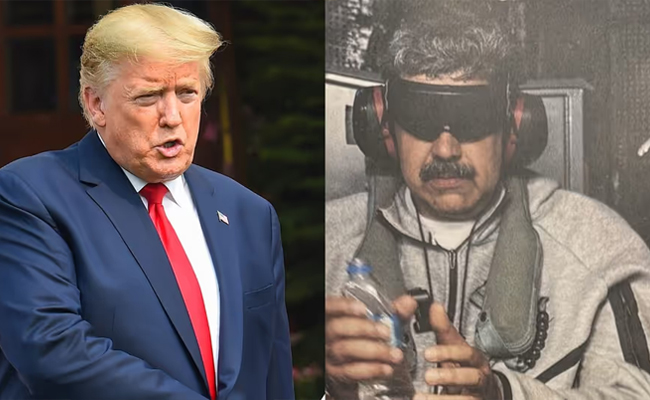
New York (AP): Deposed Venezuelan President Nicolas Maduro was making his first appearance in an American courtroom Monday on the narco-terrorism charges the Trump administration used to justify capturing him and bringing him to New York.
Maduro appeared around noon before a judge for a brief, but required, legal proceeding that will likely kick off a prolonged legal fight over whether he can be put on trial in the US.
The couple wife were transported under armed guard early Monday from the Brooklyn jail where they've been detained to a Manhattan courthouse.
The trip was swift. A motorcade carrying Maduro left jail around 7:15 am and made its way to a nearby athletic field, where Maduro slowly made his way to a waiting helicopter.
The chopper flew across New York harbour and landed at a Manhattan heliport, where Maduro, limping, was loaded into an armoured vehicle.
A few minutes later, the law enforcement caravan was inside a garage at the courthouse complex, just around the corner from the one where Donald Trump was convicted in 2024 of falsifying business records.
Across the street from the courthouse, the police separated a small but growing group of protesters from about a dozen pro-intervention demonstrators, including one man who pulled a Venezuelan flag away from those protesting the US action.
As a criminal defendant in the US legal system, Maduro will have the same rights as any other person accused of a crime — including the right to a trial by a jury of regular New Yorkers. But he'll also be nearly — but not quite — unique.
Maduro's lawyers are expected to contest the legality of his arrest, arguing that he is immune from prosecution as a sovereign head of state.
Panamanian strongman Manuel Noriega unsuccessfully tried the same defence after the US captured him in a similar military invasion in 1990. But the US doesn't recognise Maduro as Venezuela's legitimate head of state — particularly after a much-disputed 2024 reelection.
Venezuela's new interim president, Delcy Rodriguez, has demanded that the US return Maduro, who long denied any involvement in drug trafficking — although late Sunday she also struck a more conciliatory tone in a social media post, inviting collaboration with President Trump and “respectful relations” with the US.
Before his capture, Maduro and his allies claimed US hostility was motivated by lust for Venezuela's rich oil and mineral resources.
The US seized Maduro and his wife in a military operation Saturday, capturing them in their home on a military base. Trump said the US would “run” Venezuela temporarily, but Secretary of State Marco Rubio said Sunday that it would not govern the country day-to-day other than enforcing an existing " oil quarantine."
Trump suggested Sunday that he wants to extend American power further in the Western Hemisphere.
Speaking aboard Air Force One, he called Colombia's president, Gustavo Petro, "a sick man who likes making cocaine and selling it to the United States. And he's not going to be doing it very long.”
He called on Venezuela's Rodriguez to provide “total access” to her country, or else face consequences.
Trump has suggested that removing Maduro would enable more oil to flow out of Venezuela, but oil prices rose a bit more than 1 per cent in Monday morning trading to roughly USD 58 a barrel.
There are uncertainties about how fast oil production can be ramped up in Venezuela after years of neglect and needed investments, as well as questions about governance and oversight of the sector.
A 25-page indictment made public Saturday accuses Maduro and others of working with drug cartels to facilitate the shipment of thousands of tonnes of cocaine into the US, They could face life in prison if convicted.
It was unclear as of Sunday whether Maduro had hired a US lawyer yet.
He and his wife, Cilia Flores, have been under US sanctions for years, making it illegal for any American to take money from them without first securing a license from the Treasury Department.
While the indictment against Maduro says Venezuelan officials worked directly with the Tren de Aragua gang, a US intelligence assessment published in April, drawing on input from the intelligence community's 18 agencies, found no coordination between Tren de Aragua and the Venezuelan government.
Maduro, his wife and his son — who remains free — are charged along with Venezuela's interior and justice minister, a former interior and justice minister and Hector Rusthenford Guerrero Flores, an alleged Tren de Aragua leader who has been criminally charged in another case and remains at large.
Among other things, the indictment accuses Maduro and his wife of ordering kidnappings, beatings and murders of those who owed them drug money or undermined their drug trafficking operation. That included a local drug boss' killing in Caracas, the indictment said.
Maduro's wife is also accused of accepting hundreds of thousands of dollars in bribes in 2007 to arrange a meeting between “a large-scale drug trafficker” and the director of Venezuela's National Anti-Drug Office, resulting in additional monthly bribes, with some of the money going to Maduro's wife, according to the indictment.
Let the Truth be known. If you read VB and like VB, please be a VB Supporter and Help us deliver the Truth to one and all.
Zubeen Garg's drowning in Singapore highlights vessel operators' responsibility: legal experts
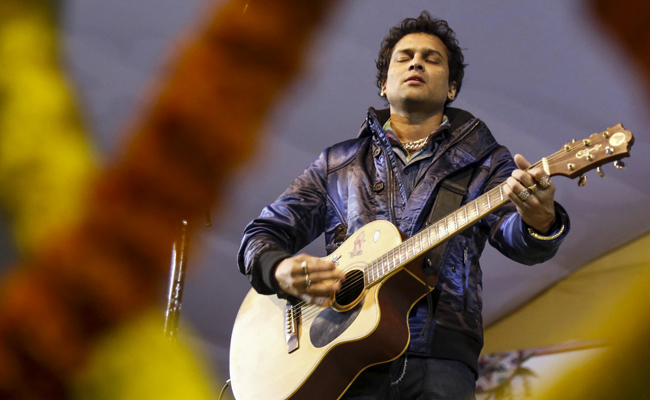
Singapore (PTI): The drowning of Indian singer-composer Zubeen Garg has brought the spotlight on rules and regulations that concern responsibilities of vessel operators when dealing with intoxicated passengers, according to a media report that cited legal experts.
A cultural icon in India’s northeastern region, 52-year-old Garg travelled to Singapore in September 2025 to perform at a live event. A day before his performance, he went on a yacht trip with a group of people. He drowned while swimming in the sea near Lazarus Island, which is a popular diving spot.
His death shook his home state Assam, where millions came out on the streets mourning. Later, police cases were registered against the organiser of the event, his manager and some others.
Nico Lee, managing director of the Triangle Legal law firm, told The Straits Times that Singapore has Maritime and Port Authority of Singapore (Port) Regulations under which there are provisions to debar drunk passengers.
The owner, agent or captain of the vessel must not allow persons under the influence of alcohol or drugs onboard if they are intoxicated to a point where they endanger safety of the vessel, its crew or any person in it.
“In terms of civil liability, it could be argued that a yacht captain is negligent, as he owes a prima facie duty of care to guests on board under general negligence principles,” Lee was quoted as saying by the newspaper.
The singer and his entourage of about 15 individuals were partying on a chartered vessel, which they had boarded at Marina at Keppel Bay.
A death certificate issued by the Singapore General Hospital listed his cause of death as drowning.
An autopsy report suggested that Garg had 333 mg of alcohol per 100 ml of blood in his system, which was four times the legal limit for driving in Singapore and is likely to have impacted his coordination.
Citing Garg’s case, Lee said the circumstances were serious, as the controller of the vessel knew that the guest was intoxicated. Also, he may not have understood or processed a safety briefing for all passengers.
“That combination makes reliance on an ordinary briefing inadequate. If intoxication reaches a level that endangers the safety of the vessel or persons on board, the person in charge should not permit boarding at all,” he said.
According to Lee, the vessel’s operators could also have assigned a crew member to directly supervise him or ensure that he received a one-to-one explanation when he was capable of understanding.
Part of the responsibility could be attributed to the guest if he chose to enter the water and ignore instructions or behave dangerously despite the yacht owner or charterer’s best efforts, Lee said.
Vanessa Sandhu from Clifford Law LLP told The Straits Times that a key question is whether the yacht captain or operator owed a “duty of care” to the passenger and, if so, whether a breach of that duty caused the death.
“A yacht captain and operator generally owe passengers a duty to take reasonable care for their safety while on board, including swimming or water activities. This may include providing safety equipment and issuing appropriate safety instructions,” the daily quoted Sandhu as saying.
“However, the standard of care is an objective one, based on what a reasonable captain or operator would have done in the circumstances. It is not an absolute obligation to prevent all harm,” she said.
During the coroner’s inquiry, the operators of the vessel had said that no one had forced the singer to consume alcohol or enter the water, and that the entire entourage was informed on the yacht about the necessity of wearing life jackets before going for a swim.
A coroner’s inquiry on March 25 ruled Garg’s death as accidental drowning. On April 1, the police said that investigations into the singer's death had concluded, with no evidence of foul play.
However, in Assam, where seven persons were arrested in connection with Garg’s case, and some of them charged with murder, the matter is being heard in the court. All the suspects have denied any wrongdoing.