Mahinda Rajapaksa resigns as Lanka's PM
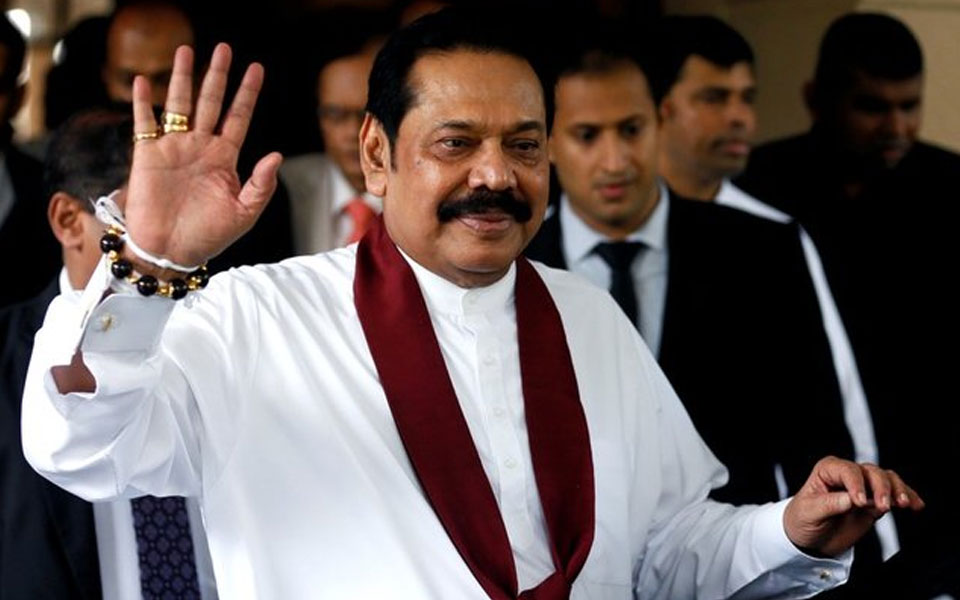
Colombo, Dec 15: Mahinda Rajapaksa, who was appointed as Sri Lanka's Prime Minister by President Maithripala Sirisena in a controversial move, resigned Saturday as two crucial Supreme Court decisions made the embattled former strongman's efforts to cling to premiership untenable.
Rajapaksa informed the lawmakers of United People's Freedom Alliance (UPFA) that he has resigned from the post, MP Shehan Semasinghe told reporters.
Rajapaksa was appointed as the prime minister on October 26 by President Sirisena in a controversial move after sacking Ranil Wickremesinghe, which plunged the country into an unprecedented constitutional crisis.
The Supreme Court on Friday refused to stay a court order restraining Rajapaksa, 73, from holding the office of Prime Minister until it fully heard the case next month.
The apex court on Thursday unanimously declared that the dissolution of Parliament by Sirisena was "illegal".
Pro-Rajapaksa lawmaker, Lakshman Yapa Abeywardena, had told reporters that Rajapaksa decided in a meeting on Friday with President Sirisena to resign to allow the President to appoint a new government.
Wickremesinghe is expected to take oath as Sri Lanka's Prime Minister on Sunday.
President Maithripala Sirisena has reportedly agreed to reinstate ousted Prime Minister Wickremesinghe in the post after a discussion with him over the phone on Friday.
Let the Truth be known. If you read VB and like VB, please be a VB Supporter and Help us deliver the Truth to one and all.
Man arrested with Rs 2.54-crore heroin in Mumbai

Mumbai (PTI): Police have arrested a man and seized over 500 grams of heroin worth Rs 2.54 crore in the illicit market from him in Mumbai, officials said on Friday.
The police's Anti-Narcotics Cell (ANC) made the drug seizure in Santacruz in the western suburbs. The operation was conducted by the Kandivali unit of the ANC on Thursday as part of a special crackdown against drug trafficking in the area, they said.
Acting on specific inputs, an ANC team conducted a raid in Santacruz (East) and intercepted a man. During a search, the team recovered 508 grams of high-grade heroin from his possession, an official said.
The seized contraband, a highly addictive, opioid drug derived from morphine, is estimated to be worth Rs 2.54 crore in the international market, he informed.
Following the seizure, a case was registered against the man under relevant sections of the Narcotic Drugs and Psychotropic Substances (NDPS) Act, 1985, and he was formally placed under arrest in the early hours of Friday.
The police are currently investigating the source of the drug and trying to identify the intended recipients of the consignment, he said.