Malala Yousafzai urges UN to help Kashmiri children go back to school
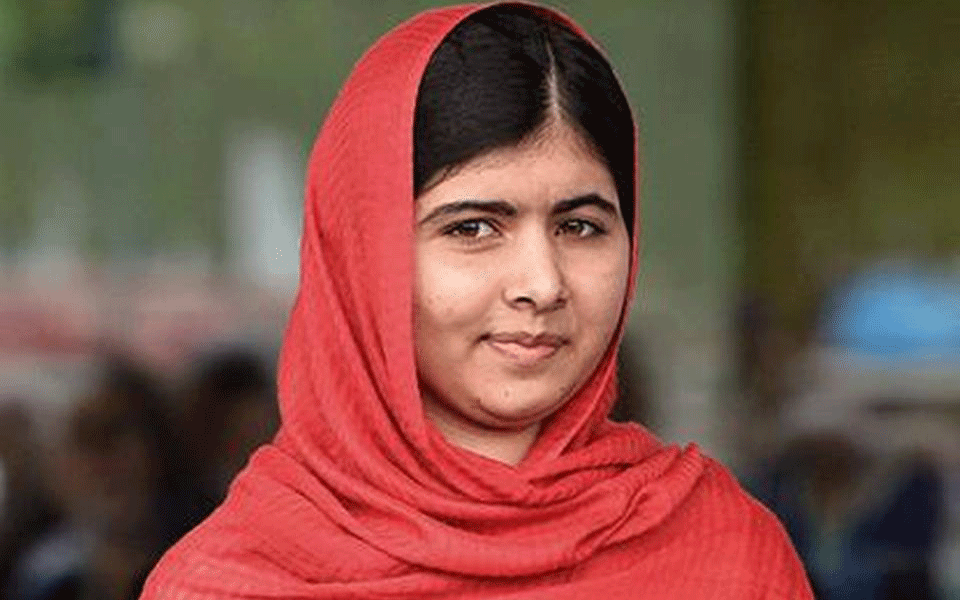
London: Nobel Peace Prize winner and Pakistani education rights activist Malala Yousafzai has urged the UN to work towards peace in Kashmir and help children go back to school amid the tense situation in the Valley.
Normal life has remained affected in Kashmir since August 5, when the special status for Jammu and Kashmir was scrapped and restrictions were imposed. Most shops and schools remain shut and public transport has gone off the roads.
"I am asking leaders, at #UNGA and beyond, to work towards peace in Kashmir, listen to Kashmiri voices and help children go safely back to school," the youngest ever Nobel Laureate tweeted on Saturday.
Malala, 22, said she is deeply concerned about reports of students who have not been able to attend school for more than 40 days, about girls who are afraid to leave their homes.
"I wanted to hear directly from girls living in Kashmir right now. It took a lot of work from a lot of people to get their stories because of the communications blackout. Kashmiris are cut off from the world and unable to make their voices heard. #LetKashmirSpeak," she tweeted.
As the shutdown in the Valley entered its 41st day on Saturday, most of the shops and other business establishments remained closed. Internet services remained suspended across all platforms.
While landline phones across the Valley were functional, voice calls on mobile devices were working only in Kupwara and Handwara police districts of north Kashmir.
The efforts of the state government to reopen schools have not borne any fruit as parents continued to keep the kids at home due to apprehensions about their safety.
Let the Truth be known. If you read VB and like VB, please be a VB Supporter and Help us deliver the Truth to one and all.
AIITA welcomes Karnataka’s ban on obscene songs in school events
Bhatkal: The Karnataka unit of the All India Ideal Teachers Association (AIITA) has welcomed the Karnataka government’s decision to strictly ban school children from dancing to obscene songs during educational and cultural programmes in government, aided, and private schools across the state.
AIITA Karnataka State President M. R. Manvi congratulated the government for taking what he termed an important step to preserve the sanctity of education.
“Such decisions to safeguard the dignity of school children and uphold the values of education are the need of the hour. This rule should not be limited to government schools alone but must be strictly implemented in all private educational institutions as well,” he said.
He further urged the government to address other concerns within school programmes.
“The government should not only prohibit obscene dances in the name of school anniversaries, but also ensure that plays and dialogues that incite religious hatred are avoided. Schools should be centres of harmony, not platforms for spreading hatred,” he added.
According to a recent circular issued by the Department of School Education and Literacy, obscene dances are adversely affecting the mental health and moral values of students.
In this regard, schools have been advised to use songs that promote nationalism, positive thinking, the greatness of Kannada culture, and value-based traditions instead of inappropriate content during programmes.
The circular also emphasises that students should be dressed in decent attire.
AIITA also backed the department’s warning that disciplinary action would be taken against head teachers if such guidelines are violated. The association has further demanded that district Deputy Directors of Public Instruction strictly monitor the implementation of these rules.