Malaysia ex-PM Muhyiddin charged with corruption, laundering
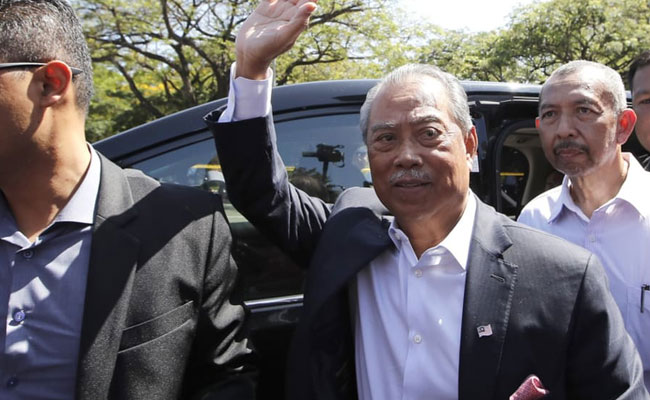
Kuala Lumpur (AP): Former Prime Minister Muhyiddin Yassin was charged Friday with corruption and money laundering, making him Malaysia's second ex-leader to be indicted after leaving office.
Muhyiddin, 75, pleaded innocent to four charges of abusing his power to obtain 232.5 million ringgit (USD 51.4 million) bribes for his party and two charges of money laundering involving 195 million ringgit (USD 43 million). He has been released on bail.
Muhyiddin was arrested Thursday by the anti-graft agency, which questioned him over government stimulus projects to ethnic Malay contractors during the COVID-19 pandemic. He then slammed the charges against him as political persecution to crush his opposition alliance ahead of state elections. Outside the court building Friday, some supporters carried banners which read "malicious intent."
Prime Minister Anwar Ibrahim rejected accusations that the charges were politically motivated and noted the investigations were carried out independently by the anti-graft agency. After taking power in November, Anwar ordered a review of government projects approved by past administrations including Muhyiddin, who led Malaysia from March 2020 until August 2021.
Two senior members from Muhyiddin's Bersatu party were recently charged with graft. The anti-graft agency has also frozen Bersatu's party accounts.
Muhyiddin said Thursday that the charges were to embarrass him and cripple his Islamic-dominated alliance, which has strong support among ethnic Malays who account for about two-thirds of Malaysia's 33 million people.
Anwar and Muhyiddin has fought for the premiership after November general elections produced a hung parliament. The king later appointed Anwar as premier after he formed a unity government with several smaller parties, but his strength will be tested in six state elections due in the next few months.
Muhyiddin was the second former leader to be charged after ex-Prime Minister Najib Razak, who was hit with multiple charges after he lost in 2018 general elections. Najib began a 12-year jail term in August after losing his final appeal in the first of several graft trials related to the looting of the 1MDB state development fund.
If Muhyiddin is found guilty, he faces up to 20 years in prison for each of the corruption charges, 15 years each for money laundering and fines.
Let the Truth be known. If you read VB and like VB, please be a VB Supporter and Help us deliver the Truth to one and all.
No unannounced load shedding in Kerala, outages due to overload, says Minister
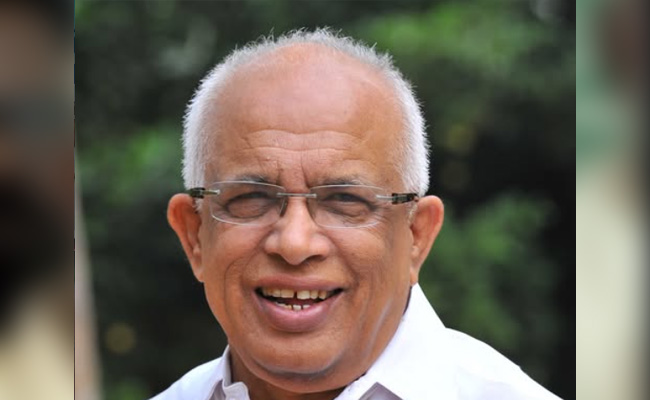
Palakkad (PTI): Kerala Electricity Minister K Krishnankutty on Saturday said there was no unannounced load shedding in the state, attributing recent power interruptions to temporary overload caused by high consumption.
Clarifying concerns raised from various parts of the state, the minister said the disruptions are not deliberate but occur when demand peaks, particularly between 10 pm and 11 pm.
"It is not being done intentionally. Power consumption has risen sharply, and when there is excessive and indiscriminate usage, the system experiences overload, leading to natural supply interruptions," he told reporters here.
His remarks come amid complaints that several areas have been witnessing frequent power cuts, often lasting around 15 minutes and occurring multiple times during the night.
Krishnankutty said the state's power demand has crossed 6,195 MW, putting pressure on the supply system. He added that around 70 per cent of Kerala's electricity is procured from outside, and existing power banking arrangements have been exhausted.
"We have approached the Regulatory Commission seeking permission to purchase more power. However, this will come at a higher cost," he said.
The minister said the government is trying to avoid increasing electricity tariffs and urged consumers to exercise restraint in usage to help manage the situation.
Responding to opposition criticism over the ruling LDF's earlier claims of a decade without power cuts, he said the current situation is not unique to Kerala.
A power crisis is emerging across the country, he said, and sarcastically asked the Opposition to take note of the role of natural factors in this.
Krishnankutty expressed confidence that the situation would improve within two days, while cautioning that long-term energy security would depend on enhancing in-state power generation.
He also warned that future generations could face serious challenges if adequate electricity production capacity is not developed within Kerala.