Malaysian PM accepts general elections result
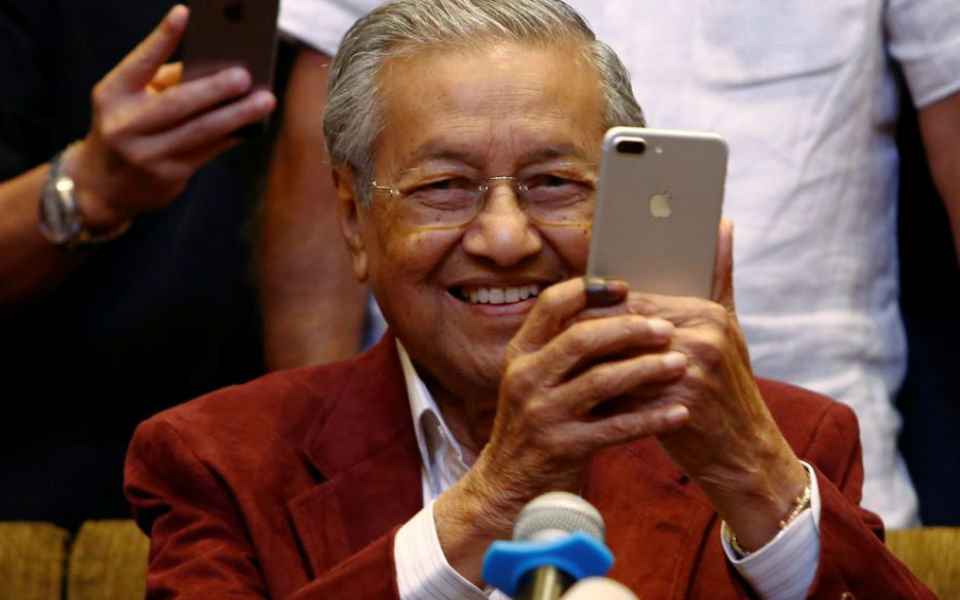
Kuala Lumpur, May 10: Malaysian Prime Minister Najib Razak on Thursday said that he accepted the result of the general elections, which saw his ruling coalition lose to the opposition led by former Prime Minister Mahathir Mohamad.
Stopping short of admitting defeat, Najib said that the King will have to decide on the next Prime Minister, reports Efe news.
After the counting of votes, the EC confirmed a historic victory for the opposition, led by Mahathir, 92, which defeated the ruling coalition which had been in power since the country's independence.
Official results show that the opposition alliance Pakatan Harapan (Alliance of Hope) has won 113 of total 222 seats - crossing the required majority of 112 - while the ruling Barisan Nasional (National Front) managed to get just 79 seats.
The Malaysian Islamic Party (PAS) emerged as the third biggest force with 18 seats.
The EC published the first results in early hours of Thursday after not giving any information for many hours, while unofficial sources had started reporting the opposition's victory by Wednesday night.
In his first statement after victory, Mahathir told his supporters that his objective was to re-establish the rule of law after the corruption scandals that characterised Najib's term.
Mahathir, who was the longest-serving prime minister of the country between 1981-2003, was Najib's patron in the beginning of the latter's political career, but returned from retirement to defeat his former protege.
Let the Truth be known. If you read VB and like VB, please be a VB Supporter and Help us deliver the Truth to one and all.
Confident we are going to win Kerala: Shashi Tharoor
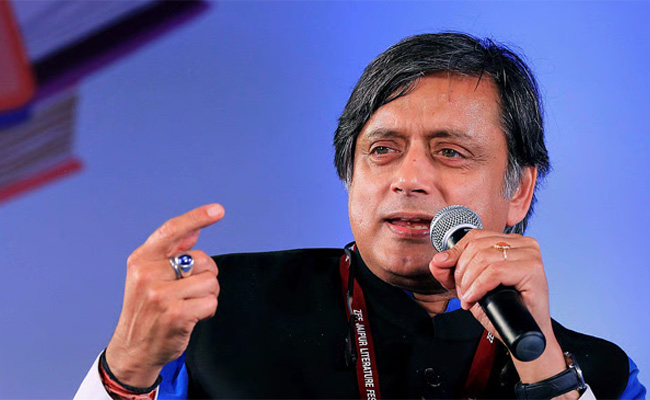
New Delhi (PTI): Congress leader Shashi Tharoor on Thursday expressed confidence in the victory of the United Democratic Front (UDF) in Kerala, saying the Congress-led alliance will win more than 75 seats out of the total 140 in the state.
Tharoor, who hails from Kerala, said he was not surprised to see the results of the exit polls, most of which predicted a victory for the UDF that has been out of power for 10 years in the state.
"We have been on the ground. I have campaigned in 59 constituencies across 12 districts out of 14. I was very confident we are going to win.
"Everything that I have picked up from not just my party colleagues and workers but also from other observers, media and others have always convinced me that we were going to score a comfortable win of above 75 seats. And all the (exit) polls have confirmed the same thing," he told reporters here.
The Thiruvananthapuram MP said he was not surprised to see the results of the exit polls but in general he was not a big fan of exit polls in India.
"Because ours is not purely a homogenous society. We have to take into account gender issue, caste issue, class issue, regional disparities. You never get a convincingly large enough sample to give an accurate poll and now there is the additional complication that we have heard about in West Bengal this year that many people are unwilling to answer the questions of the pollsters," he said.
The Congress leader said normally, it used to be below 10 per cent that people said that they would not answer.
"Even if you are a reputable exit pollster, in Bengal, one polling company has said 60 per cent of people refused to answer. So, what is the worth of a poll where 60 per cent of your respondents have not answered," he said.
Several exit polls on Wednesday predicted a comeback by the Congress-led UDF in Kerala after 10 years, dethroning the CPI(M)-led Left Democratic Front (LDF).
Polling for the 140-member Kerala assembly was held on April 9. Results of assembly elections in West Bengal, Tamil Nadu, Assam, Puducherry, besides Kerala, will be announced on May 4.