Mallya extradition trial's next hearing date remains uncertain
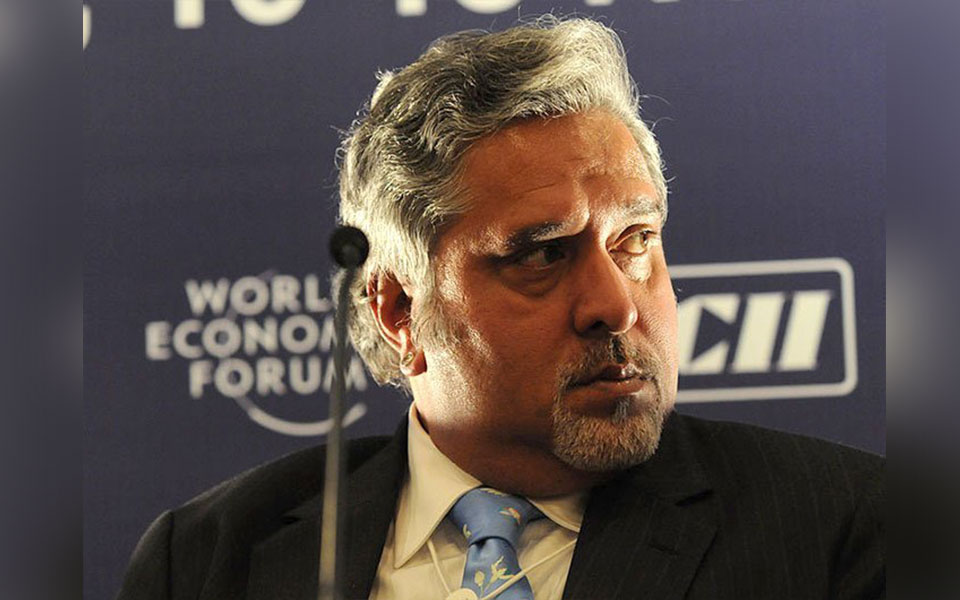
London: The next submissions hearing in the extradition trial of Vijay Mallya over alleged fraud and money laundering amounting to Rs 9,000 crores remains uncertain as the lawyers are yet to agree on a mutually convenient date.
Chief Magistrate Emma Arbuthnot was listed to hear the case at Westminster Magistrates Court today, with the 62- year-old embattled liquor baron exempt from attending.
However, the case was not discussed in the court as the lawyers are yet to agree on a mutually convenient date.
The next hearing date is expected within the next few weeks, to be determined internally between the legal counsels and announced at a later date.
The case had been left undecided over the issue of admissibility of evidence presented by the Indian authorities at a hearing earlier this month.
Judge Arbuthnot is set to rule on the issue once Mallya's defence team completes its argument claiming "absence of a strong prima facie case" and the Crown Prosecution Service (CPS), arguing on behalf of the Indian government, responds in favour of the evidence.
Meanwhile, Mallya s bail on an extradition warrant has been extended until April 2.
The next hearing is expected to also lead to a time-frame for closing arguments and verdict in the case, which seeks to establish that there are no bars to Mallya being extradited to India to stand trial on the charges of fraud and money laundering.
A senior official had confirmed that the Indian government has now presented all clarifications sought by the judge during a hearing in the case in December, including regular medical assistance that will be made available to the businessman at Arthur Road Jail in Mumbai where he is to be held.
At the last hearing on January 11, Mallya's barrister Clare Montgomery argued that evidence that was claimed as a "blueprint of dishonesty" by the CPS was in fact privileged conversation between Mallya and his lawyer about "legal advice in clear contemplation of litigation" and hence should be inadmissible.
On a separate category of evidence presented by the Indian government, Montgomery questioned the reliability of investigating officers in the case. She pointed to over 150 pages of "near identical material" purporting to be statement of witnesses taken under Section 161 of the Indian CrPC.
Dismissing the nature and source of these witness statements, Mallya s defence claimed they do not meet "obligations" under the India-UK extradition treaty to provide "proper" statements.
The Indian authorities have stressed that they are confident the evidence meets all the requirements under the treaty.
Mallya was arrested by Scotland Yard on an extradition warrant in April 2017 and has been out on bail on a bond worth 650,000 pounds.
Chief Magistrate Arbuthnot will present her ruling within a timeframe she sets out at the end of the trial. If she rules in favour of the Indian government, the UK home secretary will have two months to sign Mallya's extradition order.
However, both sides will have the chance to appeal in higher courts in the UK against the chief magistrate's verdict.
Let the Truth be known. If you read VB and like VB, please be a VB Supporter and Help us deliver the Truth to one and all.
T'gana RTC strike: Talks between govt, employees successful

Hyderabad (PTI): Talks between employees of Telangana State Road Transport Corporation (RTC) who were on strike and the state government concluded successfully on Friday as the government agreed to the key demands of the workmen.
Following a day-long marathon of talks between the leaders of the employees' Joint Action Committee (JAC) and the cabinet sub-committee, the government announced after midnight that it acceded to the demands, including a merger of RTC with the government, 11 per cent pay revision and elections to the employees' unions.
A committee comprising officials and employee leaders would be appointed over the merger of RTC with the government, it said.
The RTC management has also agreed to address the remaining issues as well, an official release said.
The employees would call off their strike and the RTC buses would hit the roads shortly, it said.
The employees had been on an indefinite strike since April 22 over a series of demands, including the merger of RTC with the government.
Earlier in the day, a driver of the RTC, who attempted suicide on April 23 during the strike, died at a hospital here in the early hours of Friday.
Shankar Goud, a 55-year-old driver, set himself ablaze by pouring petrol at Narsampet in Warangal district when the employees were staging a protest on Thursday in support of their demands.
Goud suffered serious burns, was initially admitted to a state-run hospital in Warangal, and later shifted to a super-speciality hospital in Hyderabad for advanced treatment.
"He succumbed (to injuries) at about 1.30 am on Friday," a senior official said.
The driver’s body was taken to his relative’s village, Muttojipet in Warangal district, for funeral rites.
Tension prevailed in Muttojipet as his family members and RTC employees attempted to take the body to the Narsampet bus station, where he worked, to enable his colleagues to pay their last respects. However, police did not permit this, citing law-and-order concerns.
This led to a deadlock before the funeral could proceed.
Union Minister Bandi Sanjay Kumar criticised the Telangana government for not allowing the body to be taken to the Narsampet bus station.
Kumar, Minister of State (Home), visited Muttojipet village in Warangal district, where the funeral was held, and paid homage to Goud.
“They (family members) want to take the body to the bus depot for five minutes. Is the RTC bus depot in Pakistan or Bangladesh? They are emotionally attached to taking the body there. The government is hurting sentiments and creating fear among RTC employees,” Kumar told reporters.
He also expressed anger at the police for not allowing the body to be taken to the bus station and staged a protest, according to a release from his office.
RTC employees and BJP workers attempted to take the mortal remains in an ambulance to Narsampet, but were stopped by the police.
Later, after discussions with the police, the family members and RTC employees agreed to conduct the funeral in the village.
Sanjay Kumar, stating he would abide by the family’s decision, left the village after the funeral was conducted there.
Transport Minister Ponnam Prabhakar said an ex gratia of Rs 10 lakh, a house, and a government job would be provided to the kin of Goud.
Chief Minister A Revanth Reddy expressed shock over the employee’s death and conveyed deep condolences to the grieving family, according to the release.
The RTC employees’ JAC had earlier announced an agitation programme from April 24 to 29, including silent marches and submission of memorandums to MLAs and other leaders.