Media reps say 45 reporters, staffers died at work in 2021
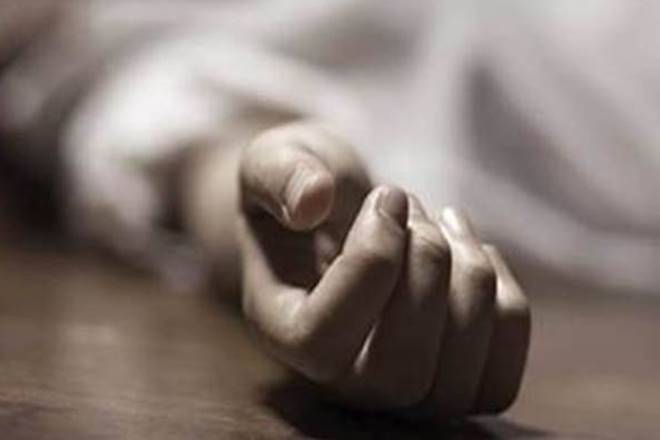
Brussels, Jan 1: A total of 45 reporters and media workers were killed doing their jobs over the last year, the highest number among them in strife-torn Afghanistan, the world's largest organization of journalists said Friday.
The figure represents one of the lowest death tolls in 30 years, since the International Federation of Journalists first began publishing annual reports in 1991 on journalists killed in incidents related to their work. Sixty-five deaths were recorded in 2020.
But the IFJ said the numbers in 2021 confirm a trend showing that media staff are most often killed for exposing corruption, crime and abuse of power in their communities, cities and countries.
These 45 colleagues we lost to violence this year remind us of the terrible sacrifice journalists across the world continue to pay for serving the public interest and we remain in the debt to them and thousands of others who paid the ultimate price," said IFJ General Secretary Anthony Bellanger.
Bellanger said the only tribute fit for the cause to which they gave their lives should be unrelenting pursuit for justice.
The IFJ, which represents around 600,000 media professionals across the globe, said that the 45 journalists and media workers were killed in 20 countries. Of those, 33 died in targeted attacks. Nine were killed in Afghanistan, eight in Mexico, four in India and three in neighbouring Pakistan.
The organisation said that 2,721 journalists have been killed around the world since 1991.
Let the Truth be known. If you read VB and like VB, please be a VB Supporter and Help us deliver the Truth to one and all.
Vartha Bharati–Sankalp predictions align closely with Karnataka bypoll results
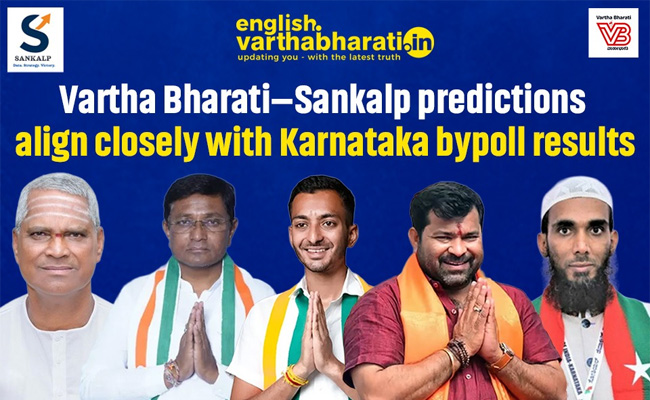
Bengaluru: The Vartha Bharati–Sankalp election analysis has shown a high level of accuracy in predicting the outcome of the recent Karnataka Assembly by-elections held in May 2026, correctly calling winners in both constituencies and closely estimating vote share trends.
The by-elections were held in Bagalkot and Davanagere South, drawing significant political attention as both seats were seen as key tests for the ruling Congress and opposition BJP.
According to the analysis, Vartha Bharati–Sankalp had made three major projections ahead of the results the winning party, vote share percentages, and margin of victory.
In both constituencies, the platform accurately predicted that the Congress would emerge victorious. The outcome matched the projections, with Congress candidates winning in Bagalkot and Davanagere South.
In terms of vote share, the predictions were largely in line with the final results. In Bagalkot, the BJP’s vote share was forecast in the range of 40 to 46 per cent, while the actual figure stood at 42.9 per cent. The Congress vote share, however, exceeded expectations, with the party securing 55.4 per cent against a projected range of 43 to 48 per cent.
The margin of victory in Bagalkot turned out to be significantly higher than anticipated. While the projection had placed the margin between 2,000 and 3,500 votes, the final margin was around 22,332 votes.
In Davanagere South, the predictions also remained largely accurate. The Congress vote share was projected between 43 and 51 per cent, and the final figure stood at 43.9 per cent. The BJP was expected to secure between 42 and 50 per cent but ended with 40.3 per cent.
The analysis had also identified the role of SDPI as a potential spoiler in the constituency. While its vote share was estimated around 6 per cent, the party eventually secured around 12 per cent of the vote.
The margin of victory in Davanagere South was predicted to be between 1,500 and 2,600 votes. The actual margin was higher at around 5,708 votes, though the contest remained relatively close as anticipated.
Overall, the performance of Vartha Bharati–Sankalp stood out for correctly identifying the winning parties in both seats and maintaining close accuracy in vote share estimates, with only limited deviations in specific cases.