Members of Pak's Hindu community to protest forced conversion, abductions and marriages of minors
Karachi (PTI): Members of Pakistan's minority Hindu community will organise a rally and converge at the Sindh Assembly building here later this month to protest the rising incidents of forced conversions, abductions and marriages of minors.
The rally, which is being organised by several Hindu community leaders in Sindh province, will be held on March 30, under the banner of Pakistan Darawer Ittehad, an organisation working for minority rights in the country.
Posters released by the organisation on social media said the rally is being held to protest the abduction, forced conversion and marriages of minor girls and forced possession of land belonging to the Hindu community in the Sindh province.
"We are expecting thousands from the Hindu community to participate in the rally as the government has turned a blind eye to the abductions, forced conversions and fake marriages of our women and girls," Chairman of Pakistan Darawer Ittehad Faqir Shiva Kuchi said.
He said the outfit has already begun mobilising rallies across the province to raise awareness.
"When this protest rally will be held on March 30, we want everyone to see the issues faced by Hindus and members from other minority communities in the country," he explained.
Kuchi added that their demand was that a stalled bill against forced conversion and marriages be passed in the Sindh Assembly.
In 2019, the issue of abducting and forcible conversion of Hindu girls in various districts of Sindh province was taken up in the Sindh Assembly.
A resolution was debated and unanimously passed after it was modified over objections of certain lawmakers that it should not be restricted to only Hindu girls.
But the bill, which criminalised forcible religious conversions was later rejected in the assembly. A similar bill was again proposed, but it got rejected in 2021.
In January this year, as many as 12 United Nations rights experts expressed alarm over the rising incidents of kidnapping, forced conversions and marriages of girls as young as 13 in Pakistan.
Forced conversion and forced marriages are prohibited in Islam.
According to the Human Rights Commission of Pakistan's report, around 1,000 girls are forcibly converted to Islam every year.
It noted that most of the converted girls belong to the impoverished Hindu community from the Sindh province.
Hindus form the biggest minority community in Pakistan.
According to official estimates, 75 lakh Hindus live in the Muslim-majority country.
Muslims account for about 96 per cent of Pakistan's 207 million population, Hindus 2.1 per cent and Christians about 1.6 per cent according to the Human Rights Commission of Pakistan estimates.
Let the Truth be known. If you read VB and like VB, please be a VB Supporter and Help us deliver the Truth to one and all.
Allahabad HC orders probe into 'reinstatement' of teacher in UP's Barabanki
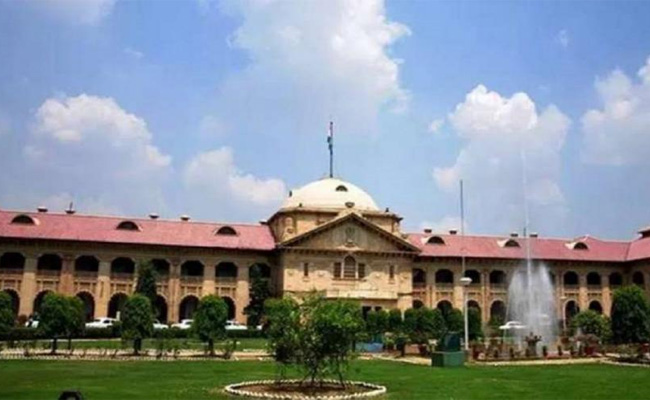
Lucknow (PTI): The Lucknow Bench of the Allahabad High Court on Friday ordered a probe by the special task force (STF) into alleged irregularities in the rejoining of a teacher at City Intermediate College in Barabanki, observing that the reinstatement appeared to be prima facie illegal.
The court also directed the recovery of the salary paid to the teacher during the disputed period.
A bench of Justice Rajeev Singh passed the order on a petition filed by the college management committee. The court expressed doubts over the roles of the District Inspector of Schools (DIOS), Barabanki, the college principal and the teacher concerned and hence, directed a detailed inquiry into the matter.
Taking note of alleged manipulation of records and misleading submissions, the court ordered the immediate transfer of the Barabanki DIOS to ensure a fair probe. It also directed the initiation of disciplinary proceedings against the then joint director of education of the Ayodhya division.
In its order, the court found that the teacher, Abhay Kumar, was initially appointed as an assistant teacher in 2018 but joined an Eklavya Model Residential School in Chhattisgarh as a lecturer in June 2024 without obtaining permission from the management. His subsequent request to retain the lien was rejected.
Despite this, he was allowed to rejoin the Barabanki College in September 2025 on the directions of the joint director of education and the DIOS, and was even paid the salary for October 2025. The court termed the rejoining "wholly illegal" and lacking any legal basis.
The bench also expressed concern over lapses in communication within the education department and directed the Uttar Pradesh chief secretary to ensure that official orders are communicated through email and WhatsApp as well, to prevent disputes.
The matter is next listed for hearing on May 28 when a compliance report is sought.