Mexico elects Claudia Sheinbaum as its first woman president
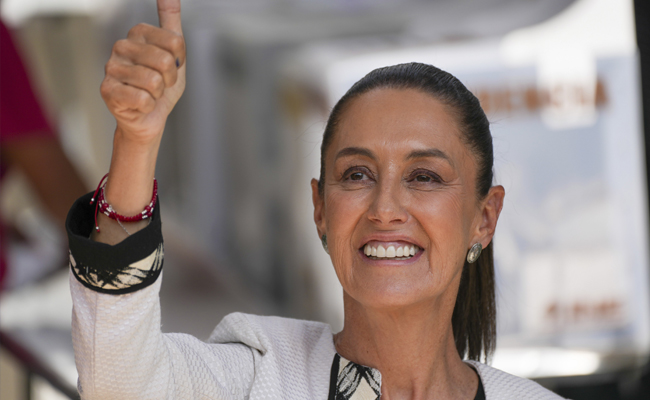
Mexico City (AP): Mexico's projected presidential winner Claudia Sheinbaum will become the first woman president in the country's 200-year history.
The climate scientist and former Mexico City mayor said on Sunday night that her two competitors had called her and conceded her victory.
“I will become the first woman president of Mexico,” Sheinbaum said with a smile, speaking at a downtown hotel shortly after electoral authorities announced a statistical sample showed she held an irreversible lead.
“I don't make it alone. We've all made it, with our heroines who gave us our homeland, with our mothers, our daughters and our granddaughters.”
“We have demonstrated that Mexico is a democratic country with peaceful elections,” she said.
The National Electoral Institute's president said Sheinbaum had between 58.3% and 60.7% of the vote, according to a statistical sample. Opposition candidate Xóchitl Gálvez had between 26.6% and 28.6% of the vote and Jorge Álvarez Máynez had between 9.9% and 10.8% of the vote.
The preliminary count, which started off very slowly, put Sheinbaum 27 points ahead of Gálvez with 42% of polling place tallies counted shortly after her victory speech.
The governing party candidate campaigned on continuing the political course set over the last six years by her political mentor President Andrés Manuel López Obrador.
His anointed successor, the 61-year-old Sheinbaum led the campaign wire-to-wire despite a spirited challenge from Gálvez. This was the first time in Mexico that the two main opponents were women.
“Of course, I congratulate Claudia Sheinbaum with all my respect who ended up the winner by a wide margin," López Obrador said shortly after electoral authorities announcement. "She is going to be Mexico's first (woman) president in 200 years.”
If the margin holds it would approach his landslide victory in 2018. López Obrador won the presidency after two unsuccessful tries with 53.2% of the votes, in a three-way race where National Action took 22.3% and the Institutional Revolutionary Party took 16.5%.
Earlier, Gálvez wrote on the social platform X, “The votes are there. Don't let them hide them.”
Sheinbaum is unlikely to enjoy the kind of unquestioning devotion that López Obrador has enjoyed. Both belong to the governing Morena party.
In Mexico City's main colonial-era main plaza, the Zocalo, Sheinbaum's lead did not initially draw the kind of cheering, jubilant crowds that greeted López Obrador's victory in 2018.
Fernando Fernández, a chef, 28, joined the relatively small crowd, hoping for a Sheinbaum victory, but even he acknowledged there were problems.
“You vote for Claudia out of conviction, for AMLO,” Fernández said, referring to López Obrador by his initials, as most Mexicans do. But his highest hope is that Sheinbaum can “improve what AMLO couldn't do, the price of gasoline, crime and drug trafficking, which he didn't combat even though he had the power.”
Also in the crowd, Itxel Robledo, 28, a business administrator, expressed hope that Sheinbaum would do what López Obrador didn't. “What Claudia has to do is put professionals in every area.”
Elsewhere in the city, Yoselin Ramírez, 29, said she voted for Sheinbaum, but split her vote for other posts because she didn't want anyone holding a strong majority.
“I don't want everything to be occupied by the same party, so there can be a little more equality,” she said without elaborating.
The main opposition candidate, Gálvez, a tech entrepreneur and former senator, tried to seize on Mexicans' concerns about security and promised to take a more aggressive approach toward organized crime.
Nearly 100 million people were registered to vote, but turnout appeared to be slightly lower than in past elections. Voters were also electing governors in nine of the country's 32 states, and choosing candidates for both houses of Congress, thousands of mayorships and other local posts, in the biggest elections the nation has seen and ones that have been marked by violence.
The elections were widely seen as a referendum on López Obrador, a populist who has expanded social programs but largely failed to reduce cartel violence in Mexico. His Morena party currently holds 23 of the 32 governorships and a simple majority of seats in both houses of Congress. Mexico's constitution prohibits the president's reelection.
Sheinbaum promised to continue all of López Obrador's policies, including a universal pension for the elderly and a program that pays youths to apprentice.
Gálvez, whose father was Indigenous Otomi, rose from selling snacks on the street in her poor hometown to start her own tech firms. A candidate running with a coalition of major opposition parties, she left the Senate last year to focus her ire on López Obrador's decision to avoid confronting the drug cartels through his “hugs not bullets” policy. She pledged to more aggressively go after criminals.
The persistent cartel violence and Mexico's middling economic performance were the main issues on voters' minds.
Julio García, a Mexico City office worker, said he was voting for the opposition in Mexico City's central San Rafael neighborhood. “They've robbed me twice at gunpoint. You have to change direction, change leadership,” the 34-year-old said. “Continuing the same way, we're going to become Venezuela.”
On the fringes of Mexico City in the neighborhood of San Andres Totoltepec, electoral officials filed past 34-year-old homemaker Stephania Navarrete, who watched dozens of cameramen and electoral officials gathering where frontrunner Claudia Sheinbaum was set to vote.
Navarrete said she planned to vote for Sheinbaum despite her own doubts about López Obrador and his party.
“Having a woman president, for me as a Mexican woman, it's going to be like before when for the simple fact that you say you are a woman you're limited to certain professions. Not anymore.”
She said the social programs of Sheinbaum's mentor were crucial, but added that deterioration of cartel violence in the past few years was her primary concern in this election.
“That is something that they have to focus more on,” she said. “For me security is the major challenge. They said they were going to lower the levels of crime, but no, it was the opposite, they shot up. Obviously, I don't completely blame the president, but it is in a certain way his responsibility.”
In Iztapalapa, Mexico City's largest borough, Angelina Jiménez, a 76-year-old homemaker, said she came to vote “to end this inept government that says we're doing well and (still) there are so many dead.”
She said the violence plaguing Mexico really worried her so she planned to vote for Gálvez and her promise to take on the cartels. López Obrador "says we're better and it's not true. We're worse.”
López Obrador claims to have reduced historically high homicide levels by 20% since he took office in December 2018. But that's largely a claim based on a questionable reading of statistics. The real homicide rate appears to have declined by only about 4% in six years.
Just as the upcoming November rematch between U.S. President Joe Biden and former President Donald Trump has underscored deep divisions in the U.S., Sunday's election revealed how severely polarized public opinion is in Mexico over the direction of the country, including its security strategy and how to grow the economy.
Beyond the fight for control of Congress, the race for Mexico City mayor — a post now considered equivalent to a governorship — is also important. Sheinbaum is just the latest of many Mexico City mayors, including López Obrador, who went on to run for president. Governorships in large, populous states such as Veracruz and Jalisco are also drawing interest.
Let the Truth be known. If you read VB and like VB, please be a VB Supporter and Help us deliver the Truth to one and all.
Himanta resigns as Assam CM, paving way for formation of new govt
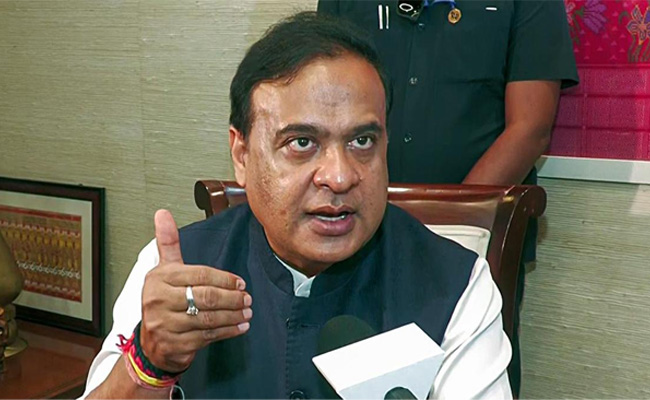
Guwahati (PTI): Assam Chief Minister Himanta Biswa Sarma on Wednesday resigned along with his cabinet colleagues, paving the way for formation of a new government led by the BJP, officials said.
The BJP-led NDA bagged 102 seats in the 126-member assembly. The assembly elections were held in a single phase on April 9, and counting of votes took place on May 4.
"Following the formal notification of the results of #AssamElections2026 and to enable the formation of the new government, Dr @himantabiswa tendered his resignation as Chief Minister along with that of the council of Ministers to Hon'ble Governor Shri @Laxmanacharya54 today at Lok Bhawan," the Chief Minister's Office said in a post on X.
ALSO READ: 11-year-old dies by suicide after sexual assault in Bareilly; accused arrested
The Governor has accepted the resignation, and requested Sarma to continue as the caretaker CM till the new government assumes office, it said.
Later, speaking to reporters outside the Lok Bhawan, Sarma said the oath-taking ceremony is likely to take place after May 11.
“As it was a historic win, we have invited Prime Minister Narendra Modi to grace the occasion," he said.
The new Assam chief minister will be selected at a meeting of the BJP legislature party in presence of central observers, Sarma said.