Michael Gambon who played role of headmaster Dumbledore in Harry Potter, passes away
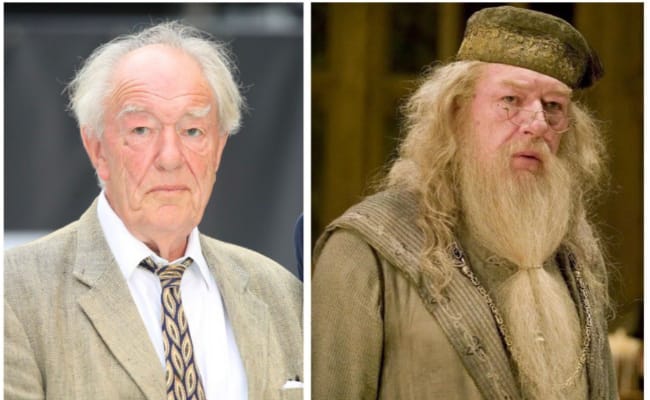
London: British-Irish actor Michael Gambon, widely recognized for his portrayal of the wise Professor Albus Dumbledore in the "Harry Potter" film series, passed away at the age of 82 on Thursday. His career, guided by his mentor Laurence Olivier, spanned across theater, television, and film, leaving a lasting legacy in the world of entertainment.
Gambon's family confirmed his peaceful passing in a hospital, as reported by PA Media.
Beginning his acting journey on the stage in the early 1960s, Gambon transitioned into television and film, establishing himself as a versatile actor. Notable film roles included a chilling portrayal of a psychotic mob leader in Peter Greenaway's "The Cook, the Thief, His Wife & Her Lover" in 1989, and his depiction of the elderly King George V in Tom Hooper's "The King's Speech" in 2010.
However, it was his iconic portrayal of Professor Dumbledore in the "Harry Potter" franchise that endeared him to audiences worldwide. Gambon took on the role from the third installment of the eight-film series after the passing of Richard Harris in 2004. Despite the acclaim, he humbly attributed his performance to playing himself "with a stuck-on beard and a long robe."
Born on October 19, 1940, in Dublin to a seamstress mother and an engineer father, Michael John Gambon relocated with his family to Camden Town, London, at the age of six, as his father sought work during the post-war reconstruction era.
Gambon's passion for acting led him to leave school at 15 to pursue an engineering apprenticeship, which he completed by the age of 21. However, his involvement in an amateur theater group reinforced his desire to act. Inspired by American actors Marlon Brando and James Dean, whom he believed embodied the struggles of teenage boys, Gambon remained committed to his calling throughout his illustrious career.
Let the Truth be known. If you read VB and like VB, please be a VB Supporter and Help us deliver the Truth to one and all.
BCI urges CJI to take action against Andhra HC judge for sending young lawyer to 24-hour custody
New Delhi (PTI): The Bar Council of India on Wednesday sought the urgent intervention of Chief Justice of India Surya Kant following a "deeply disturbing" incident where a judge of the Andhra Pradesh High Court reportedly sent a young advocate to
24-hour judicial custody over a procedural lapse.
The Bar Council of India (BCI) Chairperson and senior advocate Manan Kumar Mishra, in a formal representation, termed the conduct of Justice Tarlada Rajasekhar Rao "grossly inappropriate" and "damaging to the confidence of the Bar".
“I most respectfully request your Lordship to kindly take immediate institutional cognizance of the matter and call for the video recording of the proceedings, the order passed, and the surrounding circumstances.
“I further request that appropriate administrative action may kindly be considered, including withdrawal of judicial work from the learned Judge pending review, his immediate transfer to some far off High Court, and his nomination for appropriate judicial training/orientation on court management, judicial temperament, Bar-Bench relations, and proportional exercise of contempt/judicial authority,” Mishra wrote.
This representation is made to preserve the “dignity, moral authority and public confidence of the judiciary”, he said, adding, “Judges command the highest respect not by fear, but by fairness, patience, restraint and constitutional humility”.
The communication urged the CJI to intervene at the earliest to ensure that the faith of Bar, particularly young advocates, in the protective and corrective role of the judiciary is restored.
The controversy stems from proceedings on May 5.
According to the BCI, a video circulating online shows Justice Rao rebuking a young advocate who was unable to produce a specific order copy during a hearing.
The letter said that despite the advocate "repeatedly seeking pardon and mercy" and claiming he was in physical pain, the judge remained "unmoved".
The judge allegedly told the lawyer, "now you will learn," and mocked his experience before directing the Registrar and police personnel to take him into custody for 24 hours.
The BCI chairperson said that the judge’s actions lacked proportionality and fairness.
"The dignity of the court is not enhanced when a lawyer is made to beg for grace in open court and is still sent to custody for a procedural lapse," the letter said.
"A young lawyer... is an officer of the Court, still learning, still growing, and entitled to correction without humiliation," it added.
The bar body said that such actions create a "chilling effect" on the legal fraternity, particularly among junior members, and undermine the mutual respect required between the Bench and the Bar.