Missile from Yemen halts flights in Israel hours before top officials vote on plans for Gaza war
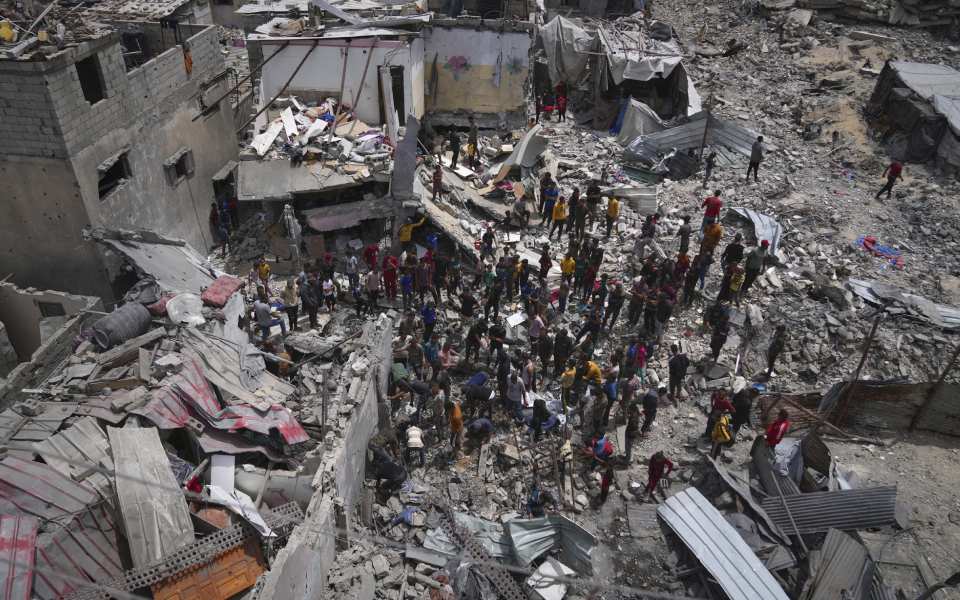
Ben-Gurion International Airport (Israel), May 4 (AP): A missile launched by Iranian-backed rebels in Yemen on Sunday briefly halted flights and commuter traffic at Israel's main international airport after an impact left a plume of smoke and caused panic among passengers.
The Houthi rebels have been striking Israel throughout the war in Gaza in solidarity with Palestinians. The attack on Ben-Gurion International Airport came hours before top Israeli Cabinet ministers were set to vote on whether to intensify the country's military operations in the Gaza Strip. The army meanwhile began calling up thousands of reserves in anticipation of a wider operation in Gaza, officials said.
The missile launch Sunday set off air raid sirens in multiple parts of Israel. A plume of smoke was visible at the airport, according to footage shared by Israeli media. Passengers were heard yelling and scrambling for cover.
It was not immediately clear whether the projectile, which landed in a field near an access road leading to airport parking lots, was the missile or its fragments, or an interceptor from Israel's air defence systems. It left a deep crater in the ground and a nearby road was littered with dirt.
Israel vows to respond to the airport attack
Police said that air, road and rail traffic were halted following the attack. The traffic resumed after about an hour, Israel Airports Authority said. Israel's paramedic service Magen David Adom said four people were lightly wounded.
Houthi military spokesman Brig. Gen. Yahya Saree said in a video statement that the group fired a hypersonic ballistic missile at the airport.
Houthi rebels have been firing at Israel since the war with Gaza erupted on Oct. 7, 2023, and the missiles have mostly been intercepted, although some have penetrated Israel's missile defence systems, causing damage.
Israel has struck back against the rebels in Yemen and the U.S., Israel's top ally, also launched a campaign of strikes in March against them.
Israeli Defence Minister Israel Katz vowed retribution for the airport attack: “Whoever harms us, we will harm them sevenfold.”
Israeli ministers will vote on expanding the war in Gaza
An Israeli official said the influential security Cabinet would meet on Sunday evening to vote on plans to expand the fighting. A military official said the country was calling up thousands of reserves. Both officials spoke on condition of anonymity in line with regulations.
Far-right Israeli National Security Minister Itamar Ben-Gvir, in an interview with Israeli Army Radio, said he wanted to see a “powerful” expansion of the war, but did not disclose details as to what the new plans would entail.
“We need to increase the intensity and continue until we achieve total victory. We must win a total victory,” he said. He demanded that Israel bomb “the food and electricity supplies” in Gaza.
The plans to escalate fighting in Gaza more than 18 months after the war there erupted come as a humanitarian crisis in the territory deepens.
As part of its efforts to pressure the fighter group Hamas to negotiate on Israel's terms for a new ceasefire, Israel in early March halted the entry of goods into Gaza. That has plunged the territory of 2.3 million people into what is believed to be the worst humanitarian crisis since the war began.
An eight-week-long ceasefire between Israel and Hamas that brought a lull in fighting and freed Israeli hostages collapsed in March. Israel resumed its strikes on Gaza on March 18 and has captured swaths of the coastal enclave. Hundreds of Palestinians have been killed since the fighting resumed, according to local health officials.
Fighting in Gaza drags on
At least seven Palestinians including two parents and their two children, ages 2 and 4, were killed in Israeli airstrikes in southern and central Gaza Strip, Palestinian medics said. Asked about the strikes, the Israeli military had no direct comment.
The Israeli military said Sunday that two soldiers were killed in combat in Gaza, bringing the number of soldiers killed since fighting resumed in March to six.
The war in Gaza began when Hamas-led group attacked southern Israel, killing 1,200 people and taking 250 hostages. Israel says 59 remain in Gaza, although roughly 35 are said to be dead.
Israel's offensive has killed more than 52,000 people in Gaza, many of them women and children according to Palestinian health officials, who do not distinguish between combatants and civilians in their count.
The fighting has displaced more than 90% of Gaza's population, often multiple times. Hunger has been widespread and the shortage of food has set off looting.
Let the Truth be known. If you read VB and like VB, please be a VB Supporter and Help us deliver the Truth to one and all.
Sengottaiyan secures historic 10th victory in Gobichettipalayam assembly constituency
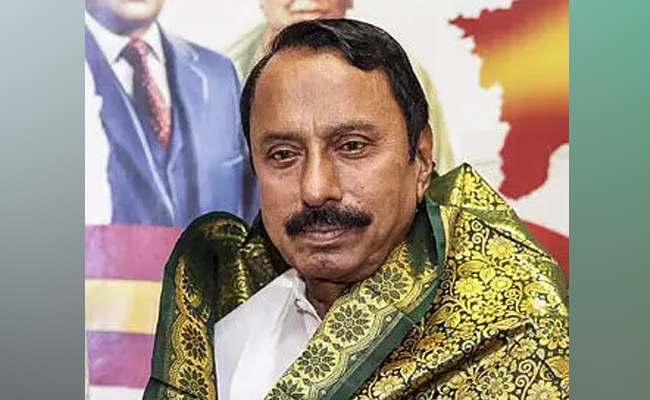
Gobichettipalayam (Tamil Nadu) (PTI): In a historic 10th win, veteran leader K A Sengottaiyan clinched the Gobichettipalayam seat in the 2026 Assembly elections.
Contesting for the first time under actor Vijay’s TVK, the 78-year-old secured approximately 71,380 votes, defeating DMK’s N Nallasivam by a margin of nearly 13,000 votes.
This win marks Sengottaiyan’s 10th consecutive victory in the constituency, cementing his status as an immovable force in the region despite his high-profile exit from the AIADMK in late 2025.
His success was a cornerstone for the TVK, which emerged as a formidable force across the state. Supporters celebrated the win as a testament to Sengottaiyan’s personal influence, which successfully transitioned from his former Dravidian home to the newly formed TVK.