Modi and Xi are ‘responsible’ leaders, can solve Sino-India issues: Russian President Vladimir Putin
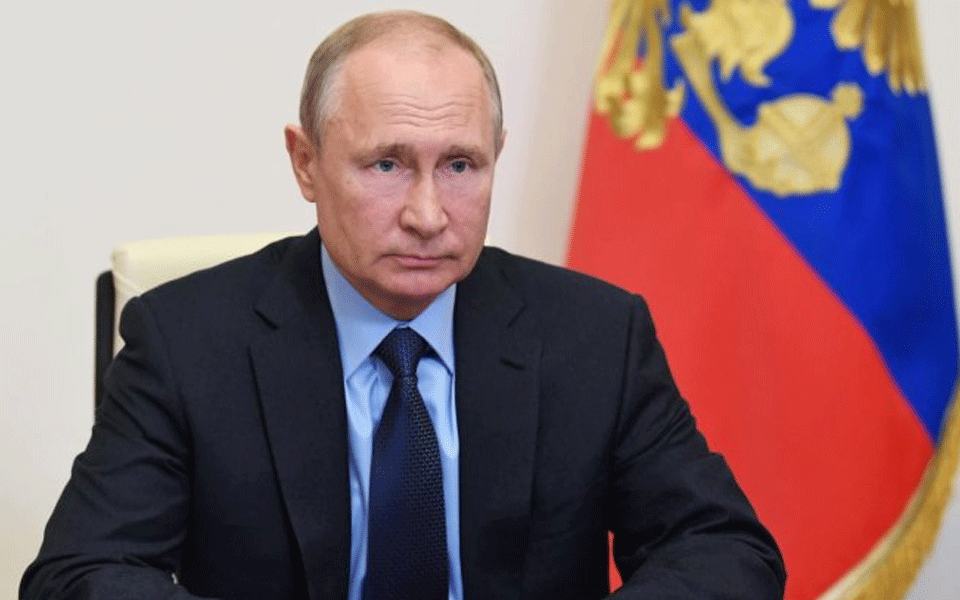
St. Petersburg (Russia): Asserting that both Prime Minister Narendra Modi and Chinese President Xi Jinping are "responsible" leaders, Russian President Vladimir Putin on Saturday said they both are capable of solving issues between the two countries, and that it was important that no "extra-regional power" should interfere in the process.
With Russia publicly critical of the Quad, the four-nation grouping of India, the US, Japan and Australia, Putin also told PTI that though it was not up to Moscow to assess how any nation should participate in an initiative and to what extent they should build their relations with other countries but no partnership should be aimed at making friends against anyone.
The Russian president's remarks, in response to a question on Moscow's view on Quad as well as India's participation in the grouping, were a veiled reference to the Chinese claim that the grouping is to contain Beijing's influence in the strategic Indo-Pacific region.
He also asserted that there were no "contradictions" in Russia's partnership with India and the ties between Moscow and Beijing.
"Yes, I do know that there are some issues related to India China relations but there are always a lot of issues between neighbouring countries but I know the attitude of both the Prime Minister of India and also the President of China. These are very responsible people and they earnestly treat one another with utmost respect and I believe that they will always arrive at a solution to any issue that they might face.
"But it is important that no other extra-regional power is interfering with that," the Russian President told PTI through a translator during a virtual interaction.
It has been more than a year since the military standoff between China and India erupted in eastern Ladakh on May 5, 2020 during which there were fatalities on both sides for the first time in 45 years. They have made limited progress in achieving disengagement at the Pangong Lake area while negotiations for similar steps at other friction points remained deadlocked.
Asked about the growing proximity between Russia and China and if that will impact the Indo-Russia security and defence cooperation, Putin said the relations between India and Russia were developing quite rapidly, quite successfully based on "trust".
"We highly appreciate such a high level of cooperation with our Indian friends. These relations are of a strategic nature. They cover a whole range of avenues of our cooperation in economy, energy and hi-tech. In defence, and I am not just talking about purchase of Russian arms...We have very deep profound relations with India based on trust," he said.
Putin also asserted that India is Russia's only partner that they are working together with on "elaborating and manufacturing, especially in India, advanced weapon systems and technologies but that is not where our cooperation ends because our cooperation is multifaceted."
During the interaction with select top editors of major international news agencies, including from the US, India, the UK, Germany and France, Putin replied to wide ranging issues, including Russia-US ties, the pandemic situation, the US sanctions against Russia and the Gaza issue.
Asked about Russian foreign minister Sergey Lavrov's criticism of Quad as 'Asian NATO' and his view on India's participation in the grouping, Putin said, "we are not participating in the quad, it is not my place to give my assessment to any other country participating in any initiative because every sovereign nation has the right to decide with whom and to what extent they are building their relations. I only believe that any partnership between countries should be aimed at making friends against anyone, No."
Ahead of his maiden summit with US President Joe Biden in Geneva on June 16, the Russian president also said that he was not expecting any "breakthrough".
"We are not taking steps first I'm talking about the steps that deteriorated our relations. It was not us who introduced sanctions against us, it was the United States who did that on every occasion and even without grounds, just because our country exists," he said.
Let the Truth be known. If you read VB and like VB, please be a VB Supporter and Help us deliver the Truth to one and all.
Allahabad HC orders probe into 'reinstatement' of teacher in UP's Barabanki
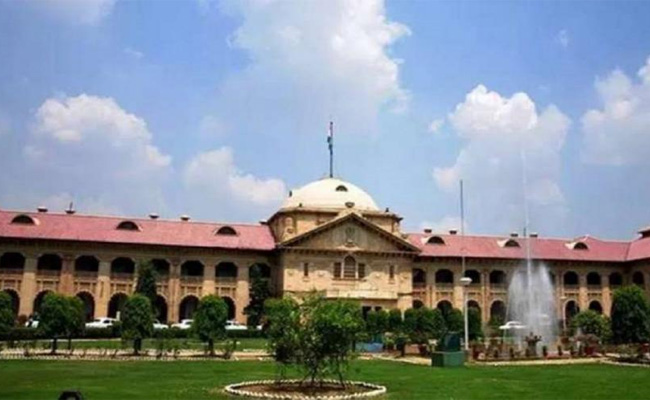
Lucknow (PTI): The Lucknow Bench of the Allahabad High Court on Friday ordered a probe by the special task force (STF) into alleged irregularities in the rejoining of a teacher at City Intermediate College in Barabanki, observing that the reinstatement appeared to be prima facie illegal.
The court also directed the recovery of the salary paid to the teacher during the disputed period.
A bench of Justice Rajeev Singh passed the order on a petition filed by the college management committee. The court expressed doubts over the roles of the District Inspector of Schools (DIOS), Barabanki, the college principal and the teacher concerned and hence, directed a detailed inquiry into the matter.
Taking note of alleged manipulation of records and misleading submissions, the court ordered the immediate transfer of the Barabanki DIOS to ensure a fair probe. It also directed the initiation of disciplinary proceedings against the then joint director of education of the Ayodhya division.
In its order, the court found that the teacher, Abhay Kumar, was initially appointed as an assistant teacher in 2018 but joined an Eklavya Model Residential School in Chhattisgarh as a lecturer in June 2024 without obtaining permission from the management. His subsequent request to retain the lien was rejected.
Despite this, he was allowed to rejoin the Barabanki College in September 2025 on the directions of the joint director of education and the DIOS, and was even paid the salary for October 2025. The court termed the rejoining "wholly illegal" and lacking any legal basis.
The bench also expressed concern over lapses in communication within the education department and directed the Uttar Pradesh chief secretary to ensure that official orders are communicated through email and WhatsApp as well, to prevent disputes.
The matter is next listed for hearing on May 28 when a compliance report is sought.