Moon mission a step forward to reach Mars: NASA chief
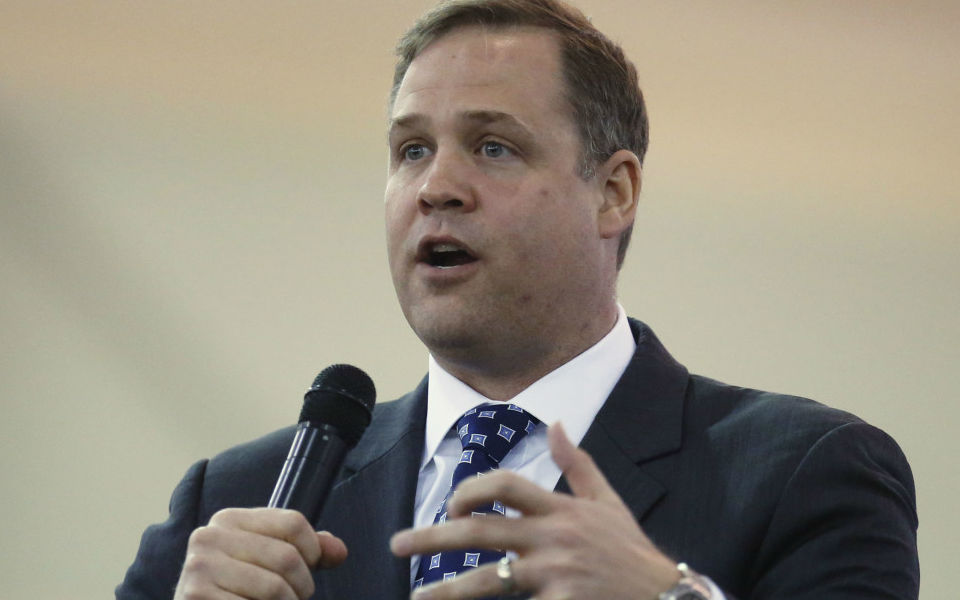
Washington, May 10: NASA's new head, Jim Bridenstine, has defended the new agency directive to return astronauts to the Moon, saying that the mission will not derail the US goal of becoming the first country to put humans on Mars.
"Our return to the surface of the Moon will allow us to prove and advance technologies that will...(enable) us to land the first Americans on the Red Planet," the NASA Administrator said on Wednesday during his keynote address at the "Humans to Mars" summit in Washington, DC.
US President Donald Trump in December 2017 signed a change in national space policy that provides for a US-led integrated programme with private sector partners for a human return to the Moon, followed by missions to Mars and beyond.
The policy calls for the NASA administrator to "lead an innovative and sustainable programme of exploration with commercial and international partners to enable human expansion across the solar system and to bring back to Earth new knowledge and opportunities".
In his first major address as NASA administrator, Bridenstine, however, did not disclose any new initiatives by NASA to send humans to the Red Planet, Space.com reported.
Mars and the moon will be complementary initiatives, said Bridenstine, who was sworn in as administrator three weeks ago after NASA went 15 months without a permanent leader.
"If some of you are concerned that the coming focus is the moon, don't be," Bridenstine said.
"We're doing both the Moon and Mars in tandem, and the missions are supportive of each other," he added.
Let the Truth be known. If you read VB and like VB, please be a VB Supporter and Help us deliver the Truth to one and all.
Confident we are going to win Kerala: Shashi Tharoor
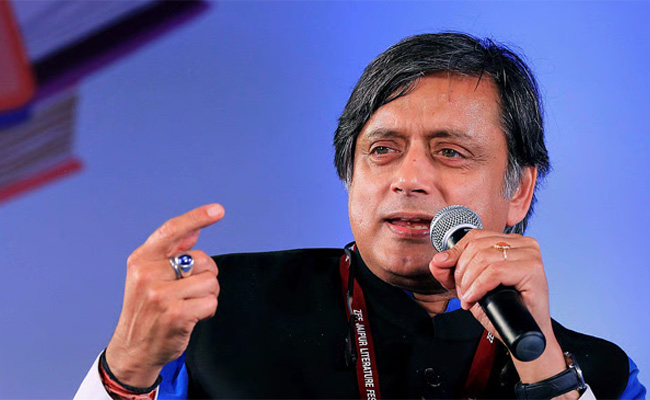
New Delhi (PTI): Congress leader Shashi Tharoor on Thursday expressed confidence in the victory of the United Democratic Front (UDF) in Kerala, saying the Congress-led alliance will win more than 75 seats out of the total 140 in the state.
Tharoor, who hails from Kerala, said he was not surprised to see the results of the exit polls, most of which predicted a victory for the UDF that has been out of power for 10 years in the state.
"We have been on the ground. I have campaigned in 59 constituencies across 12 districts out of 14. I was very confident we are going to win.
"Everything that I have picked up from not just my party colleagues and workers but also from other observers, media and others have always convinced me that we were going to score a comfortable win of above 75 seats. And all the (exit) polls have confirmed the same thing," he told reporters here.
The Thiruvananthapuram MP said he was not surprised to see the results of the exit polls but in general he was not a big fan of exit polls in India.
"Because ours is not purely a homogenous society. We have to take into account gender issue, caste issue, class issue, regional disparities. You never get a convincingly large enough sample to give an accurate poll and now there is the additional complication that we have heard about in West Bengal this year that many people are unwilling to answer the questions of the pollsters," he said.
The Congress leader said normally, it used to be below 10 per cent that people said that they would not answer.
"Even if you are a reputable exit pollster, in Bengal, one polling company has said 60 per cent of people refused to answer. So, what is the worth of a poll where 60 per cent of your respondents have not answered," he said.
Several exit polls on Wednesday predicted a comeback by the Congress-led UDF in Kerala after 10 years, dethroning the CPI(M)-led Left Democratic Front (LDF).
Polling for the 140-member Kerala assembly was held on April 9. Results of assembly elections in West Bengal, Tamil Nadu, Assam, Puducherry, besides Kerala, will be announced on May 4.