More body parts found from crashed Indonesian jet
Jakarta, Oct 30 : Indonesian search teams Tuesday recovered more remains at the site of a crashed Lion Air jet that plunged into the sea with 189 people aboard, as a report said it had suffered an instrument malfunction the day before.
The Boeing-737 MAX, which went into service just months ago, crashed into the Java Sea moments after it had asked to return to Jakarta on Monday.
Flight JT 610 sped up as it suddenly lost altitude and then vanished from radar 13 minutes after take-off, with authorities saying witnesses saw the jet plunge into the water. Dozens of divers are taking part in the recovery effort.
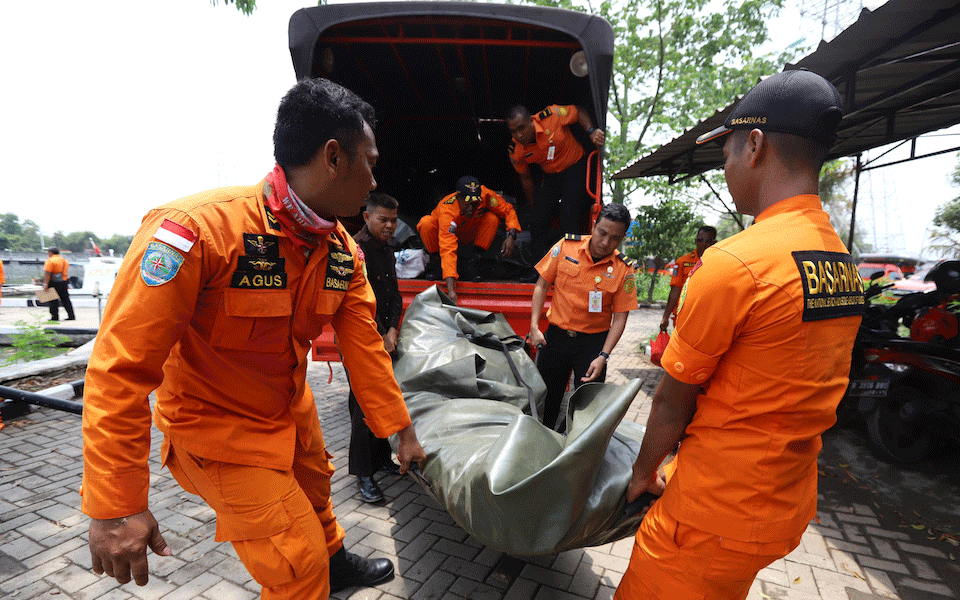
Search teams have filled ten body bags with limbs and other human remains, Muhammad Syaugi, head of the Indonesian national search and rescue agency told Metro TV, saying they will be taken to Jakarta for identification and DNA testing.
The remains of a baby were among those found, according to national deputy police chief Ari Dono Sukmanto. Another 14 bags filled with debris have also been collected. Shoes, items of clothing and a wallet are among the items found.
"We hope we can see the plane's main body -- everything on the surface of the water has been collected," Syaugi said.
Indonesia's National Transportation Safety Committee (NTSC) said there were 178 adult passengers, one child, two infants, two pilots and six cabin crew on board flight JT 610.
Among them were the plane's Indian captain, 20 Indonesian finance ministry employees and Andrea Manfredi, an Italian former professional cyclist.
The search and rescue agency all but ruled out finding any survivors late Monday, citing the discovery of body parts that suggested a high-impact crash in water some 30-40 metres deep off the coast of Indonesia's Java island.
"We are prioritising finding the main wreckage of the plane using five war ships equipped with sonar to detect metal underwater," said Yusuf Latif, spokesman of the Indonesian search and rescue agency.
Both the cockpit voice recorder and the flight data recorder -- which could be key pieces of evidence -- are still missing.
The plane had been en route to Pangkal Pinang city, a jumping off point for beach-and-sun seeking tourists on nearby Belitung island, when it dropped out of contact around 6:30 am (2330 GMT).
Lion Air said the plane had only gone into service in August.
The pilot and co-pilot had more than 11,000 hours of flying time between them and had undergone recent medical checkups and drug testing, it added.
On Monday, Lion Air chief Edward Sirait acknowledged the plane had an unspecified technical issue fixed in Bali before it was flown back to Jakarta, calling it "normal procedure".
A technical logbook detailed an "unreliable" airspeed reading instrument on the Bali-Jakarta flight on Sunday and different altitude readings on the captain and first officer's instruments, according to the BBC.
Copies of several Lion Air technical documents have been circulating on social media, but they could not be immediately confirmed as authentic.
The company did not return phones calls seeking comment.
Boeing suspended release of the 737 MAX just days before its first commercial delivery last year due to an engine issue, according to airline safety and product review site airlineratings.com.
It said the engines were a product of a joint venture between US-based General Electric and France's Safran Aircraft Engines.
Lion Air, Indonesia's biggest budget airline which has been engaged in huge expansion, announced earlier this year it was buying 50 Boeing 737 MAX 10 jets for 6.24 billion.
Indonesia's air travel industry is booming, with the number of domestic passengers growing significantly over the past decade, but it has acquired a reputation for poor regulation and its airlines had previously been banned from US and European airspace.
Lion has been involved in a number of incidents including a fatal 2004 crash and a collision between two Lion Air planes at Jakarta's Soekarno-Hatta airport.
Let the Truth be known. If you read VB and like VB, please be a VB Supporter and Help us deliver the Truth to one and all.
Mumbai-Pune Expressway connecting link now fully operational
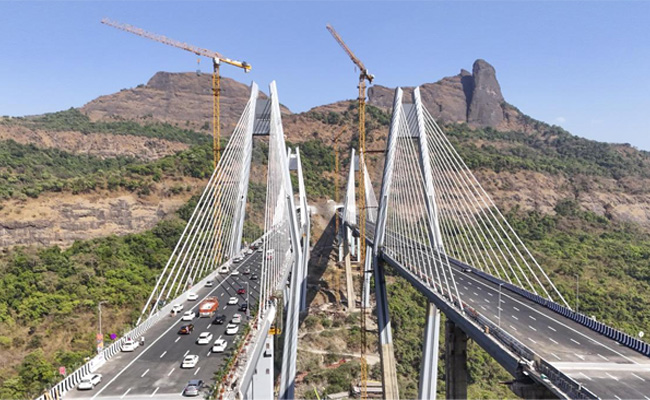
Mumbai (PTI): The Mumbai-bound carriageway of the Mumbai-Pune Expressway connecting link was opened to vehicular traffic on Saturday noon after a delay caused by the dismantling of inauguration infrastructure and cleaning work, a day after the Pune section became operational.
The 13.3 km-long "missing link", which bypasses a section of the Bhor Ghat stretch of the expressway and cuts travel time between Mumbai and Pune by 25 to 30 minutes, was inaugurated a day earlier by Chief Minister Devendra Fadnavis in the presence of Deputy CMs Eknath Shinde and Sunetra Pawar.
The Pune-bound carriageway of the corridor was opened to traffic immediately; however, the Mumbai-bound section remained closed to traffic for several hours after the inauguration.
An official of the Maharashtra State Road Development Corporation told PTI on Saturday that the opening of the Mumbai-bound carriageway was delayed mainly due to the dismantling of the inauguration infrastructure and cleaning work.
The removal of the stage and other decorations was completed in the morning. The work to load and transport the material slightly delayed the opening of the carriageway.
Vehicular movement on the carriageway began after all the remaining material was cleared and road cleaning was completed, the official added.
The expressway control room said that despite significant vehicular movement, the access-controlled highway has not witnessed any major traffic snarls since Friday evening, after the Pune-bound carriageway of the missing link was opened to traffic.
The Missing Link project connects Khopoli (in Raigad) on the Mumbai side to Kusgaon near Lonavala in Pune district and is expected to make the expressway fully access-controlled, easing congestion in the ghat section.
Developed by the MSRDC and dubbed an "engineering marvel", the project includes two tunnels, two viaducts and a cable-stayed bridge over Tiger Valley. It bypasses the steep, accident-prone ghat section, where frequent traffic snarls are reported during weekends and on public holidays.