Moscow’s response to European attack will be devastating: Russian foreign minister
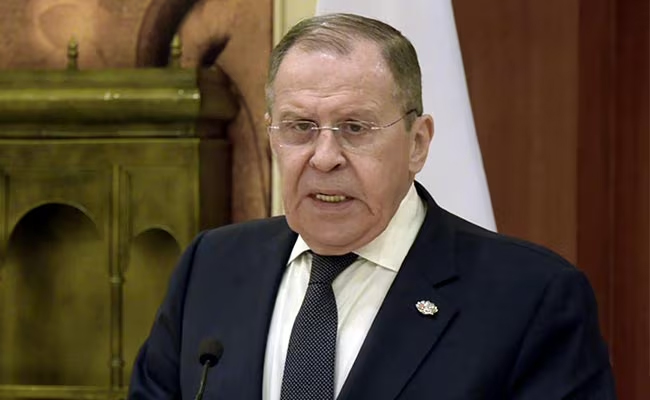
Moscow (PTI): Russia does not intend to attack anyone in Europe, but its response to any strike will be devastating, Foreign Minister Sergei Lavrov said on Sunday, noting the EU’s “war party” has become a stumbling block in Ukraine peace efforts.
Lavrov’s warning came on a day Ukrainian President Volodymyr Zelenskyy is scheduled to meet with US President Donald Trump at the latter's Mar-a-Lago estate in Florida.
“My message for European politicians who seem to have problems getting to grips with this fact is to repeat one more time that there is no need to be afraid of Russia attacking anyone,” Lavrov said in an interview with state-run news agency TASS.
ALSO READ: Bengal: JUP chief Humayun Kabir's son detained for assaulting policeman
“However, should anyone consider attacking Russia, they would face a devastating blow,” Lavrov added.
As Zelenskyy is set to meet Trump with his peace plan backed by key European powers, who according to media reports, insist on deployment of European troops as part of security guarantees for Kiev, Lavrov said they will be a ‘legitimate target’ for Russia.
“Whether leaders like (EU chief) Ursula von der Leyen, (German Chancellor) Friedrich Merz, (UK prime minister) Keir Starmer and (French President) Emmanuel Macron and the like have reached a point of no return is hard to say.
“We do see that so far, the European war party has been investing its political capital in inflicting a strategic defeat on Russia, and is ready to go the whole nine yards,” the Russian minister said.
“I would like to place a special emphasis on the fact that these actions on their behalf were totally illegitimate. After all, Russia has never taken the initiative to target its European neighbours with unfriendly actions,” Lavrov stated.
He said Russia appreciates efforts by President Trump and his team to achieve a peace settlement. Moscow is committed to continuing to work with the American negotiators to devise lasting agreements for addressing the conflict’s root causes, he added.
After Trump came to power, Europe and the European Union emerged as the main stumbling block to peace, he said. “They are making no secret of the fact that they are getting ready to fight it out with Russia on the battlefield.”
In another report, TASS quoted Lavrov as saying that Moscow will fully back Beijing on Taiwan in the event of a flared up conflict as the West sees it as a tool of military-strategic deterrence against China.
“As for the possible escalation in the Taiwan Strait, the procedure for acting in such situations is set forth in the Treaty of Good-Neighbourliness and Friendly Cooperation with the People’s Republic of China of July 16, 2001.
“One of the basic principles of that document is mutual support in defending national unity and territorial integrity,” Lavrov pointed out.
“Taiwan is currently used as a tool of military-strategic deterrence against the PRC. This is also a matter of pursuing vested interests: some in the West are keen to profit from Taiwanese money and technologies,” Lavrov underscored.
Let the Truth be known. If you read VB and like VB, please be a VB Supporter and Help us deliver the Truth to one and all.
India should create strategic buffers to navigate 'most difficult' energy shock: CEA Nageswaran
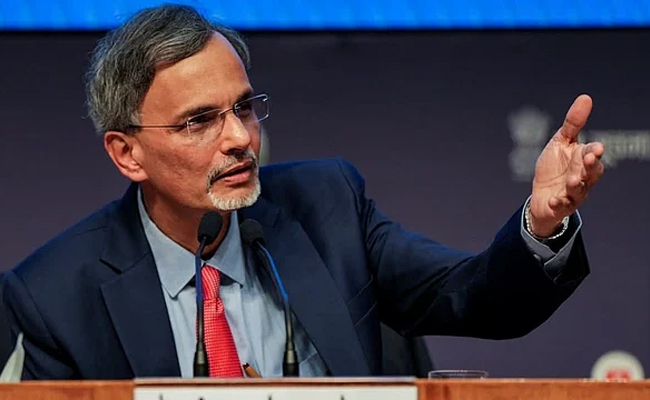
New Delhi (PTI): Chief Economic Advisor V Anantha Nageswaran on Saturday said India needs to create strategic buffers in the face of the "most difficult" energy shock that the country is facing amid the West Asia crisis.
Nageswaran also said the rising prices of fertiliser and petroleum products globally due to the crisis will make it challenging to achieve the 4.3 per cent fiscal deficit target for the current fiscal, while below normal monsoon and pass-through of higher energy prices could lead to "potential inflation spike".
He also said India has employment challenge emanating from AI, and there is a need to ensure that IT sector becomes more competitive and not lose jobs to AI, and instead create jobs that use AI within the IT sector or in other services.
Speaking at the ICPP Growth Conference organised by the Ashoka University, Nageswaran said the current account deficit (CAD) in the current fiscal could rise to over 2 per cent of GDP, from less than 1 per cent in FY'26.
"The ... priority for us is to create strategic buffers. This energy shock is the most difficult one compared to any other previous energy shock in terms of energy lost as a percentage of total global energy supply, not just oil, including gas.
"And we also need to use this occasion to think about other areas where we are vulnerable in terms of import dependence, nickel, tin, and copper. We need to build strategic buffers if we have to make a shot at manufacturing and becoming indispensable," Nageswaran said.
Since the beginning of the war in West Asia on February 28, crude oil prices soared to a four-year high of USD 126 per barrel on Thursday, from about USD 73 level before the war.
Stating that geopolitics will compel policymakers to be nimble and flexible and shed old model of thinking, Nageswaran said India is better prepared than many other countries to deal with the crisis because of the fiscal leeway that the country has due to lowering of fiscal deficit ratio to 4.4 per cent of GDP in FY'26.
Nageswaran said the West Asia conflict is more of a price shock than supply shock for India as the government is managing the supply side deftly.
"This particular conflict, which is going to be on a low simmer or a high flame situation, whatever it is, it is going to be there with us in some form or the other because the military conflict may be over, but the strategic conflict is well and truly alive. It will be so for some time," Nageswaran said.
He said the conflict has four channels of shock: price and supply shock, trade impact, sticky logistics costs and remittance shock.
India imports 60 per cent of its LPG usage and of that, 90 per cent flows through the now closed Strait of Hormuz.
Nageswaran said the pass-through of high global energy prices would have to be a "balancing act". He said some pass-through is already happening in commercial LPG, and the levy of export duty on diesel and ATF.
The government has cut excise duty on petrol and diesel to shield customers from the impact of the rise in petroleum prices. "We are coming around to arriving at a certain modus vivendi with respect to burden-sharing between the fiscal policy side, inflation, households and the oil marketing companies. So it has to be a balancing act," Nageswaran said.