Mumbai teen wins global recognition for environment-related project
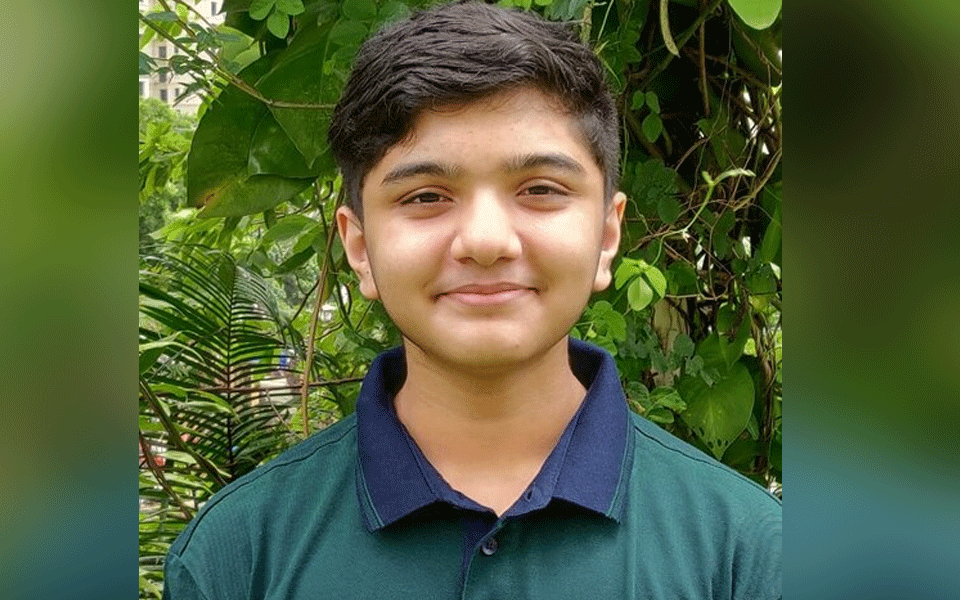
Washington, (PTI): A 12-year-old environmental activist from Mumbai has been named as a 2021 International Young Eco-Hero in recognition of his efforts to solve tough environmental problems.
Ayaan Shankta won the third place in the 8-14 age category for his project Conservation and Rehabilitation of Powai Lake, according to a media release issued on Wednesday.
He is one of the 25 young environmental activists from across the globe honoured by the Action For Nature (AFN) as a 2021 International Young Eco-Hero, an award that recognizes eco-conscious youth aged 8 to 16 who are taking crucial steps to solve tough environmental problems.
"My mission is for the lake to regain its past glory as a clean and vibrant body of water," said Ayaan who lives near a lake that used to be a source of drinking water for Mumbai, but has become a dumping ground for garbage and sewage.
His project aims to raise awareness about pollution, clean up the lake, and protect its ecosystem. In addition to working with NGOs to raise awareness and organize clean-ups, Ayaan authored an action report on lake conditions and is currently working on a documentary about Powai Lake.
"Not only will this help in bringing about ecological balance in the thickly populated city of Mumbai, but it will also help to conserve endangered species," he said.
Kids like Ayaan have shown that the next generation of leaders is here, and they are refusing to wait to solve the world's most pressing environmental challenges, said Beryl Kay, president of Action For Nature, an international non-profit organization that encourages young people to nurture a love and respect for the Earth and to take personal action to improve the environment.
"The projects that these young people created will not only have real, positive impacts on their communities, they will also help solve global climate challenges and inspire others no matter what age to consider what they can do to help," he said.
Let the Truth be known. If you read VB and like VB, please be a VB Supporter and Help us deliver the Truth to one and all.
Karnataka by-polls: Cong ahead in Bagalkot, BJP leads in Davanagere South
_vb_21.jpeg)
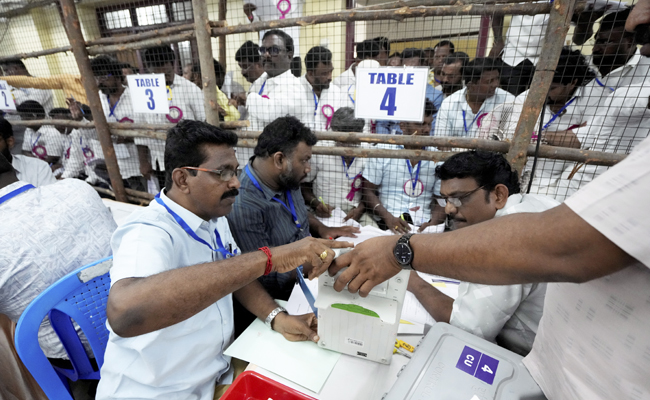
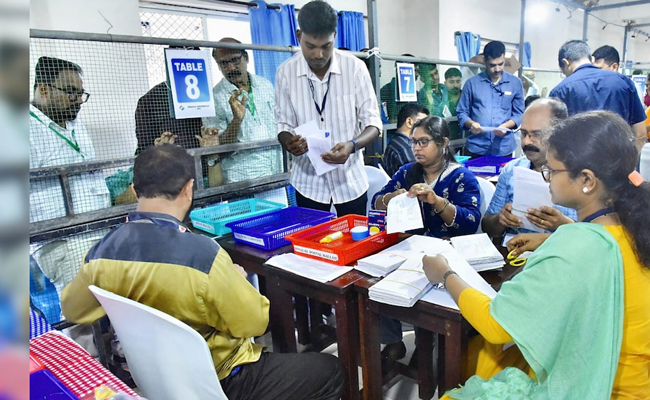
Bengaluru (PTI): Trends show Congress and BJP have maintained leads respectively in Karnataka's Bagalkot and Davanagere South Assembly seats, where counting of votes is underway on Monday, for the bypolls held for two seats on April 9.
The polls were necessitated by the deaths of senior Congress MLAs H Y Meti (Bagalkot) and Shamanur Shivashankarappa (Davanagere South).
According to the Election Commission, Congress party's Umesh Meti was ahead of BJP's Veerabhadrayya Charantimath by a margin of 9,969 votes in Bagalkot.
In Davanagere South, BJP's Srinivas T Dasakariyappa was leading over Congress party's Samarth Mallikarjun by a margin of 8,539 votes.
Nine and 25 candidates were in the fray, respectively in the Bagalkot and Davanagere South Assembly segments.