Muslim students, leaders guard temples in Bangladesh amid protests
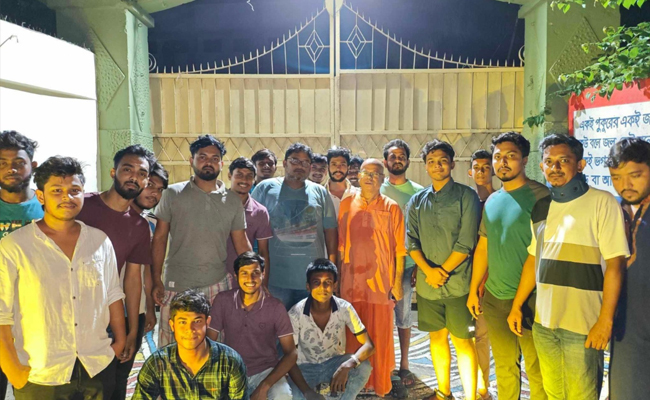
Dhaka: In a remarkable display of solidarity, protesting Muslim students are guarding the Dhakeshwari Temple in Dhaka. These students are monitoring the temple premises to ensure its safety and security.
Students are guarding the Dhakeshwari Temple in Dhaka.
— BUETian (@buetian62) August 5, 2024
Video: Dhakeshwari Mandir, 1.00 am (midnight), August 6, 2024#ProtectMinorities #ProtectAllFaiths #SafeBangladesh #NationalUnity #CommunalHarmony #HindusAreSafeInBangladesh pic.twitter.com/XhoCEYDbBz
Similarly, the Kali Temple in Sunamganj is under the protective watch of the district president and secretary of the local Shibir group, who are leading efforts to safeguard the site.
The Kali temple in Sunamganj is being guarded under the leadership of the district president and secretary of the @info_shibir.#ProtectMinorities #ProtectAllFaiths #SafeBangladesh #NationalUnity #CommunalHarmony #HindusAreSafeInBangladesh pic.twitter.com/5eJf1vZeXp
— Basherkella - বাঁশেরকেল্লা (@basherkella) August 5, 2024
Numerous images circulating on social media show Muslim students, including madrasa students, standing guard at temples across Bangladesh. The hashtag #HindusAreSafeInBangladesh has gained traction in response to reports from Indian media alleging attacks on Hindu communities.
All religion are together here and we're trying our best#IndianPropagandaAgainstBDSovereignty #SecularBangladesh #ProtectMinority#NoExtremism #NoReligiousExtremism#FightRumors #BangladeshWithHindus#CommunalHarmony, #MuslimsProtectingHindus #NewBangladesh #SafeBangladesh pic.twitter.com/F0W9IRTIvH
— Derotha⁷ needs sleep🍉 (@jeonkoomicasa) August 5, 2024
We all are United ,
— BringingJusticetoYou (@JusticeBengal) August 5, 2024
We all are one.
Our country is home to a diverse and harmonious blend of Muslims, Hindus, Buddhists, and Christians. Let's stay united and support people of all faiths in our community.
Temples are a significant part of our nation's… pic.twitter.com/UE0HnRJPVo
An Indian news outlet named Republic also misrepresented videos of Muslim students protecting Hindu temples, falsely suggesting that they were ordinary students guarding against protesting Muslims. This has sparked widespread anger among Bangladeshis, who accuse Indian mainstream media of biased reporting and attempting to spread fear.
There were also claims circulating on social media that protestors had set fire to the house of Bangladeshi cricketer Liton Das due to his Hindu faith. These posts suggested that the incident was an example of targeted violence against the Hindu community in Bangladesh. Despite the false claims circulating on social media, an investigation has revealed that the images showing a house being set on fire do not depict the home of Bangladeshi cricketer Liton Das. Instead, they show the residence of Mashrafe Mortaza, former cricketer and Member of Parliament representing Sheikh Hasina's Awami League, being vandalized and set ablaze.
Let the Truth be known. If you read VB and like VB, please be a VB Supporter and Help us deliver the Truth to one and all.
Bhojshala case: Disputed structure built from remains of pre-existing temples, claims ASI
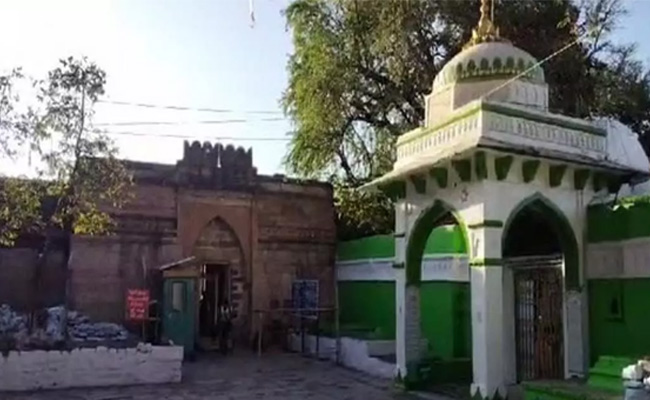
Indore (PTI): The ASI has told the Madhya Pradesh High Court that a massive structure dating back to the Paramara kings' rule existed at the disputed Bhojshala temple-Kamal Maula mosque complex, and the current structure was built from the remains of temples.
The Archaeological Survey of India (ASI) made the claim on Tuesday based on its 98-day scientific survey and over 2,000-page report.
The Hindu community considers Bhojshala a temple dedicated to Vagdevi (Goddess Saraswati), while the Muslim side claims the monument as the Kamal Maula Mosque. The disputed complex is protected by the ASI.
During the hearing before Justices Vijay Kumar Shukla and Alok Awasthi of the HC's Indore bench, Additional Solicitor General Sunil Kumar Jain, representing the ASI, presented a detailed account of the scientific survey conducted two years ago at the complex.
Referring to the ASI's survey report, he said, "Retrieved architectural remains, sculptural fragments, large slabs of inscriptions with literary texts, Nagakarnika inscriptions on pillars, etc, suggest that a large structure associated with literary and educational activities existed at the site. Based on scientific investigations and archaeological remains recovered during the investigations, this pre-existing structure can be dated to the Paramara period."
It can be said that the existing structure was made from the parts of earlier temples, based on scientific investigations, survey and archaeological excavations conducted, study and analysis of retrieved finds, study of architectural remains, sculptures, and inscriptions, art and sculptures, Jain said quoting the report.
Summarising the report, he also drew the court's attention to the fact that the archaeological study identifies that many architectural components, such as pillars and beams, were originally part of temple structures before being repurposed for a mosque.
"The evidence of this transition includes Sanskrit and Prakrit inscriptions that were damaged or hidden, alongside sculptures of deities and animals that were often mutilated or defaced," Jain contended.
The report also states that "all Sanskrit and Prakrit inscriptions are older than the Arabic and Persian inscriptions, indicating that users or engravers of the Sanskrit and Prakrit inscriptions occupied the place earlier".
In light of the Muslim side's earlier objections, the bench wanted to know why there were some discrepancies in the ASI's responses regarding the status of the disputed complex in the cases filed over the years.
The Additional Solicitor General argued that earlier studies of the complex involved only officials, while the current survey involved scientists and the use of advanced technologies such as Ground Penetrating Radar (GPR).
The hearing in the Bhojshala case will continue on Wednesday.
The high court has been regularly hearing four petitions and one writ appeal regarding the religious nature of the Bhojshala temple-Kamal Maula mosque complex since April 6.