Myanmar court sentences Aung San Suu Kyi to four years in prison
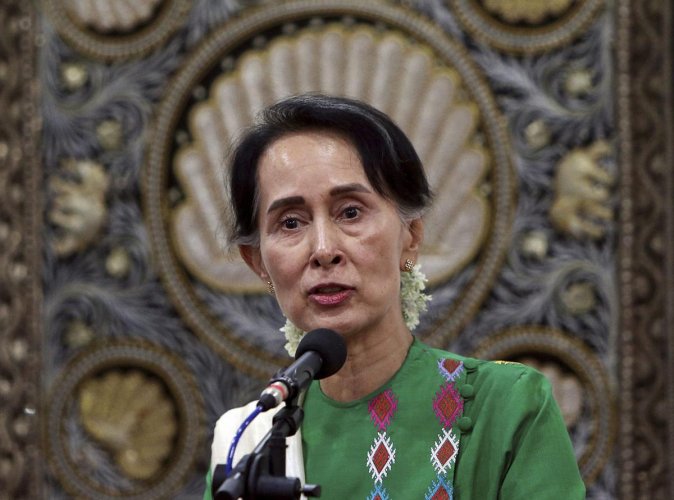
Bangkok, Dec 6: A special court in Myanmar's capital sentenced the country's ousted leader, Aung San Suu Kyi, to four years in prison on Monday after finding her guilty of incitement and violating coronavirus restrictions, a legal official said.
The sentencing was the first in a series of cases in which the 76-year-old Nobel laureate is being prosecuted since the army seized power on Feb 1, preventing her National League for Democracy party from starting a second five-year term in office.
The incitement case involved statements posted on her party's Facebook page after she and other party leaders had already been detained by the military, while the coronavirus charge involved a campaign appearance ahead of elections in November last year which her party overwhelmingly won.
The army, whose allied party lost many seats in the election, claimed massive voting fraud, but independent election observers did not detect any major irregularities.
The court's ruling was conveyed by a legal official who insisted on anonymity for fear of being punished by the authorities. Suu Kyi's trials are closed to the media and spectators, and her lawyers, who had been the sole source of information on the proceedings, were served with gag orders in October forbidding them from releasing information.
The cases against Suu Kyi are widely seen as contrived to discredit her and keep her from running in the next election. The constitution bars anyone sent to prison after being convicted of a crime from holding high office or becoming a lawmaker.
Opposition to military rule remains strong 10 months after the army's takeover, and the verdict may inflame tensions even further.
There were protest marches on Sunday against the military government and calling for the release of Suu Kyi and other detained members of her government. An army truck deliberately sped into a march by about 30 young people in Yangon, the country's biggest city, and at least three of the protesters may have been killed, according to unconfirmed reports.
The verdicts in Suu Kyi's first two cases, on incitement for allegedly spreading false or inflammatory information that could disturb public order and violating the Natural Disaster Management Law for allegedly breaching coronavirus restrictions, were supposed to be delivered last Tuesday.
However, the court postponed its ruling with no explanation. At the same time, it agreed to allow testimony this week on a separate coronavirus charge from an additional defense witness who had previously been unable to attend court because of ill health.
Suu Kyi's lawyers sought vigorously to have the incitement charge dismissed. The prosecution's evidence consisted of statements posted on a Facebook page of Suu Kyi's party.
Defence lawyers argued that Suu Kyi and a co-defendant, former President Win Myint, could not be held responsible for the statements which criticised the takeover and suggested in broad terms that it be resisted because they were already in detention.
The former mayor of Naypyitaw, Myo Aung, was another defendant in the charge, which carries a maximum penalty of two years in prison and a fine. Win Myint was sentenced to a total of four years and Myo Aung to two years.
February's seizure of power was met by nationwide nonviolent demonstrations, which security forces quashed with deadly force. They have killed about 1,300 civilians, according to a detailed tally compiled by the Assistance Association for Political Prisoners.
With severe restrictions on nonviolent protest, armed resistance has grown in the cities and countryside, to the point that UN experts have warned the country is sliding into civil war.
The military took Suu Kyi into custody on the day of its takeover, and she has not been seen in public since then, though she has appeared in court in several of her trials.
Judgment on Suu Kyi's second count of violating coronavirus restrictions is scheduled for Dec 14. The maximum penalty for each count is three years' imprisonment and a fine.
Other cases against Suu Kyi now being tried cover the alleged unregistered import and use of walkie-talkies by her security guards; violation of the Official Secrets Act, in which jailed Australian economist Sean Turnell is a co-defendant; and four separate corruption charges covering the alleged acceptance of a bribe and abuse of office to obtain favourable terms on property transactions.
Each of the corruption charges has a maximum penalty of 15 years' imprisonment and a fine.
A trial on a fifth corruption charge has not yet started, and state media last week announced a sixth charge has also been filed against Suu Kyi.
The latest charge accuses her and Win Myint of corruption in granting permits to rent and buy a helicopter.
In mid-November, the military-appointed election commission announced it intended to prosecute Suu Kyi and 15 other senior political figures for alleged fraud in the last election, which could result in her party being dissolved.
The military has declared it seized power because of widespread election fraud, a claim that independent election observers say lacks evidence.
Let the Truth be known. If you read VB and like VB, please be a VB Supporter and Help us deliver the Truth to one and all.
Sengottaiyan secures historic 10th victory in Gobichettipalayam assembly constituency
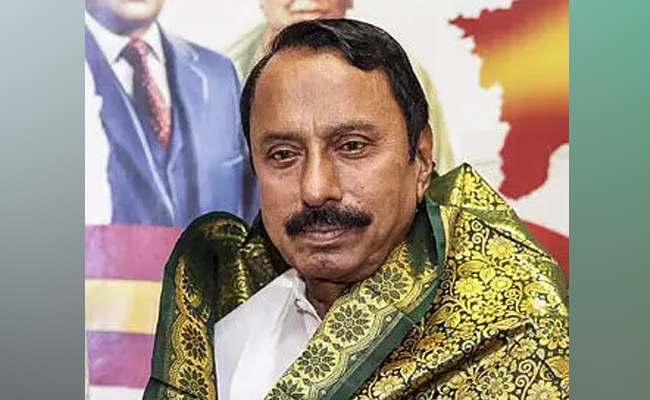
Gobichettipalayam (Tamil Nadu) (PTI): In a historic 10th win, veteran leader K A Sengottaiyan clinched the Gobichettipalayam seat in the 2026 Assembly elections.
Contesting for the first time under actor Vijay’s TVK, the 78-year-old secured approximately 71,380 votes, defeating DMK’s N Nallasivam by a margin of nearly 13,000 votes.
This win marks Sengottaiyan’s 10th consecutive victory in the constituency, cementing his status as an immovable force in the region despite his high-profile exit from the AIADMK in late 2025.
His success was a cornerstone for the TVK, which emerged as a formidable force across the state. Supporters celebrated the win as a testament to Sengottaiyan’s personal influence, which successfully transitioned from his former Dravidian home to the newly formed TVK.