Myanmar executes NLD lawmaker, 3 other political opponents
Bangkok(AP): Myanmar's government announced Monday it had carried out its first executions in nearly 50 years, hanging a former National League for Democracy lawmaker, a democracy activist and two men accused of violence after the country's takeover by the military last year.
The executions, detailed in the state-run Mirror Daily newspaper, were carried out despite worldwide pleas for clemency for the four political prisoners, including from United Nations experts and Cambodia, which holds the rotating chairmanship of the Association of Southeast Asian Nations.
The four were executed in accordance with legal procedures for directing and organizing "violent and inhuman accomplice acts of terrorist killings, the newspaper reported. It did not say when the executions were carried out.
The military government issued a brief statement confirming the report while the prison where the men had been held and the prison department refused comment.
Aung Myo Min, human rights minister for the National Unity Government, a shadow civilian administration established outside Myanmar after the military seized power in February 2021, rejected the allegations the men were involved in violence.
Punishing them with death is a way to rule the public through fear, he told The Associated Press.
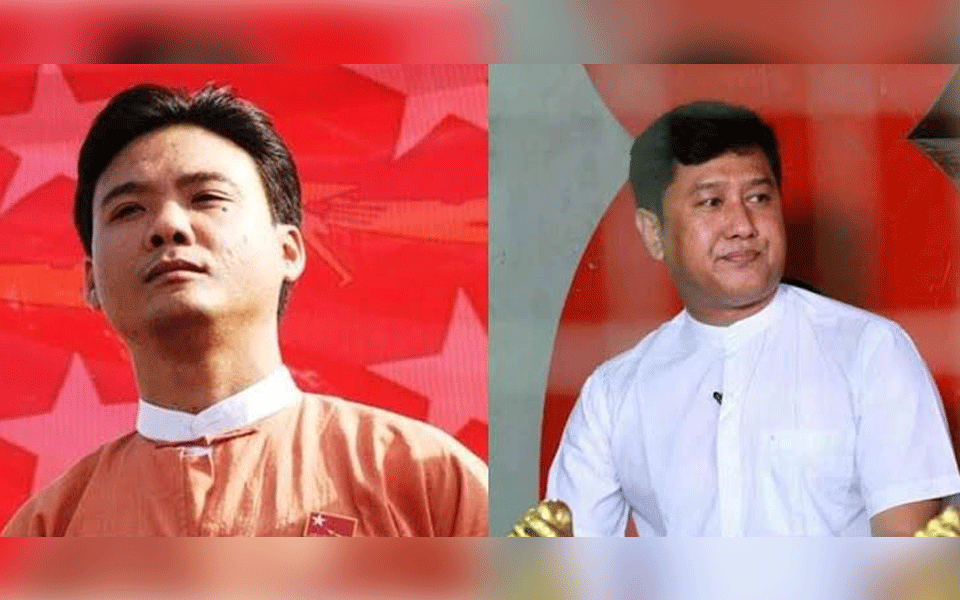
Among those executed was Phyo Zeya Thaw, a former lawmaker from ousted leader Aung San Suu Kyi's party, also known as Maung Kyaw, who was convicted in January by a closed military court of offenses involving explosives, bombings and financing terrorism.
His wife, Thazin Nyunt Aung, told the AP she had not been informed his execution had been carried out. I am still trying to confirm it myself, she said.
The 41-year-old had been arrested last November based on information from people detained for shooting security personnel, state media said at the time. He was also accused of being a key figure in a network that carried out what the military described as terrorist attacks in Yangon, the country's biggest city.
Phyo Zeya Thaw had been a hip-hop musician before becoming a member of the Generation Wave political movement formed in 2007. He was jailed in 2008 under a previous military government after being accused of illegal association and possession of foreign currency.
Also executed was Kyaw Min Yu, a 53-year-old democracy activist better known as Ko Jimmy, for violating the counterterrorism law. Kyaw Min Yu was one of the leaders of the 88 Generation Students Group, veterans of a failed 1988 popular uprising against military rule.
He already had spent more than a dozen years behind bars for political activism before his arrest in Yangon last October. He had been put on a wanted list for social media postings that allegedly incited unrest and state media said he was accused of terrorist acts including mine attacks and of heading a group called Moon Light Operation to carry out urban guerrilla attacks.
The other two men, Hla Myo Aung and Aung Thura Zaw, were convicted of torturing and killing a woman in March 2021 whom they allegedly believed was a military informer.
Elaine Pearson, acting Asia director of Human Rights Watch, said the legal proceedings against the four had been grossly unjust and politically motivated military trials.
The junta's barbarity and callous disregard for human life aims to chill the anti-coup protest movement," she said following the announcement of the executions.
Thomas Andrews, an independent U.N.-appointed expert on human rights who had condemned the decision to go ahead with the executions when they were announced in June, called for a strong international response.
I am outraged and devastated at the news of the junta's execution of Myanmar patriots and champions of human rights and decency," he said in a statement. These individuals were tried, convicted and sentenced by a military tribunal without the right of appeal and reportedly without legal counsel, in violation of international human rights law.
Myanmar's Foreign Ministry had rejected the wave of criticism that followed its announcement in June, declaring that Myanmar's judicial system is fair and that Phyo Zeya Thaw and Kyaw Min Yu were proven to be masterminds of orchestrating full-scale terrorist attacks against innocent civilians to instill fear and disrupt peace and stability.
They killed at least 50 people, military spokesperson Maj. Gen. Zaw Min Tun said on live television last month. He said the decision to hang all four prisoners conformed with the rule of law and the purpose was to prevent similar incidents in the future.
The military's seizure of power from Suu Kyi's elected government triggered peaceful protests that soon escalated to armed resistance and then to widespread fighting that some U.N. experts characterize as a civil war.
Some resistance groups have engaged in assassinations, drive-by shootings and bombings in urban areas. Mainstream opposition organizations generally disavow such activities, while supporting armed resistance in rural areas that are more often subject to brutal military attacks.
According to Myanmar law, executions must be approved by the head of the government. The last judicial execution to be carried out in Myanmar is generally believed to have been of another political offender, student leader Salai Tin Maung Oo, in 1976 under a previous military government led by dictator Ne Win.
In 2014, the sentences of prisoners on death row were commuted to life imprisonment, but several dozen convicts received death sentences between then and last year's takeover.
The Assistance Association for Political Prisoners, a non-governmental organization that tracks killing and arrests, said Friday that 2,114 civilians have been killed by security forces since the military takeover. It said 115 other people had been sentenced to death. (AP)
Let the Truth be known. If you read VB and like VB, please be a VB Supporter and Help us deliver the Truth to one and all.
Shah named BJP's central observer for election of legislative party leader in West Bengal
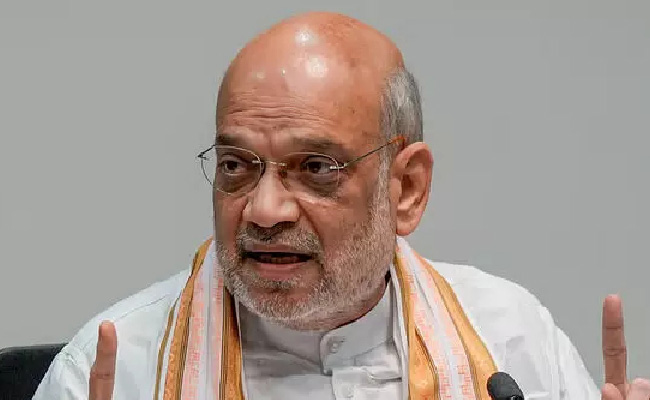
New Delhi (PTI): The BJP on Tuesday named Union Home Minister Amit Shah as the party's central observer for election of its legislative party leader in West Bengal.
The party also appointed Union minister JP Nadda as its central observer for election of the legislative party leader in Assam.
Haryana Chief Minister Nayab Singh Saini was made co-observer for election of BJP's legislative party leader in Assam, according to a notification issued by the party.
Odisha Chief Minister Mohan Charan Majhi was appointed as co-observer for election of the BJP's legislative party leader in West Bengal, according to the notification.
The BJP ousted Trinamool Congress from power in Bengal and captured power for the third time in a row in Assam in results of assembly polls declared on Monday.