Neighbourhood specialist, spy craft master Parag Jain appointed new RAW chief
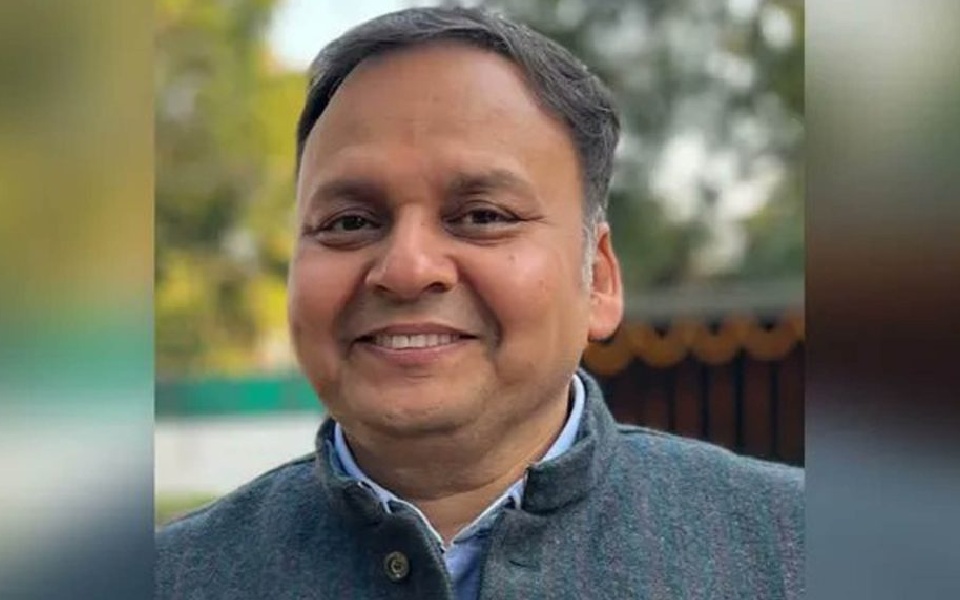
New Delhi, Jun 29 (PTI): Parag Jain, one of the brains behind the meticulous planning of 'Operation Sindoor', has been appointed as the new Chief of the Research and Analysis Wing (R&AW), according to an official order issued here on Saturday.
The two-year tenure of Jain, an Indian Police Service (IPS) officer from the 1989 batch of the Punjab cadre, officially begins on July 1. He takes over from Ravi Sinha, who retires on June 30.
"The Appointments Committee of the Cabinet has approved the appointment of Shri Parag Jain, IPS to the post of Secretary, Research & Analysis Wing (R&AW) under Cabinet Secretariat for a tenure of two years from the date of assumption of the charge of the post until further orders, whichever is earlier..." the order read.
The decision to appoint Jain as chief of the external intelligence agency was made by the Appointments Committee of the Cabinet earlier this week, officials said.
Before this, Jain was the head of the Aviation Research Centre, an organisation that deals with aerial surveillance, SIGINT operations, photo reconnaissance flights (PHOTINT), monitoring of borders and imagery intelligence (IMINT).
Jain is known for his exceptional expertise in integrating both human intelligence (HUMINT) and technical intelligence (TECHINT) and is widely credited as the mastermind behind the planning of 'Operation Sindoor', providing intelligence support that enabled the armed forces to execute precise strikes on terror infrastructure in Pakistan and Pakistan-occupied Kashmir (PoK).
India hit nine terror camps across the border and Line of Control, including the headquarters of banned terror outfits Jaish-e-Mohammed and Lashkar-e-Taiba on May 7.
The missile strikes were guided by pinpointed intelligence gathered by a team led by Jain, officials said.
With extensive ground experience in Kashmir, Jain is well-positioned to counter Pakistan's ongoing efforts to rebuild terror infrastructure in PoK.
Jain also brings extensive experience in addressing neighbourhood challenges and issues related to Khalistan terror groups. He played a crucial role in Jammu and Kashmir during the 2019 reorganisation of the erstwhile state of Jammu and Kashmir.
Throughout his career, Jain has held several significant positions. He was promoted to the rank of Director General of Police (DGP) in Punjab on January 1, 2021, though he was on central deputation at the time.
His career includes significant operational contributions during the height of terrorism in Punjab, where he served as SSP and Deputy Inspector General of Police in various districts.
Jain has also served in Indian Missions in Sri Lanka and Canada. During his tenure in Canada, he monitored Khalistan terror modules operating from the soil of that country.
Let the Truth be known. If you read VB and like VB, please be a VB Supporter and Help us deliver the Truth to one and all.
Two injuries, one DNF, a DQ as India end messy World Relays campaign
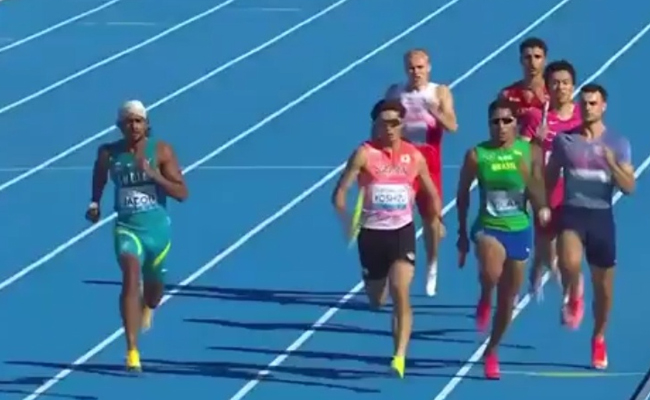
Gaborone (Botswana) (PTI): Amoj Jacob and Ragul Kumar got injured during the men's 4x400m and 4x100 races respectively as India ended their World Athletics Relays campaign in disappointment on the second day of competitions here on Sunday.
The Indian camp had high hopes of making the 2027 World Championships in the men's 4x400m relay but the team did not finish (DNF) the race as Jacob suffered cramps and pulled out of the race after taking the baton from the first leg runner Dharamveer Choudhary. Rajesh Ramesh and Vishal TK were to run in the third and fourth legs.
Those teams which could not qualify for the 2027 Beijing World Championships by reaching the final round of each of the six relay events on Saturday were given another chance in the second qualification round on Sunday.
The top two teams in each of the two heats (in all six relay events) booked the Beijing ticket on Sunday.
India will now have to try and qualify for the World Championships through the Top Lists of the World Athletics, which is a long and tedious process.
In the men's 4x100m race, third leg runner Ragul Kumar fell down the track after failing to hand over the baton inside the exchange zone to fourth leg runner Gurindervir Singh, which clearly showed the lack of coordination among the runners.
Harsh Santosh Raut and Animesh Kujur ran the first two legs.
The Indian quartet was disqualified and Kumar was seen being taken away from the Field of Play with the help of the volunteers.
It was a comedy of errors in the case of the women's 4x100m race, which saw the baton being dropped during an exchange between first leg runner Tamanna and second runner Nithya Gandhe, though the Indians finished the race in 53.09 seconds.
Gandhe started running quite a distance, but after realising that the baton was not in her hand, she turned and ran back to pick it up.
The only silver-lining for the Indian contingent was the national record time in the mixed 4x100m relay race, though the quartet of Ragul Kumar, Nithya Gandhe, Animesh Kujur and Sneha SS finished sixth in heat number two with a time of 41.35 seconds, bettering the previous national mark of 42.30 seconds set in March in Chandigarh.
The mixed 4x400m relay quartet of Theerthesh P Shetty, Kumari Saloni, Nihal William and Rashdeep Kaur ended at fifth in heat number one with a time of 3 minutes and 19.40 seconds.
On Saturday, all the five Indian relay teams had failed to make it to the respective final rounds and thus missed out on the 2027 World Championships berths.