Nepal election: Balendra Shah's RSP wins 18 seats, leads in 99
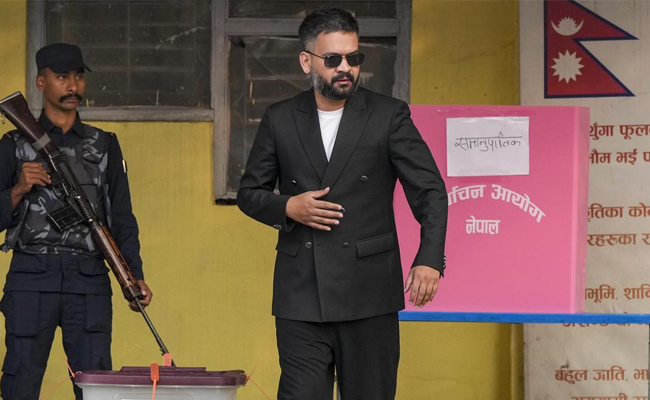
Kathmandu (PTI): Rapper-turned-politician Balendra Shah's newly formed Rastriya Swatantra Party (RSP) was on Saturday heading towards a sweeping victory in Nepal's first general elections since the violent Gen Z protests, shattering the dominance of established political parties in the politically fragile nation.
According to the latest Election Commission data, the RSP has won 18 seats and is ahead in 99 others.
The election is being closely watched by India, which hopes for a stable government in the politically fragile Himalayan nation to take forward the developmental partnership between the two sides.
ALSO READ: Trump appears to rule out talks with Iran absent its 'unconditional surrender'
"We look forward to working with the new Government of Nepal to further build on the robust multifaceted ties between our two countries and peoples for mutual benefit," Ministry of External Affairs Spokesperson Randhir Jaiswal had said in Delhi on Thursday.
He said India has "consistently supported peace, progress and stability in Nepal and in keeping with our commitment, provided logistical supplies as per request from the Government of Nepal for these elections".
The Nepali Congress has won four seats and is leading in 11 others, while the CPN-UML has won a seat and is leading in 11 constituencies. The Nepali Communist Party has bagged two seats and is leading in 10 constituencies. The Shram Sanskriti Party is now leading in only three seats, as opposed to six earlier.
Out of a total of 275 members of the Parliament, 165 will be elected through direct voting, while the remaining 110 will be elected through a proportionate method.
In the Nepal elections, about 18.9 million voters were eligible to elect 275 members of the House of Representatives, with around 60 per cent of them turning out to vote on Thursday.
Around 3,400 candidates are vying for 165 seats under direct voting, and 3,135 candidates for 110 seats through proportionate voting.
The Gen Z youth, through their two-day intensified protests on September 8 and 9 last year, ousted Prime Minister Oli, who was heading a coalition government with the backing of Nepali Congress that enjoyed nearly two-thirds majority support.
After Oli's ouster, President Ramchandra Paudel dissolved the House of Representatives on September 12 and appointed Sushila Karki as the caretaker PM.
The major issues raised by Gen Z are anti-corruption, good governance, an end to nepotism, generational change in political leadership, etc.
Let the Truth be known. If you read VB and like VB, please be a VB Supporter and Help us deliver the Truth to one and all.
ED raids in case against former Punjab Police DIG Bhullar, linked entities
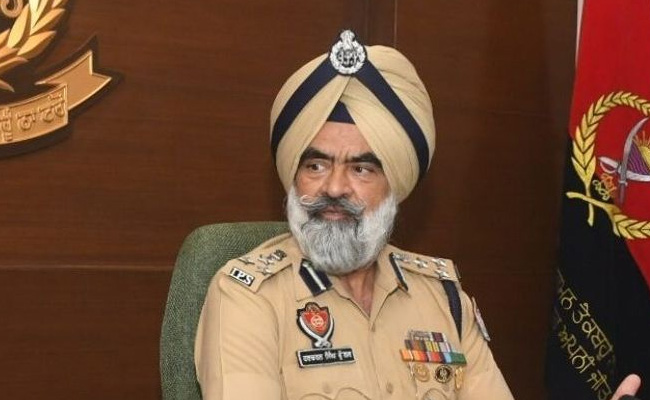
Chandigarh (PTI): The Enforcement Directorate on Monday conducted searches at multiple locations in Punjab as part of a money laundering probe against former state police DIG Harcharan Singh Bhullar and entities linked to him, officials said.
They said about 11 premises in Chandigarh, Ludhiana, Patiala, Nabha and Jalandhar linked to the accused, his associates and suspected benamidars (the owner in whose name a benami property is held) are being covered under the Prevention of Money Laundering Act (PMLA).
The Enforcement Directorate (ED) probe stems from a Central Bureau of Investigation (CBI) case registered against Bhullar on allegations that he sought illegal gratification through a middleman for settlement of a criminal case, along with detection of assets disproportionate to known sources of income.
The searches aim to trace further proceeds of the alleged crime, identify benami assets and gather evidence related to money laundering, ED officials said.
Bhullar, who was serving as the deputy inspector general (DIG) of police (Ropar Range), was arrested by the CBI in October 2025 after a scrap dealer alleged that bribe was demanded from him through an intermediary to settle a case.