Nepal Parliament's lower house unanimously passes bill to redraw political map
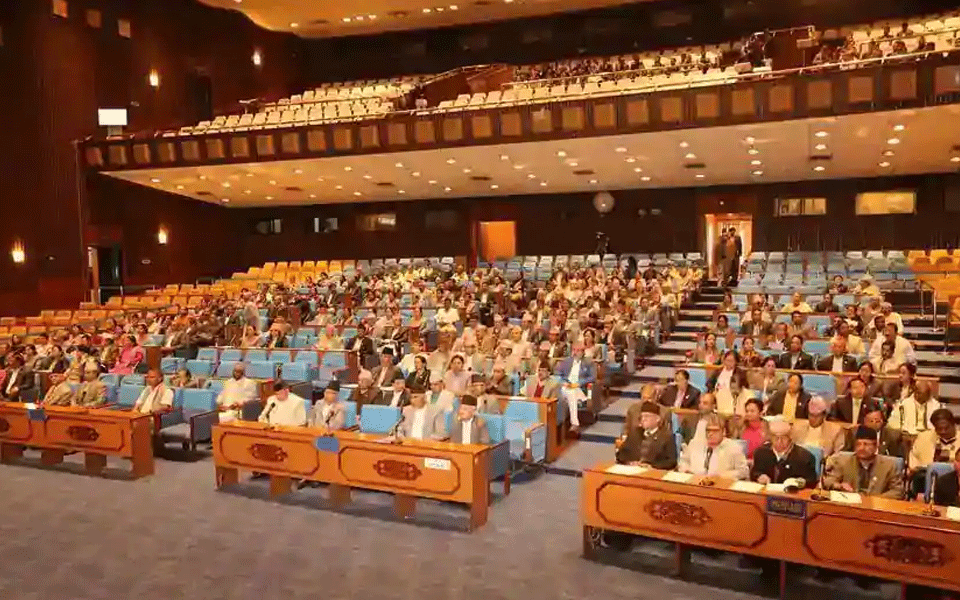
Kathmandu: Nepal's Parliament on Saturday unanimously voted to amend the Constitution to update the country's new political map, laying claim over the strategically key areas of Lipulekh, Kalapani and Limpiyadhura along the border with India.
Major Opposition parties including Nepali Congress (NC), Rastriya Janata Party-Nepal (RJP-N) and Rastriya Prajatantra Party (RPP) voted in favour of the government bill to amend Schedule 3 of the Constitution to update the national emblem by incorporating the new controversial map.
A two-thirds majority was required in the 275-member House of Representatives or the lower house to pass the bill.
On June 9, the Parliament unanimously endorsed a proposal to consider the Constitution amendment bill to pave way for endorsing the new political map amid the border row with India.
Now, the bill will be sent to the National Assembly where it will undergo a similar process. The ruling Nepal Communist Party commands two-thirds majority in the National Assembly.
The NA will have to give lawmakers 72 hours to move amendments against the bill's provisions, if any.
After the National Assembly passes the bill, it will be submitted to the President for authentication, after which the bill will be incorporated in the Constitution.
The government on Wednesday formed a nine-member team of experts to collect historical facts and evidence related to the area.
Diplomats and experts, however, questioned the government's move, asking why the task force was formed when the map has already been released and approved by the Cabinet.
The ties between India and Nepal came under strain after Defence Minister Rajnath Singh inaugurated a 80-km-long strategically crucial road connecting the Lipulekh pass with Dharchula in Uttarakhand on May 8.
Nepal reacted sharply to the inauguration of the road claiming that it passed through Nepalese territory. India rejected the claim asserting that the road lies completely within its territory.
Nepal last month released the revised political and administrative map of the country laying claim over the strategically key areas. India has been maintaining that these three areas belonged to it.
India sternly asked Nepal not to resort to any "artificial enlargement" of territorial claims after Kathmandu released the new map.
Let the Truth be known. If you read VB and like VB, please be a VB Supporter and Help us deliver the Truth to one and all.
UP Cong chief Ajay Rai hospitalised after fainting, stable
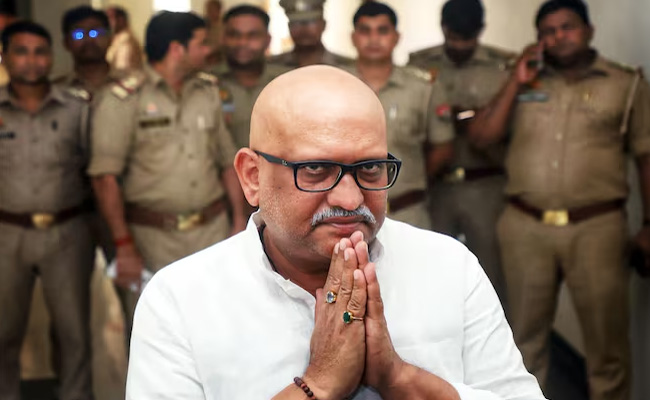
Lucknow (PTI): Uttar Pradesh Congress president Ajay Rai was hospitalised here after he fell unconscious due to low sodium levels, party leaders said on Saturday.
They said he was admitted to Medanta Hospital on Friday evening and is stable.
"Ajay Rai was admitted to Medanta Hospital in Lucknow at around 6 pm on Friday after he fell unconscious as his sodium levels had dropped. He fell unconscious at his residence in Lucknow. For the entire day, he was engaged in party programmes and had also gone to the airport," Uttar Pradesh Congress spokesperson Anshu Awasthi told PTI.
Congress in-charge of Uttar Pradesh Avinash Pande told PTI, "Now, he (Ajay Rai) is stable and I am also reaching Lucknow."
Medanta Hospital Director Dr Rakesh Kapoor told PTI that Rai collapsed at his home on Friday evening and was subsequently admitted to the hospital's emergency ward.
Medical examinations revealed that Rai was suffering from a sodium deficiency and elevated blood pressure. Doctors administered immediate treatment and he is doing significantly better now, Kapoor said.
A team of doctors is monitoring his health. Rai is conversing with others and his condition is stable, he added.
In a post on X late Friday night, Prime Minister Narendra Modi wished Rai a speedy recovery.
Rai hails from Varanasi and had contested the 2024 Lok Sabha elections against Modi from the parliamentary constituency. The Congress appointed him as the Uttar Pradesh unit chief in 2023.