Nepal records over 10% turnout till 11 am in first election since govt-toppling Gen Z protests
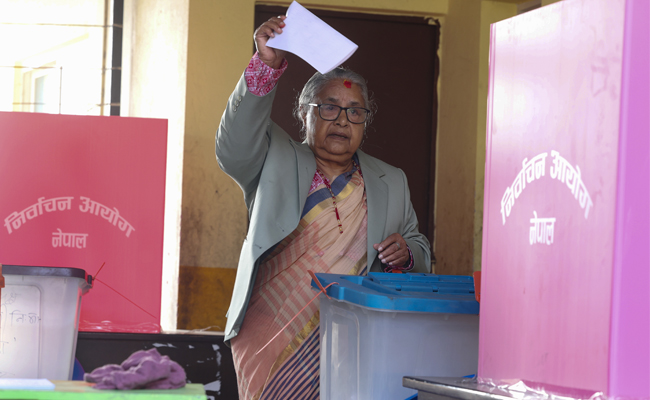
Kathmandu (PTI): Nepal which went to polls on Thursday, the first since a violent Gen Z protest that toppled the K P Sharma Oli-led government last year, recorded a turnout of about 10.18 per cent till 11 am, according to the Election Commission.
The Election Commission said that around 1.93 million people have exercised their franchise till 11 am.
Earlier, the commission had said around six per cent of eligible voters had cast their ballots by 9.30 am.
More than 18.9 million eligible Nepalese will be exercising their franchise to elect the 275-member House of Representatives from among the 3,406 candidates vying for 165 seats under direct voting, and 3,135 candidates vying for 110 seats through proportionate voting.
ALSO READ: More than 1,200 booked for drunk driving during Holi celebrations in Delhi
The voting started at 7 am and will conclude at 5 pm. The counting will start immediately after the ballot boxes are collected.
Voting is ongoing smoothly across the country with minor incidents in a very few places, Election Commissioner Sagun Shumsher Rana was quoted as saying by the Kathmandu Post.
Nepal Police confirmed that apart from minor disagreements at a few locations, no serious problems had occurred.
Police spokesperson Abi Narayan Kafle said, “Some jostling is expected during elections, but no major issues have arisen. We are ensuring that the voting process remains peaceful throughout the day.”
"Voting started in all the constituencies, including the southern plains, hilly area and the mountain region at 7 am," Election Commission spokesperson Narayan Prasad Bhattarai said.
“The election started in a peaceful environment across the country,” he added.
Addressing a press meet here on the eve of the polls, Acting Election Commissioner Ram Prasad Bhandari on Wednesday had said that all preparations for the election had been completed and urged voters to participate actively and enthusiastically in the democratic exercise.
In Kathmandu, the weather was fine, sky was clear and people were enthusiastically queuing up to cast their votes.
Interim Prime Minister Sushila Karki cast her vote from Kathmandu-5 constituency at Dhapasi on the outskirts of Kathmandu on Thursday morning.
"I have cast my vote, I am happy that people are casting their votes, participating in the general election," she said.
Nepali Congress president Gagan Thapa cast his vote from Kathmandu-4 constituency in Maitidevi in the morning.
"This election was needed to bring the Constitution back on the right track," he said.
Thapa, the prime ministerial candidate of Nepali Congress, is contesting the election from Dhanusha-4 constituency.
Rastriya Swotantra Party (RSP) president Ravi Lamichhane cast his vote from Chuchepati area on the outskirts of Kathmandu.
Prime ministerial candidate of RSP and former Kathmandu mayor Balendra Shah ‘Balen’ cast his vote from Gairegaun, Kathmandu. He is contesting the election from Jhapa-5.
The Gen Z youth, through their two-day intensified protests on September 8 and 9, ousted Prime Minister Oli, chair of the Communist Party of Nepal (Unified Marxist–Leninist) -- CPN-UML -- who was heading a coalition government with the backing of Nepali Congress that enjoyed nearly two-thirds majority support.
The CPN-UML, led by ousted PM Oli, has emerged as the hardliner force. Though former premier Pushpa Kamal Dahal 'Prachanda'-led NCP claims to have addressed the issues raised by the Gen Z, they have not handed over the party leadership to the younger generation.
Rastriya Swotantra Party (RSP), led by its chair Ravi Lamichhane and senior leader Balendra Shah, and the reformed Nepali Congress, led by Gagan Thapa, are voicing the issues raised by the Gen Z, while CPN-UML and Nepali Communist Party, led by ‘Prachanda’, are known as the traditional forces.
Ujyalo Nepal Party, led by Kulman Ghising, and Shram Shakti Party, led by former Dharan Mayor Harka Sampang, are also emerging forces but enjoy support in limited pockets only.
After Oli's ouster, President Ramchandra Paudel dissolved the House of Representatives on September 12 and appointed Sushila Karki as the caretaker PM.
The major issues raised by Gen Z are anti-corruption, good governance, an end to nepotism, generational change in political leadership, etc.
Starting Wednesday, Nepal has declared a three-day holiday for the polls.
There are a total of 10,967 polling booths and 23,112 polling centres, the Election Commission data showed. As many as 65 political parties are taking part in the election.
VIDEO | Kathmandu: Nepal's Interim Prime Minister Sushila Karki casts her vote for the General Elections being held in the country for the first time since the previous government was overthrown during the youth-led anti-corruption protests in September 2025.
— Press Trust of India (@PTI_News) March 5, 2026
(Full video… pic.twitter.com/qIJwOOBFPk
Let the Truth be known. If you read VB and like VB, please be a VB Supporter and Help us deliver the Truth to one and all.
Delhi schools suspend outdoor activities, plan early steps to shield students from heat
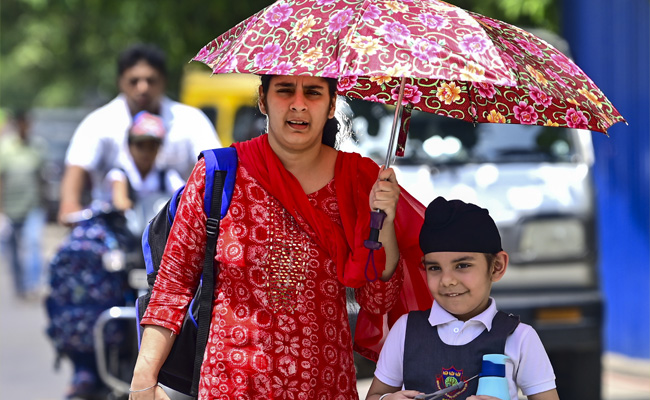
New Delhi (PTI): To shield students from heat-related ailments amid soaring temperatures and harsh afternoon sun, schools across Delhi have begun taking precautionary measures by suspending outdoor activities, shifting assemblies indoors, with some even considering early closure for junior classes.
From indoor games and hydration breaks to ORS consumption and modified dispersal timings, schools are tightening measures as the city braces for prolonged heatwave conditions.
Sudha Acharya, principal at ITL Public School in Dwarka, said all outdoor activities, including morning assembly and games, have been shifted to the school's multipurpose hall.
“We have issued an advisory to all parents to take precautionary measures before sending their children to school. We are also planning to close the school from classes 1 to 8 from May 14 onward if the weather conditions worsen," she said.
Mallika Preman, principal at Tagore International School in East of Kailash, said students have been advised to remain indoors during peak afternoon hours and keep themselves hydrated.
“We have suspended all outdoor activities, and students now play indoor games like carrom and chess. We have also modified the dispersal system so that students are not brought out until their parents arrive at their designated collection areas,” Preman said.
“This reduces their exposure to heat in the afternoon. Students have also been advised to wear caps or use umbrellas during dispersal,” she added.
Ritu Sharma, principal at Sovereign Public School in Rohini, said that teachers have been asked to closely monitor students for signs of heat exhaustion.
“Our priority is to ensure that children remain safe and comfortable during school hours. We are encouraging them to carry water bottles, avoid direct sun exposure and immediately report any discomfort. We have also arranged shaded rest areas and indoor engagement activities to reduce heat exposure,” she said.
The Directorate of Education (DoE) has launched a ‘Beat the Heat’ initiative for government, government-aided and private unaided recognised schools in Delhi in view of the heatwave conditions forecast by the India Meteorological Department (IMD).
The initiative follows the Heat Wave Action Plan issued by the Delhi Disaster Management Authority (DDMA) and aims to protect students from heat-related illnesses while promoting hydration, environmental awareness and care for animals and birds.
Under the initiative, schools have been directed to ring a 'hydration bell' daily in the penultimate period, during which every student will consume oral rehydration solution (ORS). Teachers will also briefly explain the importance of staying hydrated.
Schools have also been encouraged to create 'cool corners' with earthen water pots, promote a ‘one child-one plant’ green mission and appoint student volunteers as 'Jal Mitras' to place and refill water bowls for birds and stray animals, the advisory said.
According to the DoE, the other measures include ensuring safe drinking water stations, spreading awareness on heat stroke prevention, training teachers to identify symptoms of heat stress, and prominently displaying emergency helpline numbers across campuses.
The heads of schools have been asked to submit an action taken report on the implementation of the measures to their respective district offices by April 28, it said.