Netanyahu advances settlement expansion plan in West Bank, says “there will be no Palestinian state”
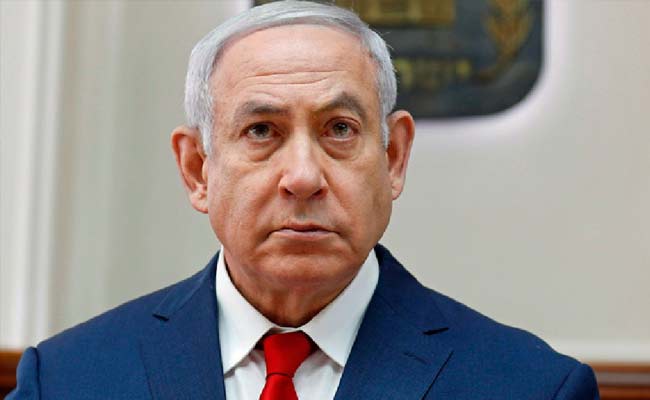
Jerusalem/Amman: Israeli Prime Minister Benjamin Netanyahu has signed an agreement to advance construction in a settlement area east of Jerusalem that critics say would block the possibility of a future Palestinian state, as reported by Al Jazeera.
The project, known as “E1,” covers about 12 square kilometres near Maale Adumim, an Israeli settlement east of Jerusalem. The plan includes 3,400 new housing units and would connect surrounding settlements while severing much of the West Bank from East Jerusalem.
Speaking at a ceremony in Maale Adumim on Thursday, Netanyahu said the government was committed to preventing the creation of a Palestinian state. “We are going to fulfil our promise that there will be no Palestinian state. This place belongs to us,” he said, pledging to double the city’s population.
Strongly opposing the expansion plan the presidential spokesperson Nabil Abu Rudeineh noted that the establishment of a Palestinian state with East Jerusalem as its capital is necessary for regional peace. He also termed the two-state solution as "inevitable." He urged countries who have not yet recognised Palestine to do so.
“All settlements are illegal under international law,” Rudeineh said, accusing Netanyahu of endangering regional stability.
The United Nations has affirmed that 149 of its member states already recognise Palestine. Israel, which has occupied the West Bank since 1967, maintains that the E1 development is part of its long-term settlement policy.
Let the Truth be known. If you read VB and like VB, please be a VB Supporter and Help us deliver the Truth to one and all.
NCW chief condemns rape-murder of 4-year-old girl in Pune, calls for swift action
New Delhi (PTI): National Commission for Women (NCW) Chairperson Vijaya Rahatkar has condemned the alleged rape and murder of a four-year-old girl in Maharashtra's Pune, calling it "deeply distressing" and a "blot on humanity".
The girl was allegedly raped and killed by a 65-year-old labourer, who has a criminal record, in Bhor tehsil of Pune on Friday. The accused allegedly lured the child to a cattle enclosure on the pretext of giving her food. After raping her, he killed her by hitting her with a stone, according to police.
The accused has been arrested.
In a post on X on Saturday, Rahatkar said the incident in the Nasrapur area in Pune was heartbreaking and has shaken society.
"The brutal torture and murder of a four-year-old innocent girl in Nasrapur (Bhor, Pune) is deeply painful, heartbreaking, and shocking. It is a blot on humanity," she said.
She said Pune Rural police has arrested the accused and noted that Maharashtra Chief Minister Devendra Fadnavis and Deputy Chief Minister Sunetra Pawar have assured strict action in the case.
Rahatkar said the NCW has taken cognisance of the matter and written to the National Commission for Protection of Child Rights (NCPCR), requesting the body to ensure necessary and prompt action.
It has also been recommended that the case be pursued under stringent provisions of the Protection of Children from Sexual Offences (POCSO) Act and be closely monitored from the filing of the chargesheet to proceedings in a fast-track special court to ensure time-bound justice, she added.
Ensuring justice for the victim and stringent punishment for the accused is a collective responsibility, the NCW chairperson underlined.
In a post on X, the NCW said it has taken suo motu cognisance of the extremely "heinous" incident.
"This heinous crime causes profound pain and outrage, and it highlights serious concerns regarding the safety of young girls," it said.
Strongly condemning this grave "inhuman act", the NCW said such crimes constitute a serious violation of children's rights and raise questions about society's security system.