New COVID-19 Omicron sub-variant BA.2.75 detected in countries like India: WHO
United Nations/Geneva, Jul 7 (PTI) A new sub-lineage BA.2.75 of the Omicron variant of the coronavirus has been detected in countries like India and the World Health Organisation is following this, Director-General Tedros Adhanom Ghebreyesus said.
On COVID-19, globally reported cases have increased nearly 30 per cent over the past two weeks. Four out of six of the WHO sub-regions saw cases increase in the last week, Ghebreyesus said at a press briefing Wednesday.
In Europe and America, BA.4 and BA.5 are driving waves. In countries like India a new sub-lineage of BA.2.75 has also been detected, which we're following, he said.
On the emergence of the potential Omicron sub-variant BA.2.75, WHO Chief Scientist Soumya Swaminathan said in a video posted on Twitter that there has been an emergence of a sub-variant that is being called the BA.2.75 first reported from India and then from about 10 other countries.
She said there are still limited sequences available of the sub-variant to analyse, but this sub-variant seems to have a few mutations on the receptor-binding domain of the spike protein. So obviously, that's a key part of the virus that attaches itself to the human receptor. So we have to watch that. It's still too early to know if this sub-variant has properties of additional immune evasion or indeed of being more clinically severe. We don't know that."
So we have to wait and see, she said, adding that WHO is tracking it and the WHO Technical Advisory Group on SARS-CoV-2 Virus Evolution (TAG-VE) is constantly looking at the data from around the world.
And at any time if there is an emergence of a virus that looks very different from a previous one, enough to be called a separate variant of concern, then the committee will do that.
The WHO weekly epidemiological update on COVID-19, released July 6, said that globally, the number of new weekly cases increased for the fourth consecutive week after a declining trend since the last peak in March 2022.
During the week of June 27 to July 3, over 4.6 million cases were reported, a figure similar to that of the previous week. The number of new weekly deaths declined by 12% as compared to the previous week, with over 8100 fatalities reported.
As of July 3, 2022, over 546 million confirmed COVID19 cases and over 6.3 million deaths had been reported globally.
The COVID update said that among Omicron lineages, the proportions of BA.5 and BA.4 continue to increase. BA.5 has been detected in 83 countries. Although BA.4, which has been detected in 73 countries, is also rising globally, the rate of increase is not as high as that of BA.5.
The South-East Asia Region has been reporting an increasing trend in cases since early June, with over 157,000 new cases reported, a 20% increase as compared to the previous week. Five of 10 countries (50 per cent) for which data are available showed increases in the number of new cases of 20% or greater, with the greatest proportional increases observed in Bhutan, Nepal and Bangladesh.
The highest numbers of new cases were reported from India (112,456 new cases, an increase of 21 per cent), Thailand (15,950, an increase of 6 per cent) and Bangladesh (13,516 new cases, a 53 per cent increase).
The number of new weekly deaths in the region increased by 16 per cent as compared to the previous week, with over 350 new deaths reported. The highest numbers of new deaths were reported from India (200 new deaths, a 39 per cent increase), Thailand (108 new deaths, a decline of 14 per cent), and Indonesia (32 new deaths, an increase of 7 per cent).
WHO Incident Manager COVID-19 Abdi Mahamud said that now is not the time to declare that the pandemic is over.
We're still in the midst of the pandemic and the virus has a lot of force left. So whether it is the BA.4 or BA.5 or BA.2.75, the virus will continue. It does what it does good, he said adding that people and communities must continue to wear masks, avoid crowds and ensure that the most vulnerable and high-risk population is protected.
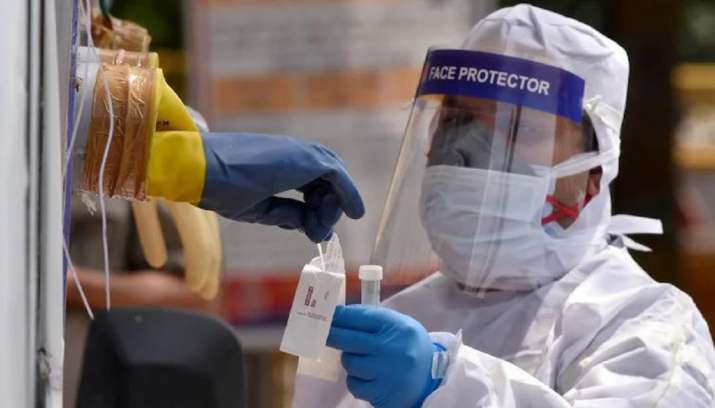
Ghebreyesus said compounding the COVID-19 challenge are a number of factors, including that testing has reduced dramatically in many countries. This obscures the true picture of an evolving virus and the real burden of COVID-19 disease globally. It also means that treatments are not given early enough to prevent serious illness and/or death.
He said secondly, new treatments, especially promising new oral antivirals, are still not reaching low- and low-middle income countries, depriving whole populations that need them. Further, as the virus evolves, vaccine protection while still really effective at preventing serious disease and death does wane.
Decreasing immunity underscores the importance of boosters, especially for the most at-risk, the WHO chief said adding that each wave of the virus leaves more people with the long-COVID or post-COVID condition."
This obviously impacts individuals and their families but it also puts an extra burden on health systems, the wider economy and society-at-large. These challenges require action at a global, national and local level, he said.
Let the Truth be known. If you read VB and like VB, please be a VB Supporter and Help us deliver the Truth to one and all.
Real Madrid fines Valverde and Tchouaméni half a million euros each for altercation

Barcelona (AP): Real Madrid slapped players Federico Valverde and Aurélien Tchouaméni with half-a-million-euro ($588,000) fines on Friday for their altercation during practice.
The massive fines came a day after the midfielders tussled when the team trained. Valverde said in a post on social media on Thursday that no punches were thrown. But Valverde knocked his head on a table and he suffered a small cut that required a brief hospital visit.
On social media, Valverde initially called it a “meaningless fight” with a teammate and said “everything has been blown out of proportion."
His employers, however, considered it a significant enough breach of team discipline to nail both Valverde and Tchouaméni with fines that bite even the bank account of a top soccer player. The half-a-million euro penalties reflect the reputational damage the club was enduring in a chaotic end to a disappointing season.
In a statement, the 15-time European champion said its disciplinary action was concluded after both players expressed to the club “their complete remorse for what happened and apologized to one another.”
Madrid added they also apologized to their teammates, the coaching staff and club supporters, as well as showing their willingness to accept whatever disciplinary action the club deemed “opportune.”
Tchouaméni was back training with Madrid on Friday, two days before they play at Barcelona in a clasico. Madrid has to win otherwise Barcelona will be crowned La Liga champion.
After being notified of the fine, he posted a public apology to the club and its fans on social media.
“What happened this week in training is unacceptable,” Tchouaméni wrote. "I say this while thinking about the example we are expected to set for young people, whether in football or at school.
“Above all, I am sorry for the image we projected of the club.”
Valverde was not at practice due to the head knock.
Both players are set to play in the World Cup next month, with Tchouaméni playing for France and Valverde for Uruguay.
Chaotic end to a poor season
===================
The run-in between the players, who for seasons have played side by side in Madrid's midfield, came after they argued this week in previous training sessions. But tempers boiled over on Thursday. Spanish media was rife with reports that the players previously disagreed over the club's decision to let coach Xabi Alonso go after just months on the job.
It was not the only altercation involving Madrid players during training this week. Álvaro Carreras confirmed he was in a “minor” incident with a teammate. Spanish media said he and fellow defender Antonio Rüdiger got into a scuffle.
Álvaro Arbeloa, the coach who was promoted from Madrid's reserve team when Alonso was fired in January, will face tough questions on what went wrong inside the changing room when he gives a press conference on Saturday ahead of the clasico at Camp Nou.
Madrid is facing a second consecutive campaign without a major trophy amid rumors in the Spanish media that club president Florentino Pérez is considering bringing back Jose Mourinho to straighten out his underperforming team.