New images show Chinese spy balloons over Asia: BBC
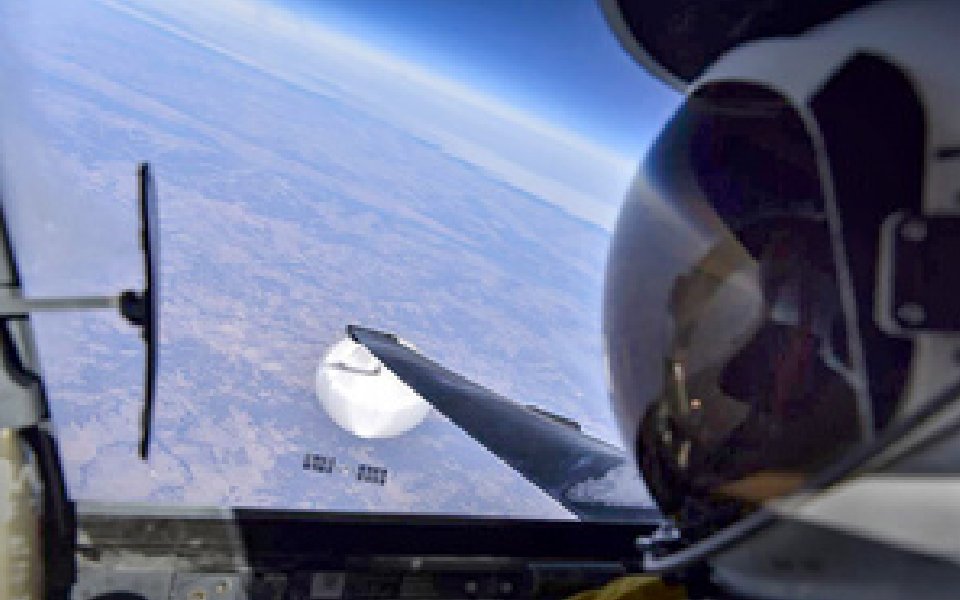
London, Jun 26: The British media on Monday reported new evidence of China's spy balloon programme, including flights over Japan and Taiwan, months after US-China relations were derailed when one such airship was shot down off the US coast.
Working with Synthetaic, an artificial intelligence company which sifted through huge amounts of data captured by satellites, the BBC has found multiple images of balloons crossing East Asia.
The company's founder, Corey Jaskolski, found evidence of one balloon crossing northern Japan in early September 2021. These images have not been published before, the BBC reported.
Jaskolski also believes the evidence points to this balloon having been launched from deep inside China, south of Mongolia.
US-China relations were thrown into turmoil in February this year, when a Chinese spy balloon, said to be the size of three buses, was shot down by American fighter jets over the Atlantic Ocean off the Eastern Seaboard of the United States.
China has repeatedly claimed the balloon seen over the US airspace was a civilian airship, used for scientific research such as meteorology - and that it was an unintended and isolated event.
The incident led to US Secretary of State Antony Blinken postponing his visit to China in early February. He finally visited Beijing last week in a bid to ease tense bilateral ties.
The US State Department says it believes the Chinese balloons are equipped to gather signals intelligence. It says the aircraft it discovered over the US had "multiple antennas, likely capable of collecting and geo-locating communications".
To investigate whether China had launched other balloons, the BBC's Panorama team first searched social media and press reports across the region for sightings of UFOs in the sky.
They found two photographs taken by Taiwan's weather service, appearing to show a balloon over the capital, Taipei, in late September 2021.
Jaskolski then cross-referenced them with satellite imagery. "Within 90 seconds, we found the balloon off the coast of Taiwan," he is quoted as saying.
He started with a sketch of what he thought the balloon would look like from space. He then fed this outline into his Artificial Intelligence software, together with rough coordinates of where it was last seen.
He also analysed wind models to trace the balloon's path and find its origin.
Working with satellite images provided by the company Planet Labs, Corey fed all the information into his software, known as RAIC (rapid automatic image categorisation), to locate the balloons.
Surveillance balloons are huge - the size of several buses - and carry sophisticated equipment capable of collecting large amounts of data on targets below.
Jaskolski's research shows that the balloon which flew over the US in February was at one point about 130 km from a nuclear air force base in the state of Montana.
He also plotted the flight path of the balloon back to its most likely launch site - Hainan Island in the South China Sea.
"It looks like on the launch there was cloud cover," he says. "And if I were going to launch a balloon, I would have chosen a cloudy day in order to minimise that chance of detection."
In a statement, the Chinese Embassy in London accused the US of releasing a large number of high-altitude balloons, which have continuously circled the globe and illegally flown over China's airspace.
It said that "China is a responsible country" which always acts "in strict compliance with international law and respects all countries' sovereignty and territorial integrity". It added that it rejects "unfounded allegations to denigrate and attack China," the BBC quoted the statement as saying.
Let the Truth be known. If you read VB and like VB, please be a VB Supporter and Help us deliver the Truth to one and all.
Trump says he ‘hasn’t even thought about’ continuing Iran ceasefire
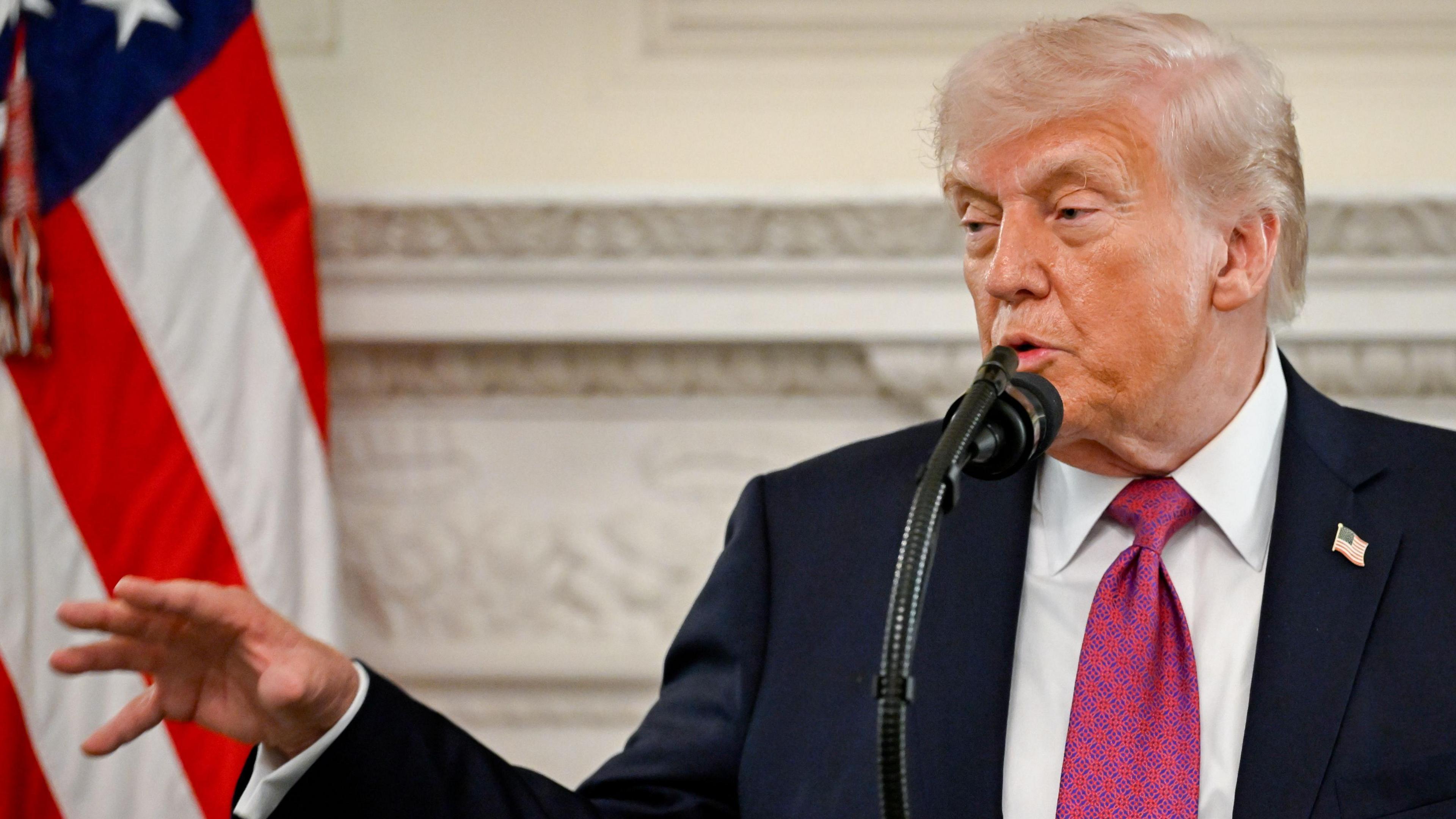
Washington: US President Donald Trump has said he has not yet considered whether he would continue the ceasefire involving Iran, while also claiming the United States holds the advantage in negotiations.
Speaking to reporters, Trump said he was prepared to make a deal with “whoever is running the show” in Iran.
“They are fighting with each other, there’s tremendous infighting. They’re probably fighting for leadership in many cases. I think they’re fighting not to be leader because we knocked out two levels of leaders,” he said.
Trump added, “When they want they can call me. We have all the cards, we’ve won everything.”
Referring to ongoing negotiations, he said, “They gave us a paper that should’ve been better. And, interestingly, immediately when I cancelled it [envoy trip to Pakistan], within 10 minutes we got a new paper that was much better.”
“We talked about they will not have a nuclear weapon, very simple … They offered a lot, but not enough,” he added.
When asked whether he would continue the ceasefire, Trump replied, “I haven’t even thought about it.”
The remarks come as uncertainty remains over the future of the temporary truce and broader negotiations between Washington and Tehran.