New Malaysia PM sworn in amid crisis, Mahathir fights on
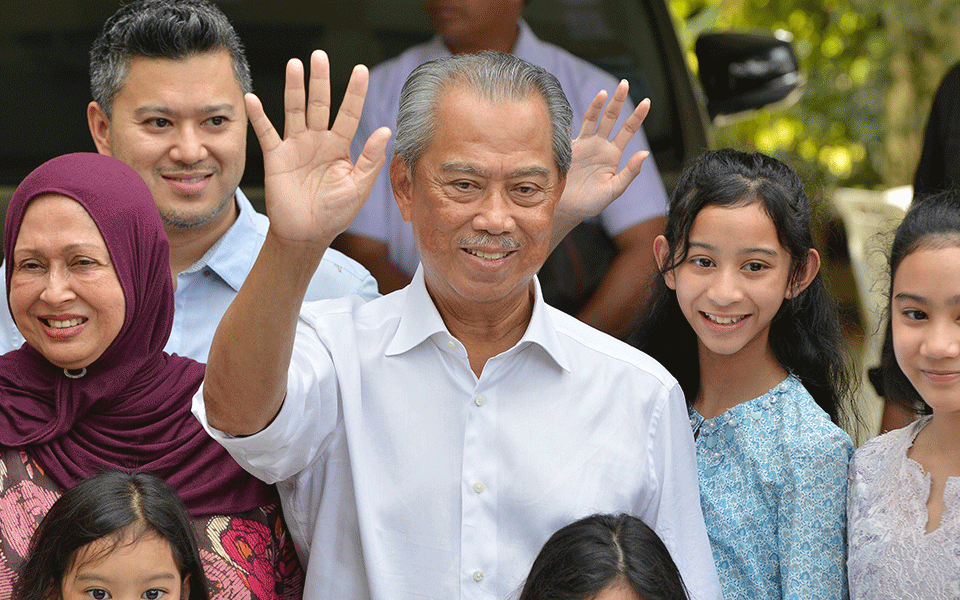
Kuala Lumpur: A former interior minister was sworn in as Malaysia's premier on Sunday, marking the return of a scandal-mired regime to power after the last government's collapse but ex-leader Mahathir Mohamad slammed the move as illegal.
The Southeast Asian nation was plunged into turmoil a week ago as Mahathir's reformist "Pact of Hope" alliance, which stormed to a historic victory in 2018, collapsed after a bid to force out leader-in-waiting Anwar Ibrahim.
Mahathir - who was the world's oldest leader at 94 - then quit, triggering a race for the premiership which he ultimately lost to little-known Muhyiddin Yassin, who heads a coalition dominated by the country's ethnic Malay Muslim majority.
The decision on Saturday by the monarch to pick Muhyiddin was greeted with shock as Mahathir's allies claimed he had enough support to return as leader, and sparked widespread anger that the democratically elected government was being abruptly ejected.
The king appoints the country's prime minister, who must show he has the support of most MPs.
Muhyiddin's coalition includes the United Malays National Organisation (UMNO), the party of disgraced ex-leader Najib Razak, as well as a hardline group that wants tougher Islamic laws.
UMNO is the corruption-riddled lynchpin of the coalition thrown out at the 2018 elections amid allegations Najib and his cronies looted billions of dollars from state fund 1MDB. Najib is now on trial for corruption.
Despite a last-minute bid by Mahathir and his allies to prove that the veteran politician had enough support to return as premier, Muhyiddin's inauguration went ahead on Sunday morning.
Wearing traditional Malay dress, the 72-year-old took the oath of office at the national palace in Kuala Lumpur during an elaborate ceremony. But in a press conference shortly beforehand, Mahathir insisted that Muhyiddin did not have the support of most of the country's 222 MPs.
"This is a very strange thing... losers will form the government, the winners will be in the opposition," he said.
"The rule of law no longer applies," he said, adding he would call for an urgent parliament sitting so that Muhyiddin can prove he has enough support.
The veteran ex-leader -- who served a first stint as premier from 1981 to 2003 -- however conceded that the king had refused to see him to hear his case, and that the "Pact of Hope" alliance would now go into opposition.
Public anger was growing at the ejection of the reformist alliance, with the hashtag "NotMyPM" trending on Twitter and more than 100,000 people signing a petition that said the move was a "betrayal" of voters' choice at the 2018 poll.
The political crisis began when a group of ruling coalition lawmakers joined forces with opposition parties in a bid to form a new government without Anwar and stop him becoming premier.
After the government fell, Mahathir was appointed interim premier and he and Anwar initially launched separate bids for power, reviving their decades-old rivalry.
But as Muhyiddin's bid quickly gained support and it became clear that he could get into power with UMNO, Mahathir and Anwar joined forces again in an effort to stop him -- but it proved too little, too late.
Let the Truth be known. If you read VB and like VB, please be a VB Supporter and Help us deliver the Truth to one and all.
Power struggle in ruling Cong has 'created massive confusion' in Karnataka: BJP leader Ashoka
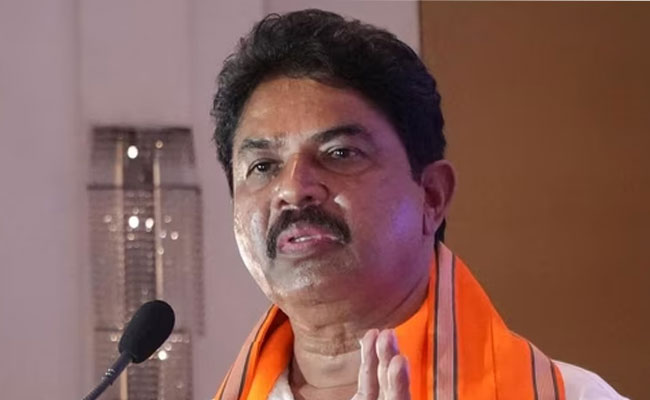
Bengaluru (PTI): BJP leader R Ashoka on Friday claimed that the ongoing power struggle between Chief Minister Siddaramaiah and his deputy D K Shivakumar has created massive confusion in Karnataka.
He remarked that the proverb “when two people fight, the third one benefits” has come true, as AICC President Mallikarjun Kharge is also now making efforts to become Chief Minister.
Speaking to reporters here, Ashoka said the entire government has turned into a house of confusion due to the alleged power tussle.
Kharge’s new statement has only added to the chaos, he said.
Congress chief Mallikarjun Kharge had on Friday said that no date has been fixed yet to discuss possible leadership change in Karnataka.
This came a day after Kharge said there was no change of CM in Karnataka "for now" and that the leadership issue in the state would be resolved soon.
The BJP leader said that Kharge too has aspirations and that he was cheated earlier.
"Perhaps he has received a green signal from the Congress high command to become CM. Everyone is already saying Kharge should become CM. Kharge himself has declared, “I am ready to become CM.” Despite many attempts in the past, he never became CM. Now he is trying to seize the opportunity," the Leader of Opposition in the state assembly said.
According to him, the situation in Congress has perfectly become a case of “two people fighting, third one benefits.”