New studies clarify what drugs help, hurt for COVID-19
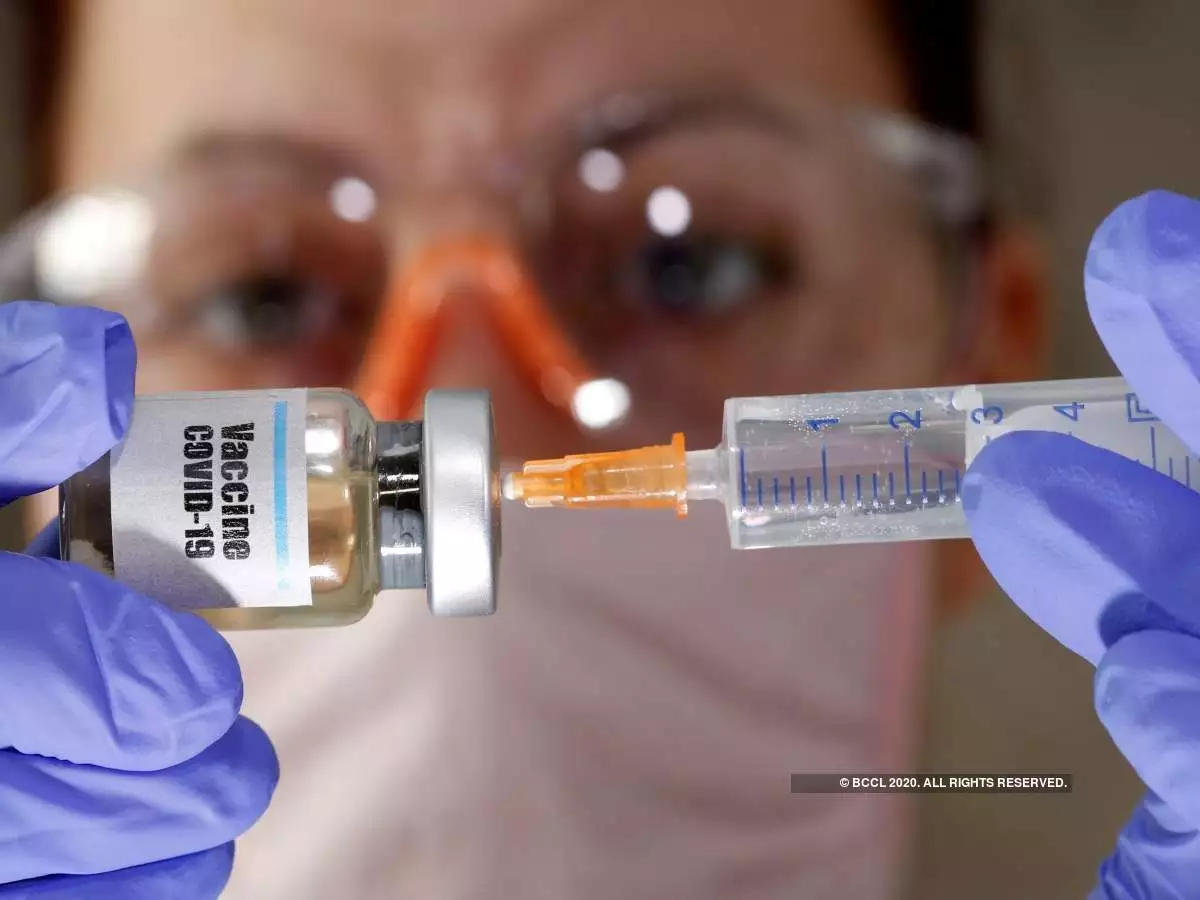
London: Fresh studies give more information about what treatments do or don't work for COVID-19, with high-quality methods that give reliable results.
British researchers on Friday published their research on the only drug shown to improve survival -- a cheap steroid called dexamethasone.
Two other studies found that the malaria drug hydroxychloroquine does not help people with only mild symptoms.
For months before studies like these, learning what helps or harms has been undermined by desperation science as doctors and patients tried therapies on their own or through a host of studies not strong enough to give clear answers.
For the field to move forward and for patients' outcomes to improve, there will need to be fewer small or inconclusive studies and more like the British one, Drs. Anthony Fauci and H. Clifford Lane of the National Institutes of Health wrote in the New England Journal of Medicine.
It's now time to do more studies comparing treatments and testing combinations, said Dr. Peter Bach, a health policy expert at Memorial Sloan Kettering Cancer Center in New York.
Here are highlights of recent treatment developments:
DEXAMETHASONE
The British study, led by the University of Oxford, tested a type of steroid widely used to tamp down inflammation, which can become severe and prove fatal in later stages of COVID-19.
About 2,104 patients given the drug were compared to 4,321 patients getting usual care.
It reduced deaths by 36% for patients sick enough to need breathing machines: 29% on the drug died versus 41% given usual care. It curbed the risk of death by 18% for patients needing just supplemental oxygen: 23% on the drug died versus 26% of the others.
However, it seemed harmful at earlier stages or milder cases of illness: 18% of those on the drug died versus 14% of those given usual care.
The clarity of who does and does not benefit probably will result in many lives saved, Fauci and Lane wrote.
HYDROXYCHLOROQUINE
The same Oxford study also tested hydroxychloroquine in a rigorous manner and researchers previously said it did not help hospitalized patients with COVID-19.
After 28 days, about 25.7% on hydroxychloroquine had died versus 23.5% given usual care -- a difference so small it could have occurred by chance Now, details published on a research site for scientists show that the drug may have done harm.
Patients given hydroxychloroquine were less likely to leave the hospital alive within 28 days -- 60% on the drug versus 63% given usual care. Those not needing breathing machines when they started treatment also were more likely to end up on one or to die.
Two other experiments found that early treatment with the drug did not help outpatients with mild COVID-19.
A study of 293 people from Spain published in the journal Clinical Infectious Diseases found no significant differences in reducing the amount of virus patients had, the risk of worsening and needing hospitalization, or the time until recovery.
A similar study by University of Minnesota doctors in Annals of Internal Medicine of 423 mildly ill COVID-19 patients found that hydroxychloroquine did not substantially reduce symptom severity and brought more side effects.
It is time to move on from treating patients with this drug, Dr. Neil Schluger from New York Medical College wrote in a commentary in the journal.
REMDESIVIR
The only other therapy that's been shown to help COVID-19 patients is remdesivir, an antiviral that shortens hospitalization by about four days on average.
The role of remdesivir in severe COVID is now what we need to figure out, Memorial Sloan Kettering's Bach wrote in an email, saying the drug needs to be tested in combination with dexamethasone now.
Details of the government-led remdesivir study have not yet been published, but researchers are eager to see how many patients received other drugs such as steroids and hydroxychloroquine.
Meanwhile, Gilead Sciences, the company that makes remdesivir, which is given as an IV now, has started testing an inhaled version that would allow it to be tried in less ill COVID-19 patients to try to keep them from getting sick enough to need hospitalisation.
Gilead also has started testing remdesivir in a small group of children.
Supplies are very limited, and the U.S. government is allocating doses to hospitals through September.
Let the Truth be known. If you read VB and like VB, please be a VB Supporter and Help us deliver the Truth to one and all.
BJP, TMC hail SC directions on counting of votes for West Bengal polls
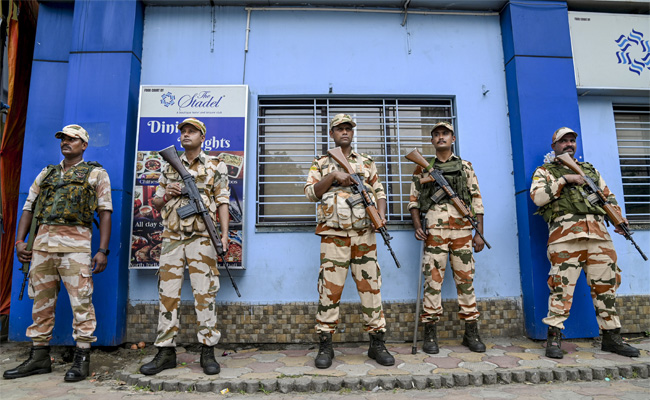
Kolkata (PTI): The BJP and TMC on Saturday both hailed the SC directions on the Election Commission's circular over the deployment of central government personnel for vote counting in West Bengal.
The apex court on Saturday said no further order was necessary on the TMC's plea challenging the Calcutta High Court's dismissal of its petition against the April 13 circular.
In a social media post, BJP leader Amit Malviya said, "In yet another legal setback, the Supreme Court has refused to intervene. The Trinamool Congress had approached the court challenging the exclusion of state government employees from vote-counting supervisor duties, and had sought an urgent hearing."
"The refusal to entertain this plea underscores a clear message -- attempts to influence or cast doubt over the integrity of the counting process will not find easy validation. Another day, another judicial rebuff for Mamata Banerjee," he added.
The TMC, however, claimed that the SC directions vindicated its stand.
"The issue raised before the Hon'ble Supreme Court pertained to the implementation of the said communication in a manner whereby only Central Government/Central PSU employees were being appointed as Counting Supervisors and Counting Assistants for counting of votes," the party said in a statement.
The TMC said it was highlighted that such an interpretation and implementation of the communication would be contrary to the framework of a fair and balanced counting process.
"After hearing the parties, the Hon'ble Supreme Court directed that Clause 1 of the communication dated 13.04.2026, relating to the appointment of Counting Supervisors and Counting Assistants, must be read along with the salient feature contained in the second page of the said communication, which provides for random selection of both State Government and Central Government employees," it said.
"The Hon'ble Supreme Court has further recorded the undertaking of Mr Dama Seshadri Naidu, learned Senior Advocate appearing for the Election Commission of India that the said communication shall be followed in its letter and spirit," it added.
The TMC said that in view of the directions, it is expected that the counting of votes shall be conducted in a fair, transparent, and balanced manner.
A special bench of Justices P S Narasimha and Joymalya Bagchi said the EC can choose the counting personnel, and its April 13 circular, which provides for deployment of state government employees as well, cannot be said to be incorrect.
The poll body said the apprehensions of TMC of any wrongdoing are misplaced, as the circular very clearly states that there will be a mix of central and state government employees.
The EC assured the court that the circular would be implemented in letter and spirit, and there would be state government employees also during the counting of votes on May 4.
Polling for the 294-member West Bengal assembly was held in two phases -- April 23 and April 29. The counting of votes will be taken up on May 4.
On April 30, the Calcutta High Court dismissed the TMC's petition against the Election Commission circular, saying there was no illegality in the poll panel's decision to appoint counting supervisors and assistants from Central government and Public Sector Undertaking (PSU) employees, instead of the state government staff.