Nine countries pledge to enforce arrest warrant against Israeli Prime Minister Benjamin Netanyahu
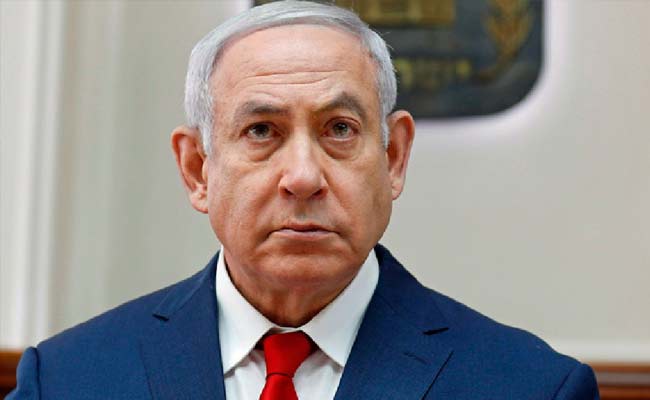
New Delhi: Nine nations have pledged to take action against Israel, including upholding The Hague's arrest warrants against Israeli Prime Minister Benjamin Netanyahu and former Defence Minister Yoav Gallant, as part of efforts to end Israel's occupation of Palestine and address its operations in Gaza.
Organized under the 'Hague Group,' the countries—Belize, Bolivia, Colombia, Cuba, Honduras, Malaysia, Namibia, Senegal, and South Africa—announced their commitment on January 31. They also vowed to prevent the supply of arms and munitions to Israel where there is a clear risk they may be used to violate international law, and to block vessels carrying military fuel or weapons to Israel from docking at their ports.
The group cited violations of international humanitarian law, human rights law, and the prohibition of genocide in Palestine as the basis for their stance. Their decision was influenced by Israel's disregard for rulings by international courts, including the International Court of Justice (ICJ) and the International Criminal Court (ICC).
South Africa, one of the member countries, previously brought a case before the ICJ alleging Israel's genocide in Gaza, a case expected to take years to conclude.
“The Hague Group’s formation sends a clear message: no nation is above the law, and no crime will go unanswered,” said South African Foreign Minister Ronald Lamola.
Progressive International (PI), the organization convening the group's meeting, called for renewed international efforts to hold Israel accountable for its actions. PI also quoted Malaysian Prime Minister Anwar Ibrahim, stating that Israel's violations of international law extend beyond the persecution of Palestinians and threaten the very foundations of global law.
Let the Truth be known. If you read VB and like VB, please be a VB Supporter and Help us deliver the Truth to one and all.
Rupee falls 20 paise to 95.43 against US dollar in early trade

Mumbai (PTI): The rupee depreciated 20 paise to 95.43 against US dollar in early trade on Tuesday as market sentiments remained fragile after renewed military exchanges between US and Iranian forces in the Gulf region.
Forex traders said investor anxiety due to instability in the Gulf is causing massive capital flight into safe-haven assets, with the US dollar acting as the primary beneficiary.
Moreover, Brent oil prices is hovering near USD 113 per barrel, maintaining pressure on oil-importing economies like India.
At the interbank foreign exchange market the rupee opened at 95.30 then lost ground to touch 95.43 against the US dollar, in initial trade, registering a fall of 20 paise over its previous close.
Rupee fell 39 paise to close at an all-time low of 95.23 against the US dollar on Monday.
"With oil boiling rupee on Monday fell to a closing low of 95.0875 and this morning the opening was still lower as it becomes more and more vulnerable when dollar index rises due to safe-haven buying and oil prices rise due to the continuous fighting in the Gulf Region," Anil Kumar Bhansali, Head of Treasury and Executive Director, Finrex Treasury Advisors LLP, said.
The higher oil prices will keep rupee sold off against the dollar as oil companies and FPIs intensify dollar buying, Bhansali added.
Meanwhile, the dollar index, which gauges the greenback's strength against a basket of six currencies, was trading at 98.51, up 0.15 per cent.
Brent crude, the global oil benchmark, was trading lower by 1.07 per cent at USD 113.22 per barrel in futures trade.
"Market sentiments remained fragile after renewed military exchanges between US and Iranian forces when Iranian forces launched fresh attacks in the Gulf as both sides sought to assert control over the strategic waterway," Bhansali said.
On the domestic equity market front, Sensex declined 361.62 points to 76,907.78 in early trade, while the Nifty dropped 134.90 points to 23,980.60.
Foreign Institutional Investors purchased equities worth Rs 2,835.62 crore on Monday, according to exchange data.