Nine dead in Turkey as 5.7 earthquake strikes western Iran

Ankara: Nine people were killed in Turkey in a magnitude 5.7 earthquake that struck western Iran early Sunday morning, Turkish Health Minister Fahrettin Koca said.
The quake centered west of the Iranian city of Khoy and affected villages in the Turkish province of Van.
Turkish Interior Minister Suleyman Soylu told a news conference that three children and four adults were killed in Turkey's Baskule district.
Koca later updated the number of fatalities to nine and wrote on Twitter that 37 people were injured, including nine in a critical but not life-threatening condition.
Emergency teams have been sent to the remote mountainous region.
Iran's official IRNA news agency said the earthquake affected 43 villages in the mountainous Qotour area.
It later added that at least 75 people had been injured, six of whom were hospitalised.
According to the European Mediterranean Seismological Center (EMSC), the quake, which happened at 9:22am local time (0552GMT), had a depth of 5 kilometers (3 miles).
The region has a history of powerful earthquakes.
Last month a quake centered on the eastern Turkish city of Elazig killed more than 40 people.
In 2011, more than 600 were killed when a quake struck north of Van province's capital.
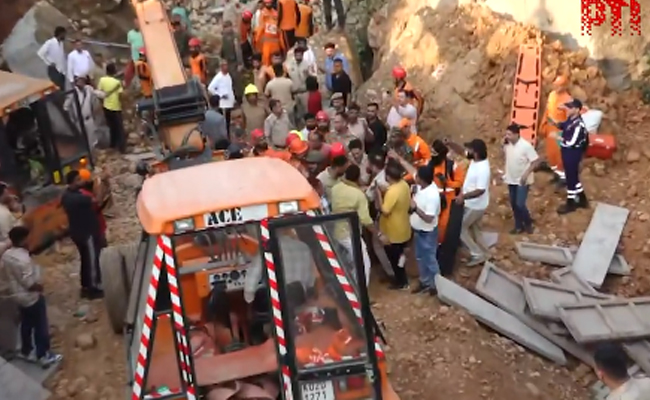
Turkish broadcaster NTV showed images of locals and soldiers digging through the rubble of collapsed buildings as families fearing further tremors sat in snowy streets.
The EMSC reported several further quakes that measured up to magnitude 4.4.
The effects of the quake hit four villages in Van. Seven of the fatalities occurred in Ozpinar village, where Soylu said search and rescue teams had arrived.
He added that the quake caused 1,066 buildings to collapse while the Education Ministry said a number of schools were damaged.
Koca said 25 ambulances, a medical helicopter and 13 emergency teams had been sent to the region.
The Disaster and Emergency Management Directorate (AFAD) said 144 tents for families had been dispatched.
Let the Truth be known. If you read VB and like VB, please be a VB Supporter and Help us deliver the Truth to one and all.
Teen killed after being hit by private bus in Bengaluru
Bengaluru (PTI): A 16-year-old boy was killed after he was allegedly hit and run over by a private bus while crossing a road here on Friday, police said.
The deceased was identified as Varun, they said.
According to police, the accident occurred around 11:30 am on the Hennur–Bagalur main road.
The boy who crossing the road on foot when he was allegedly struck by the bus and came under its rear wheel, leading to his death on the spot.
He was rushed to a nearby hospital, where he was declared brought dead.
Following the incident, family members and locals staged a protest by blocking the Hennur–Bagalur road, resulting in heavy traffic congestion in the area.
The driver of the bus has been detained, and further legal action is being initiated, a senior police officer said, adding that an investigation is underway.