No country should use any excuse to engage in militarisation in South China Sea: Beijing
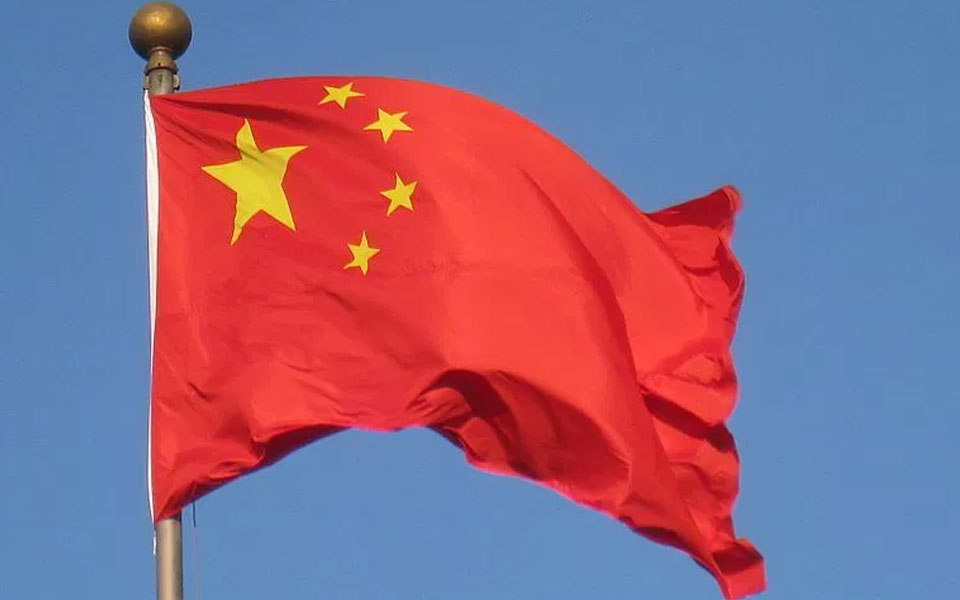
Washington, Nov 10 : Asserting that there is no problem of freedom of navigation in the South China Sea, Beijing said no country should use any excuse to engage in militarisation in the region.
China, which claims almost all of the South China Sea, has been unhappy with the US' navigation and overflight patrols in the region over which Vietnam, the Philippines, Malaysia, Brunei and Taiwan also have counter claims. In September, a Chinese destroyer and a US warship nearly collided in the disputed waters.
"There is no problem of the freedom of navigation and overflight being obstructed, so to use the freedom of navigation and overflight as an excuse to pursue military actions is unjustifiable, Chinese State Councilor Yang Jiechi told a joint press conference here on Friday.
Secretary of State Mike Pompeo, US Defence Secretary James Mattis and Chinese Minister of National Defence Wei Fenghe were also present at the press conference.
The Chinese leaders are in Washington to set the stage for a meeting between US President Donald Trump and his Chinese counterpart Xi Jinping later this month.
In an apparent attempt to allay the growing global concern about China constructing defence facilities in the disputed territory, Yang said Beijing is only building certain security facilities in response to possible threats from outside.
He said China has undertaken some constructions on the islands and reefs in the region, however, "most of them are civilian facilities" whose purpose is to "serve the interest of the Chinese people and also to provide public goods to others".
Yang said to pursue militarisation in the region will not only undermine interest of regional countries, but will also hurt the nations that take these actions.
Addressing the conference, Mattis said the US adheres strictly to international law and the international maritime rules of the road and it "will continue to fly, sail, and operate wherever international law allows".
He said the US' commitment to a free and open Indo-Pacific, one that is underpinned by the rules-based international order and regional stability, is unwavering.
Let the Truth be known. If you read VB and like VB, please be a VB Supporter and Help us deliver the Truth to one and all.
NIA court to complete framing of charges against 2010 hand-chopping case accused on May 15
Kochi (PTI): A special court here will complete proceedings for framing charges against the prime accused in the 2010 hand-chopping case involving professor T J Joseph, in which PFI activists were accused of attacking him at Muvattupuzha.
Ernakulam Special Court for NIA cases judge P K Mohandas, on April 30, heard the arguments of counsel for accused Savad and Shafeer C and decided to proceed with framing charges against the duo.
A group chopped off Thodupuzha Newman College professor Joseph's right hand in July 2010, accusing him of religious blasphemy in a question paper he had prepared.
The case, later taken over by the National Investigation Agency (NIA), resulted in the conviction of 19 accused.
The first accused, Savad, who allegedly chopped off Joseph’s palm, was arrested in Berram in Mattannur, Kannur, in January 2024, where he had allegedly been hiding under the pseudonym Shajahan.
The NIA also arrested Shafeer, who allegedly arranged shelter and provided logistical support to Savad at Chakkad and Mattannur in Kannur since 2020.
On April 30, the court heard the counsel for the accused and the NIA prosecutor on framing charges against the duo.
"On going through the documents and evidence in the case and on hearing the counsel for the accused and the prosecutor, I am of the opinion that there are grounds for presuming that the first accused has committed offences punishable under provisions of the IPC, the Explosive Substances Act and the Unlawful Activities (Prevention) Act, and that the second accused has committed offences punishable under the IPC and the UAPA, and there are materials for framing charges under these provisions against the accused," the court said.
The court directed that Savad be produced and Shafeer, who is on bail, appear before it on May 15 for recording their pleas as part of the charge-framing process.
After framing the charges, the court will schedule the trial in the case.