‘No state has right to use force’: Russia on US seizure of tanker in North Atlantic
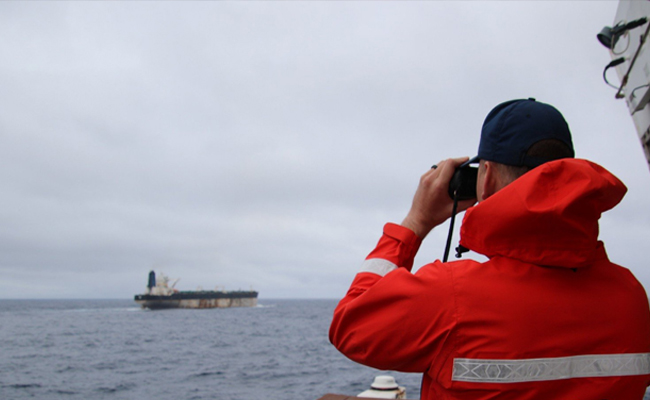
Moscow: Russia on Wednesday criticised the United States over the seizure of a Russian-flagged oil tanker in the North Atlantic, saying no country has the right to use force against vessels on the high seas, The New Indian Express reported.
Russia’s transport ministry reportedly said, "In accordance with the 1982 UN Convention on the Law of the Sea, freedom of navigation applies in waters on the high seas, and no state has the right to use force against vessels duly registered under the jurisdiction of other states," Russia's transport ministry said in a statement.
ALSO READ: US seizes 2 sanctioned oil tankers linked to Venezuela in North Atlantic and Caribbean
The vessel, earlier named Bella-1 and later renamed Marinera, was granted temporary permission to sail under the Russian flag on December 24, the ministry said. It added that contact with the ship was lost after US naval forces boarded it in international waters, beyond the territorial limits of any state.
US officials said the tanker was part of a so-called shadow fleet used to transport oil for countries such as Venezuela, Russia and Iran in violation of US sanctions.
The ship had earlier evaded a boarding attempt near Venezuela last month. US forces eventually seized it in the North Atlantic under a warrant issued by a US federal court," US European Command, which oversees American forces in the region, said in a statement on X.
Following the operation, Pentagon chief Pete Hegseth said the US blockade on Venezuelan oil was in full effect "anywhere in the world."
Let the Truth be known. If you read VB and like VB, please be a VB Supporter and Help us deliver the Truth to one and all.
Remarks against St Francis Xavier: Right-wing speaker Gautam Khattar gets bail

Panaji (PTI): A court in Goa on Saturday granted bail to right-wing speaker Gautam Khattar, who was arrested after he allegedly made derogatory comments against St Francis Xavier.
Judicial Magistrate First Class, Vasco, granted regular bail to Khattar, currently admitted to Goa Medical College and Hospital at Bambolim for treatment of chest pain after he was shifted from the District Hospital in Mapusa two days back.
A row erupted after a video of remarks by Khattar, the founder of Sanatan Mahasangh, at an event on April 18 in the presence of Swami Brahmeshanand, State Transport Minister Mauvin Godinho and BJP MLAs Sankulp Amonkar and Daji (Krishna) Salkar, went viral.
St Francis Xavier is revered as the patron saint of Goa.
The controversial remarks led to the Vasco Police registering an FIR against Khattar on charges of hurting religious sentiments and creating enmity between groups.
He was detained in Kullu, Himachal Pradesh, by local police. His custody was later handed over to the Goa Crime Branch, according to officials.