Nobel Peace Prize cannot be passed on or further distributed even symbolically: Foundation
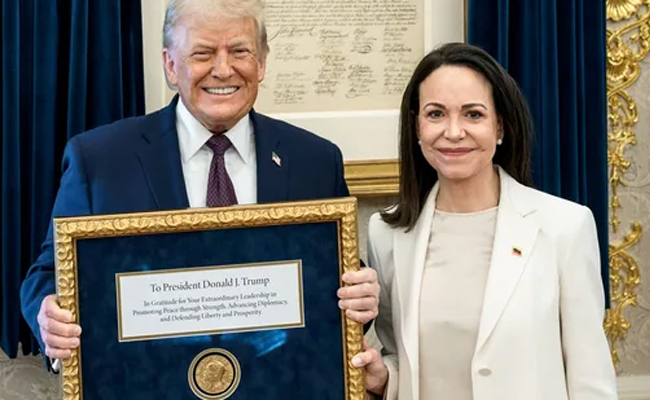
Oslo: The Nobel Foundation, commenting on the 2025 Nobel Peace Prize winner Maria Corina Machado handing over her award to US President Donald Trump, has stressed on the mission of the Foundation to uphold the dignity of the prizes as well as their administration.
In a post on its Facebook page on Sunday, the Foundation stated, “The Foundation upholds Alfred Nobel’s will and its stipulations. It states that the prizes shall be awarded to those who "have conferred the greatest benefit to humankind," and it specifies who has the right to award each respective prize.”
Referring to Machado, the Venezuelan Opposition leader, handing over her prize to President Trump, the Foundation continued, “A prize can therefore not, even symbolically, be passed on or further distributed.”
On its official website, the Foundation explained on Friday, “A Nobel Peace Prize laureate receives two central symbols of the prize: a gold medal and a diploma. In addition, the prize money is awarded separately,” and added, “Regardless of what may happen to the medal, the diploma, or the prize money, it is and remains the original laureate who is recorded in history as the recipient of the prize. Even if the medal or diploma later comes into someone else’s possession, this does not alter who was awarded the Nobel Peace Prize.”
The Foundation has also said that a laureate cannot share the prize with others, nor transfer it once it has been announced. “A Nobel Peace Prize can also never be revoked. The decision is final and applies for all time,” it has stressed.
Let the Truth be known. If you read VB and like VB, please be a VB Supporter and Help us deliver the Truth to one and all.
Mumbai-Pune Expressway connecting link now fully operational
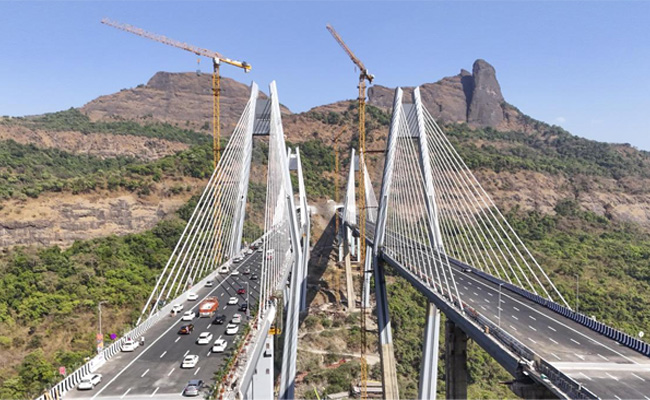
Mumbai (PTI): The Mumbai-bound carriageway of the Mumbai-Pune Expressway connecting link was opened to vehicular traffic on Saturday noon after a delay caused by the dismantling of inauguration infrastructure and cleaning work, a day after the Pune section became operational.
The 13.3 km-long "missing link", which bypasses a section of the Bhor Ghat stretch of the expressway and cuts travel time between Mumbai and Pune by 25 to 30 minutes, was inaugurated a day earlier by Chief Minister Devendra Fadnavis in the presence of Deputy CMs Eknath Shinde and Sunetra Pawar.
The Pune-bound carriageway of the corridor was opened to traffic immediately; however, the Mumbai-bound section remained closed to traffic for several hours after the inauguration.
An official of the Maharashtra State Road Development Corporation told PTI on Saturday that the opening of the Mumbai-bound carriageway was delayed mainly due to the dismantling of the inauguration infrastructure and cleaning work.
The removal of the stage and other decorations was completed in the morning. The work to load and transport the material slightly delayed the opening of the carriageway.
Vehicular movement on the carriageway began after all the remaining material was cleared and road cleaning was completed, the official added.
The expressway control room said that despite significant vehicular movement, the access-controlled highway has not witnessed any major traffic snarls since Friday evening, after the Pune-bound carriageway of the missing link was opened to traffic.
The Missing Link project connects Khopoli (in Raigad) on the Mumbai side to Kusgaon near Lonavala in Pune district and is expected to make the expressway fully access-controlled, easing congestion in the ghat section.
Developed by the MSRDC and dubbed an "engineering marvel", the project includes two tunnels, two viaducts and a cable-stayed bridge over Tiger Valley. It bypasses the steep, accident-prone ghat section, where frequent traffic snarls are reported during weekends and on public holidays.