North Korea ends test moratoriums, threatens 'new' weapon
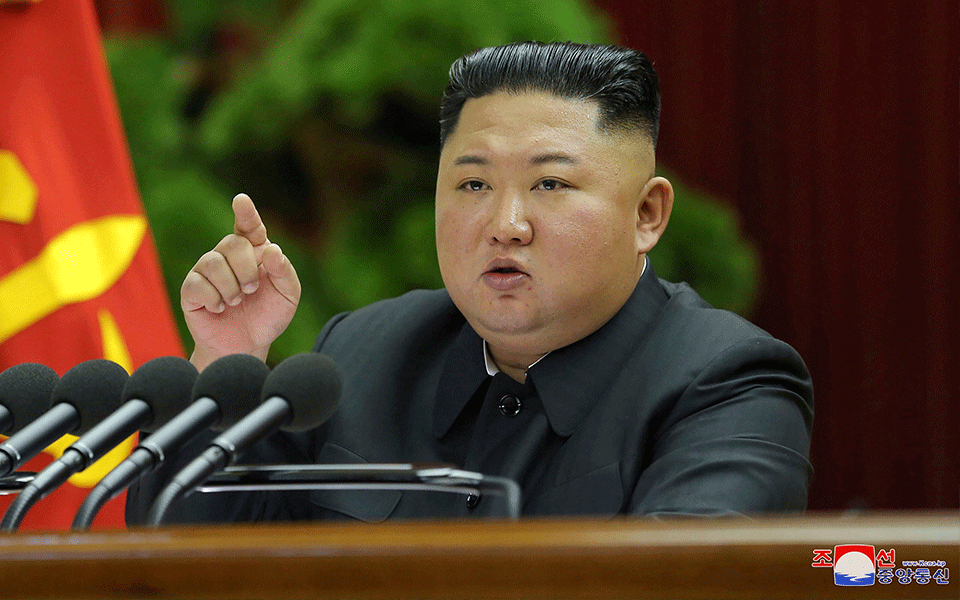
Seoul: North Korean leader Kim Jong Un has declared an end to moratoriums on nuclear and intercontinental ballistic missile tests and threatened a demonstration of a "new strategic weapon" soon.
Analysts said the announcement, reported by state media on Wednesday, amounted to Kim putting a missile "to Donald Trump's head" -- but warned that escalation by Pyongyang would probably backfire.
Washington was swift to respond, with Secretary of State Mike Pompeo urging Kim to "take a different course" and stressing that the US wanted "peace not confrontation" with the North, while Trump played down the development.
Pyongyang has previously fired missiles capable of reaching the entire US mainland, and has carried out six nuclear tests, the last of them 16 times more powerful than the Hiroshima blast, according to the highest estimates.
A self-imposed ban on such tests -- Kim declared they were no longer needed -- has been a centrepiece of the nuclear diplomacy between Pyongyang and Washington over the past two years, which has seen three meetings between Kim and US President Donald Trump, but little tangible progress.
Any actual test is likely to infuriate Trump, who has repeatedly referred to Kim's "promise" to him not to carry them out, and has downplayed launches of shorter-range weapons.
Negotiations between the two sides have been largely deadlocked since the breakup of their Hanoi summit in February, and the North set the US an end-of-year deadline for it to offer fresh concessions on sanctions relief, or it would adopt a "new way".
"There is no ground for us to get unilaterally bound to the commitment any longer," the official KCNA news agency cited Kim as telling top ruling party officials.
"The world will witness a new strategic weapon to be possessed by the DPRK in the near future," he added, referring to the North by its official name. The full meeting of the central committee of the ruling Workers' Party was an indication of a major policy shift.
State television showed veteran newsreader Ri Chun Hee reading out the KCNA dispatch over footage of Kim addressing the officials and general imagery of the country.
The broadcast appeared to stand in place of Kim's usual New Year speech -- normally a key moment in the North Korean political calendar.
Kim acknowledged the impact of international sanctions imposed on Pyongyang over its weapons programmes, but made clear that the North was willing to pay the price to preserve its nuclear capability.
"The US is raising demands contrary to the fundamental interests of our state and is adopting brigandish attitude," KCNA cited him as saying.
Washington had "conducted tens of big and small joint military drills which its president personally promised to stop" and sent high-tech military equipment to the South, he said.
For months, Pyongyang has been demanding the easing of international sanctions imposed over its nuclear and ballistic missile programmes, while Washington has insisted it takes more tangible steps towards giving them up.
"North Korea has, in effect, put an ICBM to Donald Trump's head in order to gain the two concessions it wants most: sanctions relief and some sort of security guarantee," said Harry Kazianis of the Center for the National Interest in Washington.
"Kim Jong-un is playing a dangerous game of geopolitical chicken," he added.
The strategy was risky, he said, as Washington was likely to respond with "more sanctions, an increased military presence in East Asia and more fire and fury style threats coming from Donald Trump's Twitter account".
Kim's moratorium comments were "ominous", said Leif-Eric Easley of Ewha University in Seoul, but added that he could be looking to "elicit concessions by approaching Trump's red line without crossing it".
The US has already indicated that it will react if the North carries out a long-range missile test.
Speaking to Fox News and CBS after Kim's announcement, Pompeo said a resumption of nuclear and missile tests would be "deeply disappointing".
"We hope that Chairman Kim will take a different course... that he'll choose peace and prosperity over conflict and war," Pompeo said. "We want peace, not confrontation," he added, with Seoul's unification ministry adding that a strategic weapon test "would not help denuclearisation negotiations".
Trump himself was emollient, saying that he thought Kim was "a man of his word" and that at their Singapore summit "We did sign a contract, talking about denuclearisation".
An ICBM launch would be likely to frustrate China, the North's key diplomatic backer and provider of trade and aid, which always stresses stability in a region it regards as its own back yard. (AFP)
Let the Truth be known. If you read VB and like VB, please be a VB Supporter and Help us deliver the Truth to one and all.
Women journalists face doubling of online abuse since 2020, AI intensifies harassment: report
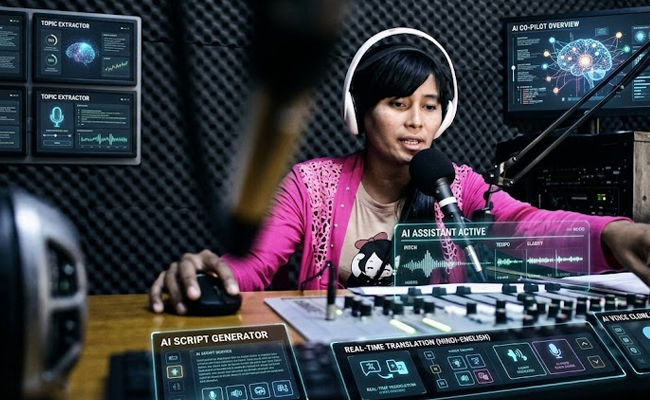
New Delhi: Incidents of online violence against women journalists have doubled since 2020, with growing use of artificial intelligence intensifying the scale and impact of abuse, according to a new report released ahead of World Press Freedom Day.
The study is titled “Tipping point: Online violence impacts, manifestations and redress in the AI age.” It is published by UN Women and its partners and highlights how digital harassment has become more invasive and technologically sophisticated.
The study is based on a 2025 global survey covering 641 respondents across 119 countries. The report found that women journalists and media workers are increasingly resorting to self-censorship due to online abuse. Around 45 per cent said they avoid expressing themselves on social media, which is a sharp rise from 2020. Nearly 22 per cent reported limiting their professional work for similar reasons.
The findings also indicate that 12 per cent of respondents have experienced non-consensual sharing of personal images, including intimate content, and six per cent reported being targeted by AI-generated “deepfakes.” One in three said they had received unsolicited sexual advances online.
The report highlights the psychological toll of such harassment, noting that nearly a quarter of women journalists surveyed had been diagnosed with anxiety or depression, while about 13 per cent reported post-traumatic stress disorder.
An environmental journalist from India, quoted in the report, described how coordinated online attacks and misinformation campaigns had led to fear and withdrawal from investigative reporting, and the repercussions extending to family members.
However, as the abuse has increased, so too has the number of women journalists reporting such incidents. The percentage of women journalists approaching law enforcement agencies has doubled from 11 per cent to 22 per cent in 2025 compared with 2020. The report also shows an increase in legal action against perpetrators, technology platforms, and employers.
However, the report points to significant gaps in legal protection. It presents data that fewer than 40 per cent of countries have laws addressing cyber harassment or stalking. Kalliopi Mingerou, who leads efforts to end violence against women at UN Women, said emerging technologies are amplifying existing threats. “AI is making abuse easier and more damaging,” she said, warning that the trend risks undermining democratic participation and hard-won rights.
The report can be accessed at https://www.unwomen.org/en/digital-library/publications/2026/04/tipping-point-online-violence-impacts-manifestations-and-redress-in-the-ai-age