North Korea has fired ballistic missiles toward the east, Seoul says
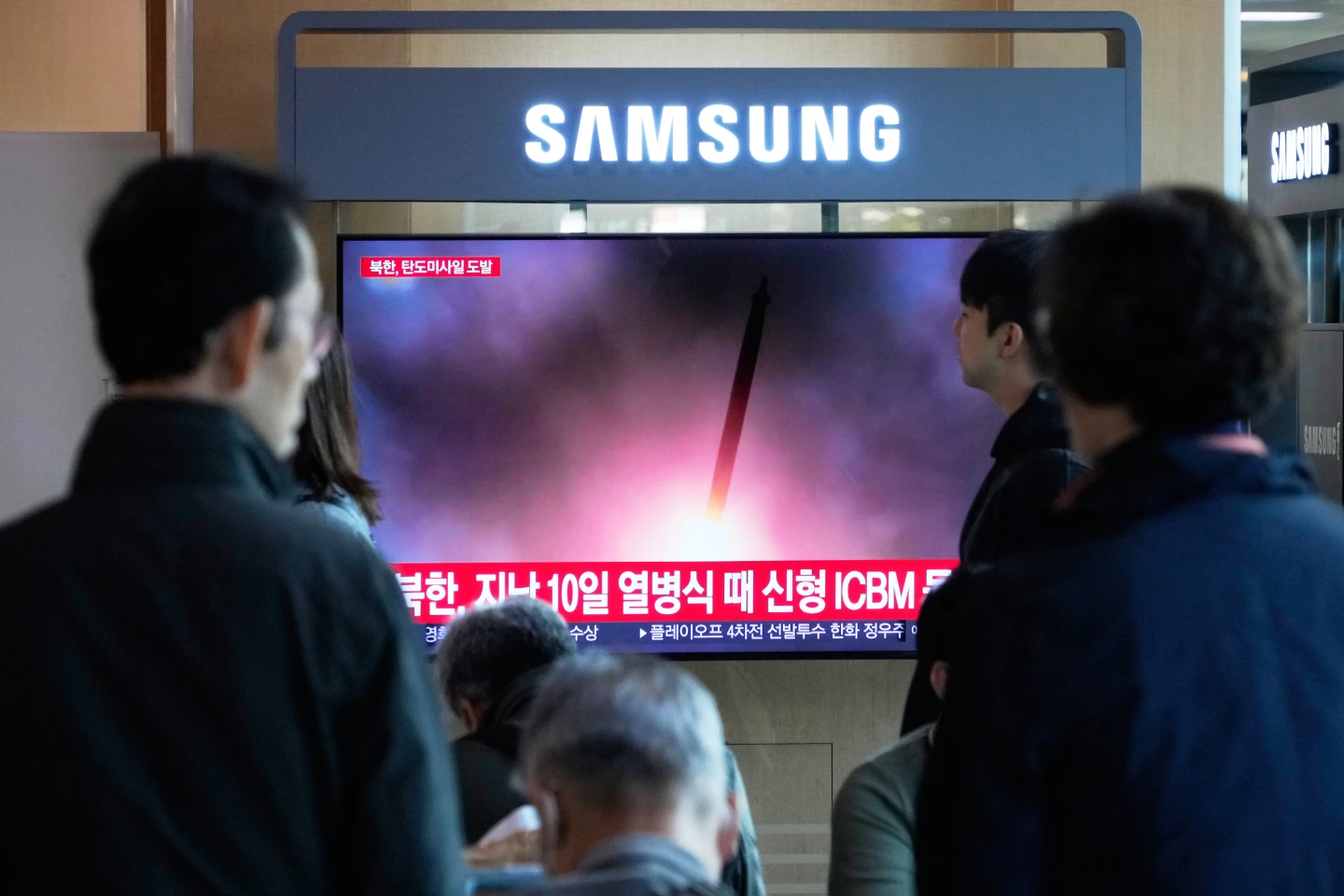
Seoul (AP): North Korea performed its first ballistic missile tests in five months on Wednesday, days before US President Donald Trump and other leaders are expected to meet in South Korea.
South Korea's military detected multiple suspected short-range ballistic missiles launched from an area south of Pyongyang, the North Korean capital, South Korea's Joint Chiefs of Staff said. It said the weapons flew about 350 kilometres (217 miles) each in a northeastern direction but did not say where they landed.
South Korea's military said it maintains a readiness to repel any provocations by North Korea based on the solid military alliance with the United States.
Japan's new Prime Minister Sanae Takaichi told reporters that none of the North Korean missiles reached Japan's territorial waters or exclusive economic zone and that there had been no reports of damage caused by the launches. She said that Tokyo was closely communicating with Washington and Seoul, including by sharing real-time missile warning data.
South Korea next week hosts the Asia-Pacific Economic Cooperation, an annual summit meant to promote economic integration and trade. It has no military component. Trump was expected to come to Gyeongju ahead of the summit for bilateral meetings with leaders including Chinese President Xi Jinping and South Korean President Lee Jae Myung, but South Korean officials say Trump won't likely attend APEC's main conference set for October 30-November 1.
Experts earlier said North Korea could conduct provocative missile tests before or during the APEC summit to underscore its commitment to gain recognition as a nuclear weapons state. Experts say North Korean leader Kim Jong Un would need that status to call for the UN to lift the economic sanctions punishing it for its weapons programme.
Wednesday's ballistic missile launches by North Korea were the first of their kind since the country on May 8 tested short-range systems that simulated nuclear counter strikes against US and South Korean forces. They were also the first ballistic missile testing activities by North Korea since Lee took office in June with a promise to push to restore peace on the Korean Peninsula.
Kim has been sharply accelerating the pace of weapons tests since his high-stakes nuclear diplomacy with Trump fell apart in 2019 due to wrangling over the US-led economic sanctions. But last month, Kim suggested he could return to talks if the US drops its demand for North Korea's denuclearisation, after Trump repeatedly expressed his hopes for new diplomacy.
Earlier this month, Kim displayed a new intercontinental ballistic missile at a military parade attended by Chinese, Russian and other top officials. The parade highlighted Kim's growing diplomatic footing and his relentless drive to build a reliable arsenal of nuclear missiles targeting the US and its allies.
North Korea's state media said the October 10 parade featured the Hwasong-20 intercontinental ballistic missile, which it described as the country's “most powerful nuclear strategic weapon system.” Observers said the ICBM is designed to carry multiple nuclear warheads to defeat US missile defences and that North Korea could test-launch it in coming months.
Let the Truth be known. If you read VB and like VB, please be a VB Supporter and Help us deliver the Truth to one and all.
4 workers die after being buried under coal slurry in Jharkhand's Dhanbad
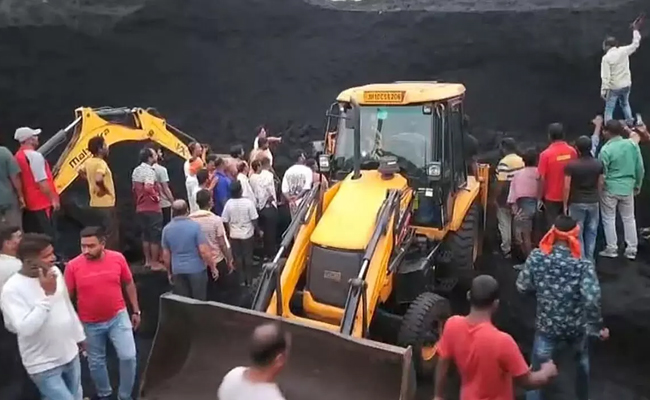
Dhanbad (Jharkhand) (PTI): At least four workers died after being buried under coal slurry in Jharkhand's Dhanbad district on Saturday, a police official said.
The incident took place at Moonidih coal washery in the command area of Bharat Coking Coal Limited (BCCL).
"Bodies of all four workers were dug out of debris during a rescue operation," Putki police station in-charge Waqar Hussain told PTI.
The incident took place when coal slurry was being loaded into trucks by workers, during which a large chunk of slurry fell and trapped several workers underneath, officials said.
The deceased have been identified as Manik Bauri, Dinesh Bauri, Deepak Bauri, and Hemlal Gope.
Meanwhile, the family members of the deceased and local villagers placed the bodies in front of the washery gate and began a protest.
They demanded compensation, jobs for dependents and action against those responsible for the incident.
Police and administration officials are trying to pacify the protesters, an official said.