North Korea tested rocket launchers and ''tactical guided weapons''
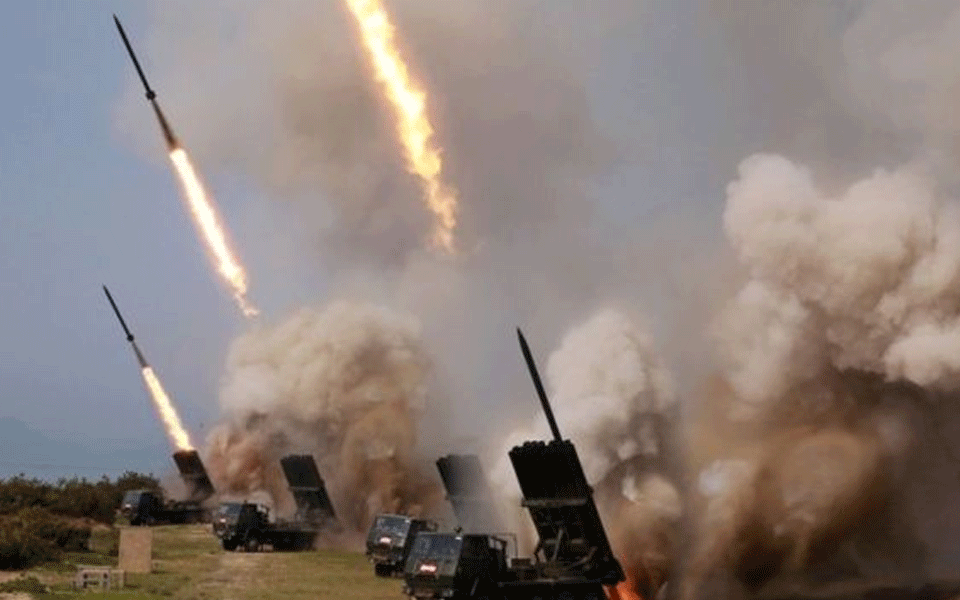
Seoul: North Korea's state media said Sunday that leader Kim Jong Un had overseen a rocket and tactical guided weapons test, after the drill Saturday had raised concerns Pyongyang was escalating provocations with US nuclear negotiations deadlocked.
The North last carried out a missile test in November 2017, before a rapid diplomatic rapprochement saw tensions ease on the peninsula and a series of summits.
A return to missile launches would be likely to infuriate US President Donald Trump, but the North's official KCNA news agency shied away from the term in its report, saying Kim had ordered a "strike drill" involving "long-range multiple rocket launchers" -- which are not targeted by UN sanctions resolutions -- and unspecified "tactical guided weapons".
Seoul's military described the weapons as "projectiles" after it detected Saturday's firing.
The United States and North Korea have been at loggerheads since the collapse of a Trump-Kim summit in February, when the two sides clashed over sanctions and the extent of Pyongyang's concessions on its atomic arsenal.
But despite the latest sabre-rattling from Pyongyang, Trump insisted that a breakthrough was possible.
"Kim Jong Un fully realizes the great economic potential of North Korea, & will do nothing to interfere or end it," Trump tweeted.
"He also knows that I am with him & does not want to break his promise to me. Deal will happen!" The US leader did not elaborate on Kim's promise.
During Saturday's drill Kim urged his troops to remember "the iron truth that genuine peace and security are ensured and guaranteed only by powerful strength", KCNA said.
The state-run Rodong Sinmun newspaper on Sunday carried 16 photos of the weapons test on its front page, including a picture of a grim-looking Kim clutching his binoculars in an observation post as well as several images of projectiles shooting skywards.
Trump proclaimed that the North Korean nuclear threat was over after the two sides' historic first summit in Singapore in June, when Kim pledged to work towards "complete denuclearisation of the Korean peninsula".
The two have since disagreed over what that means, but Trump has insisted the leaders remain close even after their follow-up meeting in Vietnam broke up without a deal or even a joint statement, and that Kim would maintain his moratorium on long-range missile and nuclear tests.
But with negotiations lagging, the North appears to be testing the US while staying below that threshold.
The Saturday drill followed last month's test-firing of very short-range tactical weapons, and came days after a senior North Korean diplomat chastised US Secretary of State Mike Pompeo for making "foolish and dangerous" comments during nuclear talks.
Analysts said Pyongyang appears intent on raising pressure on Washington.
"Kim wants to ensure the world knows it is upset with the US hardline stance on denuclearisation and will not bow to external pressure," said Scott Seaman of the Eurasia Group.
But Ankit Panda of the Federation of American Scientists stressed that the projectile launch "does not violate Kim Jong Un's self-imposed missile-testing moratorium", which "only applied to intercontinental-range ballistic missiles".
Even so, a statement from Seoul's presidential Blue House said it was "greatly concerned," calling it a violation of a military agreement signed by both Koreas last year.
On Friday, South Korean Foreign Minister Kang Kyung-wha said Pyongyang should show "visible, concrete and substantial" denuclearisation action if it wants sanctions relief -- the issue at the centre of the Hanoi debacle.
Earlier this week, North Korean Vice Foreign Minister Choe Son Hui warned Washington of an "unwanted outcome" if it did not adjust its stance on economic sanctions.
Since the collapse of the Hanoi summit, South Korean president Moon Jae-in -- who brokered the first meeting between the mercurial US and North Korean leaders -- has tried to salvage diplomacy, but Pyongyang has remained largely unresponsive.
Last week, on the anniversary of the first Panmunjom summit between Moon and Kim, KCNA said Washington and Seoul "keep pushing the situation of the Korean peninsula and the region to an undesirable phase", criticising their joint military exercises.
The North Korean drill comes just days before US special representative Stephen Biegun is to visit Japan and South Korea for talks on Pyongyang's nuclear arsenal.
Let the Truth be known. If you read VB and like VB, please be a VB Supporter and Help us deliver the Truth to one and all.
Sujit Nair raises concerns over speculation of DMK-AIADMK understanding to block TVK
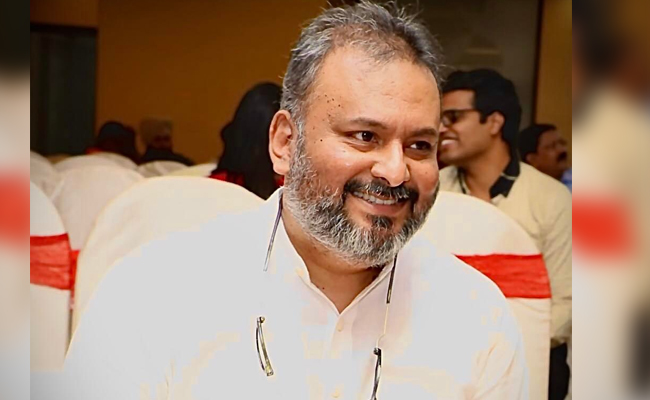
Chennai: Journalist and political commentator Sujit Nair has expressed concern over speculation that the Dravida Munnetra Kazhagam and the All India Anna Dravida Munnetra Kazhagam could explore a post-poll understanding to prevent Vijay-led Tamilaga Vettri Kazhagam from forming the government in Tamil Nadu.
In a social media post, Sujit Nair said the election verdict in Tamil Nadu reflected a clear public demand for political change and argued that the mandate should be respected irrespective of political preferences.
Referring to reports and political discussions surrounding a possible understanding between the DMK and AIADMK, he said he hoped such developments remained only speculative conversations and did not turn into reality.
Nair stated that if such an alliance were to take shape, it would raise serious questions about ideological politics in the country. He said TVK had emerged through a democratic electoral process and that the legitimacy to govern in a parliamentary democracy comes from the people’s verdict.
According to him, attempts to prevent an electoral winner from forming the government through unexpected political arrangements may be constitutionally valid, but many people could view them as politically opportunistic.
He further said that such a move could particularly affect the political image of the DMK, which has historically projected itself around ideology, social justice and opposition politics. Nair said that in ideological terms, the DMK appeared closer to TVK than to the AIADMK, and joining hands with its long-time political rival only to remain in power could weaken its broader political narrative.
He added that the same questions would apply to the AIADMK as well, as the party had spent decades positioning itself against the DMK and such an arrangement could create discomfort among its cadre and supporters.
Drawing a comparison with Maharashtra politics in 2019, Nair said he had expressed similar views when the Shiv Sena formed an alliance with the Indian National Congress and the Nationalist Congress Party after the Assembly elections.
He said post-poll alliances between long-standing political rivals often create a public perception that ideology and electoral mandates become secondary when political power equations come into play.
Nair also said such developments increase public cynicism towards politics and reinforce the belief among voters that ideology is often sidelined after elections.
He maintained that the Tamil Nadu verdict was emphatic and said respecting both the spirit and substance of the mandate was important for the credibility of democratic politics.