Oli breaks silence, denies giving any shooting orders during 'Gen Z' protests in Nepal
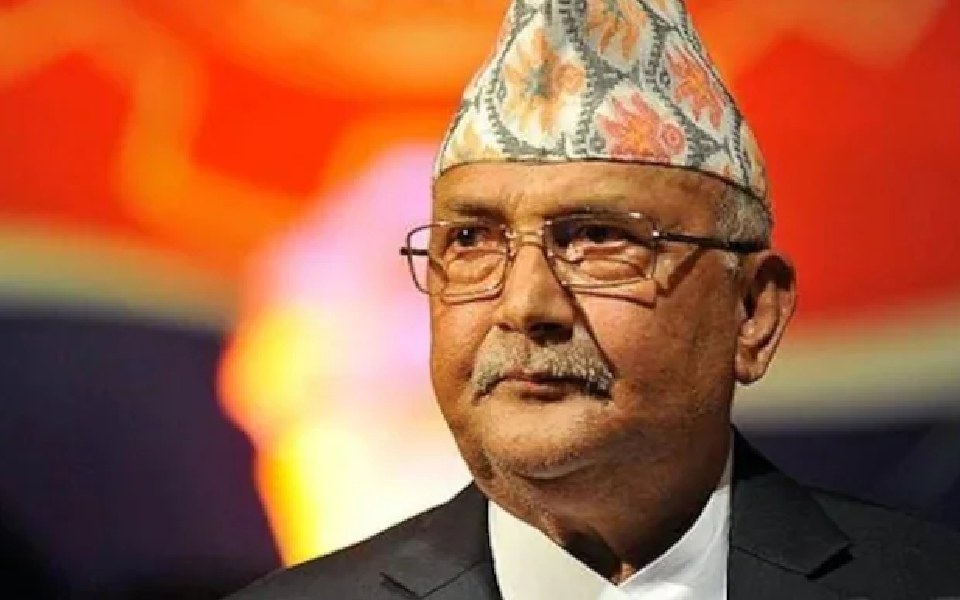
Kathmandu (PTI): Nepal's deposed prime minister K P Sharma Oli on Friday denied that he had given any shooting orders during the 'Gen Z' demonstrations, saying bullets were fired at protesters from automatic guns that the police did not possess and called for a probe into the matter.
In his first public statement since his ouster on September 9, the Communist Party of Nepal (Unified Marxist-Leninist) chairman blamed the infiltrators for the violence during the "peaceful protest" by Gen-Z.
“The government didn’t order to shoot at the demonstrators,” 73-year-old Oli said in a message issued on the occasion of Constitution Day.
“The bullets were fired at the protesters from automatic guns, which were not possessed by the police personnel, and this must be investigated,” Oli said.
Seventy-four people, including 3 policemen, were among the dead during the youth-led violent protests on September 8 and 9 against corruption and a ban on social media.
Claiming that there was "infiltration" in the "peaceful protests", he said, "The infiltrating conspirators turned the agitation violent, and this way our youths were killed.”
Expressing grief over the loss of lives, Oli demanded an inquiry into the incident.
"The Singhdurbar Secretariat and Supreme Court were set on fire, Nepal's map was burnt, and many important government buildings were set on fire after I resigned from the post," he said.
"I don’t want to elaborate on the conspiracies behind these incidents; time will speak for itself,” he added.
He also recalled the challenges the country had faced while promulgating the Constitution.
"The Constitution was promulgated in the midst of a border blockade and challenges against national sovereignty,” said Oli, who did not appear at the Constitution Day event organised at the UML's central party office.
"All generations of Nepalis must unite — to confront the assault on our sovereignty and to defend our Constitution,” he added.
Oli had flown to the army barracks, probably in Shivapuri forest area in the North of Kathmandu, as soon as the Gen Z protest turned violent, even as he quit the post on September 9.
After spending nine days under the Nepal Army's security, Oli recently moved to a private place. However, the place where he is staying now has not been made public. According to media reports, Oli has moved to a private house in the Gundu area of Bhaktapur district, 15 km east of Kathmandu.
The Gen-Z protesters had burnt his house at Balkot in Bhaktapur to ashes during the second day of the protest. Oli was at the official residence of the Nepal PM when the protesters partially burnt the Prime Minister’s Office at Balkot.
However, Oli safely escaped with the help of the Nepal Army, who sent a helicopter to rescue him.
Let the Truth be known. If you read VB and like VB, please be a VB Supporter and Help us deliver the Truth to one and all.
SC to hear on May 4 PIL seeking stringent guidelines for issuing Aadhaar to adolescents, adults
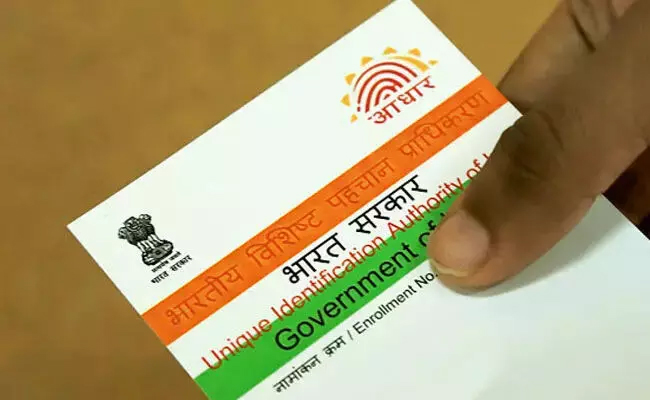
New Delhi (PTI): The Supreme Court is scheduled to hear on Monday a plea seeking a direction to the Unique Identification Authority of India to issue new Aadhaar cards only to citizens up to the age of six years, and frame stringent guidelines for its issuance to adolescents and adults to stop infiltrators from masquerading as Indian citizens.
As per the apex court's causelist of May 4, the plea would come up for hearing before a bench of Chief Justice Surya Kant and Justice Joymalya Bagchi.
The Public Interest Litigation (PIL) filed by lawyer Ashwini Upadhyay has also sought a direction to the authorities to install display boards at common service centres stating that the 12-digit unique identification number is only a "proof of identity" and not a proof of citizenship, address or date of birth.
Besides all the states and Union Territories, the plea has made the UIDAI -- which is the authority that issues Aadhaar -- and the Union ministries of home, law and justice, and electronics and information technology as parties.
The plea, filed through advocate Ashwani Dubey, said Aadhaar, originally intended as a proof of identity, has increasingly become a "foundational document" enabling individuals to obtain other identification documents, such as ration cards, domicile certificates and voter identity cards.
"The UIDAI has issued 144 crore Aadhaar and 99 percent Indians have been enrolled. Therefore, the petitioner is filing this writ petition as a PIL under Article 32, seeking a direction to UIDAI to issue new Aadhaar to children only and frame new stringent guidelines for adolescents and adults, so as to stop infiltrators from getting it and masquerading as Indian citizens," the plea said.
It said the need to file the plea arose when the petitioner came to know the manner in which infiltrators are able to procure Aadhaar through a verification process that is weak and can be easily manipulated.
"Foreigners apply for Aadhaar under the 'foreign' category. But infiltrators apply for Aadhaar under the 'Indian citizen' category and get it easily made. Thereafter, they obtain a ration card, birth and domicile certificate, driving licence, et cetera, essentially becoming indistinguishable from Indian citizens…," it said.
Besides seeking other directions, the plea has raised legal questions, including whether the Aadhaar Act 2016 has become "temporally unreasonable" for failing to keep up with the legislative intent of distinguishing foreigners from Indian citizens.
It said the alleged misuse of Aadhaar undermines targeted welfare delivery and leads to diversion of public resources.