One in two youths subject to depression, anxiety, says ILO survey on effects of COVID-19

United Nations: Half of the world's youth population are subject to anxiety or depression-causing circumstances and more than a third are uncertain of their future career prospects due to the COVID-19 pandemic, according to a survey by the International Labour Organization.
The ILO's 'Youth and COVID-19: impacts on jobs, education, rights and mental well-being' survey found that if urgent action is not taken, youths are at the risk of suffering severe and long-lasting adverse impacts from the pandemic.
"The COVID-19 pandemic has disrupted every aspect of our lives. Even before the onset of the crisis, the social and economic integration of young people was an ongoing challenge. Now, unless urgent action is taken, young people are likely to suffer severe and long-lasting impacts from the pandemic, the report said on Tuesday.
The ILO survey aimed to capture the immediate effects of the pandemic on the lives of youths (aged 18 to 29 years) with regard to employment, education, mental health, rights and social activism.
Over 12,000 responses were received from 112 countries, with a large proportion coming from educated youths with access to the Internet.
The survey found that one in two (i.e., 50 per cent) young people across the world are possibly subject to anxiety or depression, while 17 per cent are probably affected by it.
"Severe disruption to learning and working, compounded by the health crisis, has seen a deterioration in young people's mental well-being," the survey said.
Mental well-being is lowest for young women and younger youths between the ages of 18 and 24 years.
Young people whose education or work was either disrupted or had stopped completely were almost twice as likely to be affected by anxiety or depression as compared to those who continued to be employed or whose education was not affected.
"This underscores the interlinkages that exist between mental well-being, educational success and labour market integration," it said.
Among those who thought that their education would be delayed or might fail, 22 per cent were likely to be affected by anxiety or depression, compared to 12 per cent of students whose education remained on track.
According to the report, 38 per cent of young people are uncertain of their future career prospects, with the COVID-19 crisis expected to create more obstacles in the labour market and to lengthen the transition from school to work.
The coronavirus, which first emerged in China's Wuhan city, has claimed over 7.4 lakh lives with more than 20 million confirmed cases across the world so far.
The ILO survey said some youths have already felt the direct impact of the pandemic, with one in six youths having to stop work since the virus outbreak.
Many young workers are employed in highly-affected sectors, such as support, services or sales-related work, making them more vulnerable to the economic consequences of the pandemic.
The report said 73 per cent of the young people, who were either studying or combining study and work before the onset of the crisis, experienced school closures though all of them were not able to transition into online and distance learning.
The coronavirus has left one in eight young people (13 per cent) without any access to courses, teaching or training -- a situation particularly acute among the youth in low-income countries and one that serves to underline the sharp digital divide that exists between regions.
It added that despite the best efforts of schools and training institutions to provide continuity through online delivery, 65 per cent of the young people reported having learnt less since the pandemic began.
Fifty-one per cent believe their education will be delayed, and nine per cent fear their education would suffer and might even fail. The pandemic is also inflicting a heavy toll on young workers, destroying their employment and undermining their career prospects.
One in six young people (17 per cent) who were employed before the outbreak, stopped working altogether, most notably younger workers aged 18 to 24 years, and those in clerical support, services, sales, crafts and related trades.
Working hours among the employed youths fell by nearly a quarter (i.e. by an average of two hours a day) and two out of five young people (42 per cent) reported a reduction in their income.
Young people in low-income countries are the most exposed to reductions in working hours and the resultant contraction in income, the survey said.
ILO Director-General Guy Ryder said, "The pandemic is inflicting multiple shocks on young people. It is not only destroying their jobs and employment prospects, but also disrupting their education and training and having a serious impact on their mental well-being."
Despite the setbacks, the youth have continued to mobilise and speak out about the crisis. According to the survey, a quarter of the young people have done some kind of volunteer work during the pandemic.
Ensuring that their voices are heard is critical for a more inclusive COVID-19 response, the ILO said, adding that giving youth a chance to articulate their needs and ideas during the decision-making procedures improves effectiveness of policies and programmes.
Let the Truth be known. If you read VB and like VB, please be a VB Supporter and Help us deliver the Truth to one and all.
No proposal to hike bus fares in Karnataka, says Ramalinga Reddy
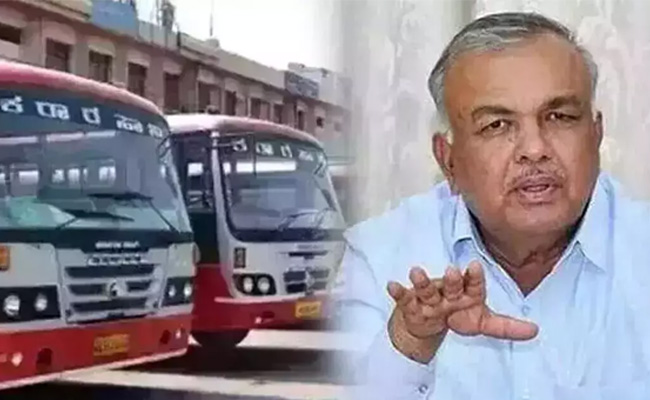
Bengaluru: Karnataka Transport Minister Ramalinga Reddy has said there is no proposal at present to increase bus fares in the state, even if diesel prices go up.
Speaking to reporters in Bengaluru on Wednesday, Reddy said he was not aware of any decision to raise diesel prices and added that it would be welcome if no such hike takes place.
He said that although an increase in diesel prices would add to the financial burden of state-run transport corporations such as Karnataka State Road Transport Corporation and Bangalore Metropolitan Transport Corporation, no discussion has been held so far regarding a revision in passenger fares.
Commenting on the recent salary revision for transport corporation employees, the minister said the government had already conveyed its decision and declined to comment on reports that some employees were dissatisfied with the announcement.
On the delay in holding elections to the Greater Bengaluru Authority, Reddy said it was natural for aspirants to feel disappointed and acknowledged that the postponement was also increasing pressure on party leaders.
He said Bengaluru’s infrastructure development since 1947 had seen substantial progress during Congress governments, but added that questions regarding the reasons for postponing the elections should be addressed to Deputy Chief Minister D. K. Shivakumar.
Reddy also said he had no information regarding any power-sharing arrangement within the government, but was aware of discussions on a cabinet reshuffle.
He noted that he had travelled to New Delhi only three times in the past three years and said it would be good if the cabinet expansion takes place soon.
According to him, there had been indications that the expansion would occur after two and a half years in office, but it has already been delayed by six months.