OpenAI ex-CEO Sam Altman will join Microsoft to 'lead' new advanced AI research team: Satya Nadella

New York, Nov 20: Sam Altman, the former chief of artificial intelligence start-up OpenAI, will join Microsoft to "lead" a new advanced AI research team, the tech giant's CEO Satya Nadella announced on Monday.
In a blog post, Microsoft's Indian-origin chief said the company remains committed to its partnership with OpenAI and has confidence in its product roadmap, "our ability to continue to innovate with everything we announced at Microsoft Ignite, and in continuing to support our customers and partners".
"We're extremely excited to share the news that Sam Altman and Greg Brockman (OpenAI co-founder and former president), together with colleagues, will be joining Microsoft to lead a new advanced AI research team. We look forward to moving quickly to provide them with the resources needed for their success," Nadella said.
Nadella also shared Microsoft's announcement about Altman and Brockman joining the tech giant team in a post on X, to which the former OpenAI CEO responded, "The mission continues."
Replying to Altman's post, Nadella said, "I'm super excited to have you join as CEO of this new group, Sam, setting a new pace for innovation. We've learned a lot over the years about how to give founders and innovators space to build independent identities and cultures within Microsoft, including GitHub, Mojang Studios, and LinkedIn, and I'm looking forward to having you do the same."
Last week, the board of directors of OpenAI announced that Altman, 38, will depart as CEO and leave the board, which "no longer has confidence" in his "ability to continue leading OpenAI".
Brockman had also quit the start-up and had said that Altman and he were "shocked and saddened" by what the board did.
A statement by OpenAI said that Altman's departure follows a "deliberative review process by the board, which concluded that he was not consistently candid in his communications with the board, hindering its ability to exercise its responsibilities".
OpenAI had said that as part of this transition, Brockman will be stepping down as chairman of the board and will remain in his role at the company, reporting to the CEO.
In the blog post, Nadella said Microsoft looks forward to getting to know Emmett Shear, the former chief executive of Twitch who has been named interim chief at OpenAI, as well as OAI's new leadership team and working with them.
Nadella said Microsoft is continuing to rapidly innovate for this era of AI, with over 100 announcements across the full tech stack from AI systems, models, and tools in Azure, to Copilot.
"Most importantly, we're committed to delivering all of this to our customers while building for the future. We have a long-term agreement with OpenAI with full access to everything we need to deliver on our innovation agenda and an exciting product roadmap; and remain committed to our partnership, and to Mira and the team. Together, we will continue to deliver the meaningful benefits of this technology to the world," he said.
We remain committed to our partnership with OpenAI and have confidence in our product roadmap, our ability to continue to innovate with everything we announced at Microsoft Ignite, and in continuing to support our customers and partners. We look forward to getting to know Emmett…
— Satya Nadella (@satyanadella) November 20, 2023
the mission continues https://t.co/d1pHiFxcSe
— Sam Altman (@sama) November 20, 2023
Sam and I are shocked and saddened by what the board did today.
— Greg Brockman (@gdb) November 18, 2023
Let us first say thank you to all the incredible people who we have worked with at OpenAI, our customers, our investors, and all of those who have been reaching out.
We too are still trying to figure out exactly…
the mission continues https://t.co/d1pHiFxcSe
— Sam Altman (@sama) November 20, 2023
Today I got a call inviting me to consider a once-in-a-lifetime opportunity: to become the interim CEO of @OpenAI. After consulting with my family and reflecting on it for just a few hours, I accepted. I had recently resigned from my role as CEO of Twitch due to the birth of my…
— Emmett Shear (@eshear) November 20, 2023
Let the Truth be known. If you read VB and like VB, please be a VB Supporter and Help us deliver the Truth to one and all.
Bengaluru airport introduces AI-based system to enhance safety at vehicle-aircraft intersections
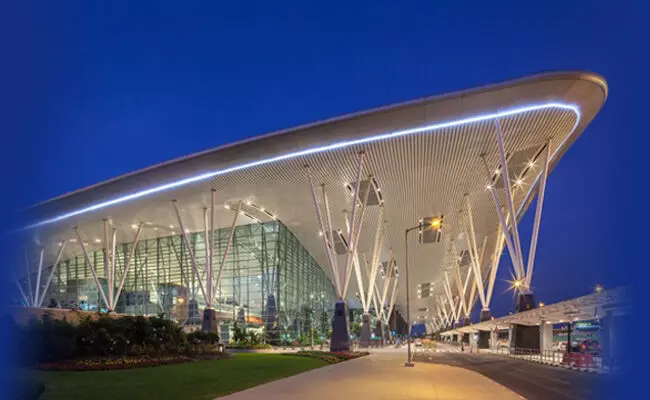
Bengaluru: Bangalore International Airport Limited (BIAL) has introduced an integrated smart airside safety system at Kempegowda International Airport to improve operational safety at key intersection zones.
According to The Hindu, the system has been designed to enhance safety at Cross Service Roads (CSRs), where aircraft and ground vehicle movements intersect.
According to BIAL, the system integrates AI-based computer vision, automation, and centralised monitoring to manage right-of-way movements and reduce the risk of human error.
“CRSs are among the most sensitive areas within airport operations, requiring precise and seamless coordination between aircraft and ground vehicles. Traditionally, right of way protection at these intersections relied on manual or semi-manual inset light activation, creating dependencies on human intervention, increasing the risk of delays and limiting operational visibility,” TH quoted BIAL as saying.
The new system uses real-time detection of vehicle movement, risk assessment, and automated signalling. AI-enabled cameras identify potential conflicts and trigger automated inset light signals to ensure aircraft priority. Normal operations resume once the area is confirmed clear.
“Based on these detections, the system triggers automated inset light activation to protect aircraft right‑of‑way and restores normal signalling once the intersection is confirmed clear. A centralised monitoring and analytics platform digitally logs all events, strengthening governance, compliance, and operational control,” BIAL said.
By embedding technology into operations, the system creates a data-driven separation layer between aircraft and ground vehicles, significantly reducing human error, especially during night and low-visibility conditions.
“Precision-led signal activation improves traffic flow, minimises unnecessary stoppage and enhances turnaround efficiency. It also establishes a scalable foundation for predictive safety analytics, enabling trend analysis, peak-hour optimisation, compliance mapping and risk forecasting to support continuous improvement and stronger airside governance,” BIAL said.