Our investment plans in India on track, Indian economy has strength to bounce back: Saudi Arabia
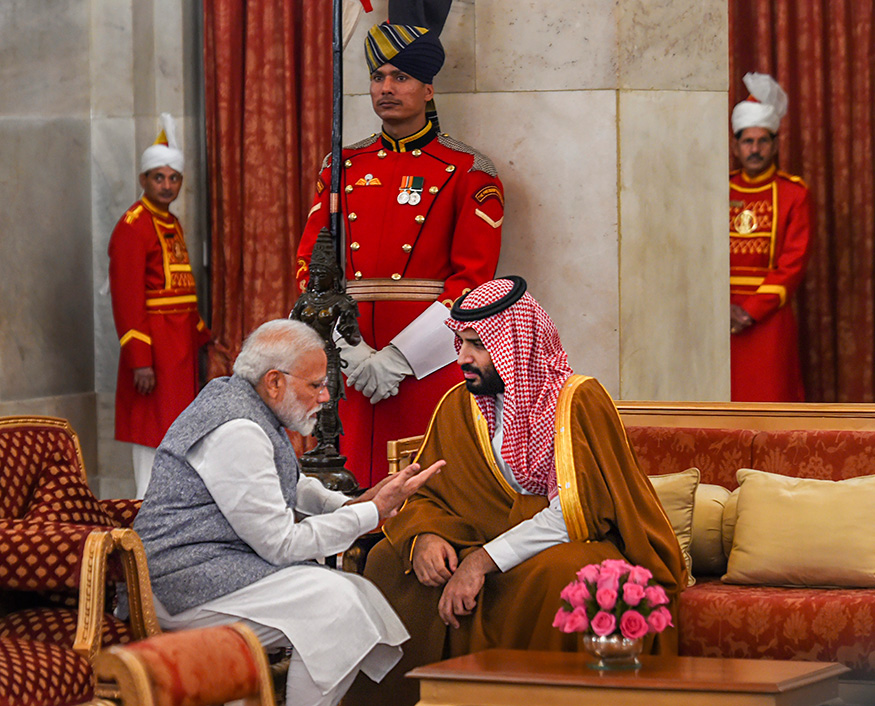
New Delhi, Dec 20: Saudi Arabia, the world's largest oil exporter, on Sunday said its investment plans in India are on track, noting that the Indian economy has the strength to recover from the adverse impact of the coronavirus crisis.
In February last year, Saudi Crown Prince Mohammed bin Salman announced that Saudi Arabia would invest over USD 100 billion in India in petrochemicals, refining, infrastructure, mining and manufacturing, agriculture and several other sectors.
"Our plans to invest in India are on track and we are in discussion to prioritise investment opportunities in several sectors in both countries," Saudi Ambassador Dr Saud bin Mohammed Al Sati told PTI in an interview.
Stating that Saudi Arabia values India as a strategic partner and a close friend, Al Sati identified ongoing cooperation in areas of training, knowledge sharing and combating terrorism as key elements of the partnership in defence and security sphere.
Al Sati complimented India's measures to revive its economy in view of the impact of the pandemic and said the economic recovery of both countries will help elevate other economies in the region as well.
"The economic relief package provided by India for its most prominent sectors is commendable. As the fifth-largest global economy and the largest economy in South Asia, the Indian economy has the impetus to recover from the impact of the ongoing pandemic," he said.
Without commenting on Army Chief Gen MM Naravane's visit to Saudi Arabia last week, the Ambassador said the setting up of the Strategic Partnership Council by the two countries opened new avenues of cooperation in several sectors including defence and security and counter-terrorism.
"The Strategic (Partnership) Council set up by the two countries in 2019 has opened new avenues on partnership in strategic areas like defence, security counter-terrorism, energy security and renewable energy," he said.
Gen Naravane on Sunday held extensive talks with Commander of Royal Saudi land forces Gen Fahd Bin Abdullah Mohammed Al-Mutir as he began a two-day rare visit to the Gulf country to lay the ground for deeper military ties.
In the first-ever visit by a head of the Indian Army, Gen Naravane travelled to Saudi capital city Riyadh last week where he held talks with top military brass.
The two sides set up the Strategic Partnership Council during Prime Minister Narendra Modi's visit to Riyadh in October last year. The council is mandated to monitor the progress of strategic relationships in a whole range of key areas.
"The current decade has witnessed a remarkable stride in the relations between Saudi Arabia and India. What was once viewed as ties between two friendly countries is now a strong strategic partnership between two formidable economies," Al Sati said.
"From energy cooperation, security and defense, burgeoning trade relations to health cooperation, the nature of this relationship has diversified immensely allowing for expanded growth. The leadership on both sides have heralded this transformation for Saudi India ties," he said.
On trade partnership, the envoy referred to the decision by Saudi Public Investment Fund (PIF) to invest approximately USD 1.3 billion in Reliance Retail and USD 1.5 billion in Reliance's Jio platforms
"Saudi Aramco is committed to investing in India's energy sector. Aramco's decision to buy a stake in Reliance Industries Oil to Chemical business and Aramco's commitment to invest in the West Coast refinery petrochemical project signifies the interest Saudi Arabia places in the development of India's energy sector," he said.
Apart from this, Al Sati said Saudi Arabia is continuing to explore new investment opportunities in India.
The envoy also highlighted Saudi Arabia's recent Labor Reform Initiative (LRI), saying they will further help Saudi Arabia and India to cement their economic relationship.
"It will enhance the contractual relationship between workers and employers, and will support the Kingdom's vision of establishing an attractive job market, empowering and developing labour competencies and developing the work environment," he said.
"The initiative is a welcome step in improving the efficiency of the work environment in Saudi Arabia and will complement similar initiatives launched in this regard," he said.
Al Sati said the measures will also contribute towards reducing the disparity between Saudi workers and expatriates.
"The positive economic benefits expected from LRI include the development of the local market and the flexibility of work, increase in productivity within the private sector attracting highly skilled talent, and will ultimately help in achieving the goals of the Kingdom's Vision 2030 through the national transformation programme," he said.
Asked about political developments in Yemen, the Saudi Ambassador said the forming of the new government in that country is an important step in the context of implementing the Riyadh agreement.
"We hope that this step will help in realising peace and stability in Yemen and in achieving the aspirations of the Yemeni people for a political solution that ends the crisis in Yemen," he said.
The Riyadh agreement was pushed by Saudi Arabia in an effort to end hostilities between Yemen's internationally recognised government and southern separatists.
Let the Truth be known. If you read VB and like VB, please be a VB Supporter and Help us deliver the Truth to one and all.
MP boat tragedy: Death toll climbs to 12; search on for one missing person
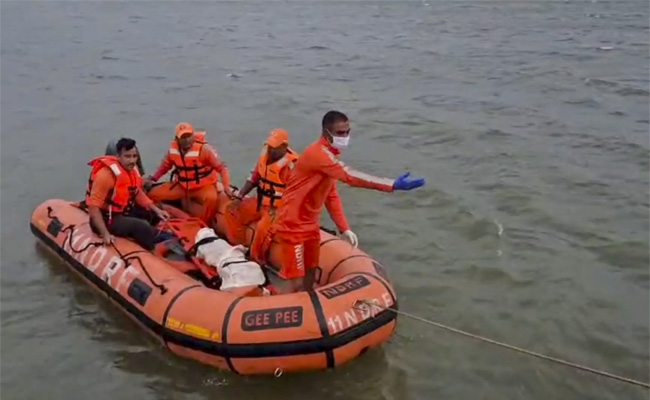
Jabalpur (PTI): The body of a 5-year-old boy was recovered from the Bargi Dam in Madhya Pradesh's Jabalpur district on Sunday morning, taking the death toll in the cruise boat tragedy to 12, while search continued for one missing person, police said.
The boat, around 20 years old and operated by the state tourism department, capsized during a storm on Thursday evening.
The body of Mayuram (5) has been fished out of the dam. Search is underway for Kamraj (aged around 50), an employee of the Ordnance Factory in Khamaria, Bargi police station house officer (SHO) Neelesh Dohare told PTI.
More than 200 rescuers, including around 20 Army divers airlifted from Agra, National Disaster Response Force, State Disaster Response Force and local divers, were searching for the man 40-50 feet deep in the water in a radius of 5 km, according to police.
Of the 41 identified passengers on board the ill-fated vessel, 28 were rescued after the incident, police earlier said.
The CCTV footage near the boarding point showed 43 people heading towards the boat, while the identities of 41 passengers have been confirmed so far, they said.
The state government on Friday ordered a probe into the tragedy and dismissed three crew members. It also banned the operation of similar vessels in the state.