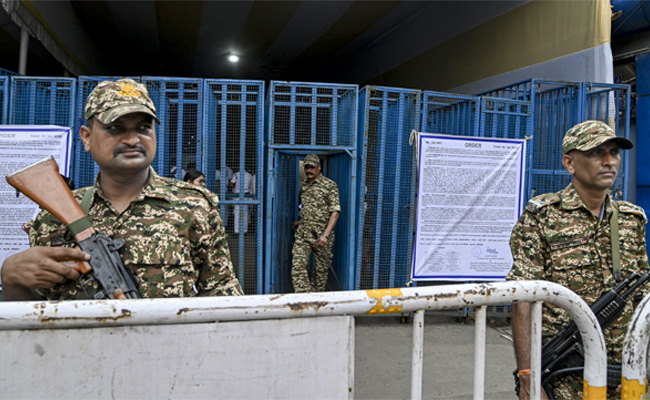
Over 15,000 prisoners escape amid violent protests in Nepal: Report
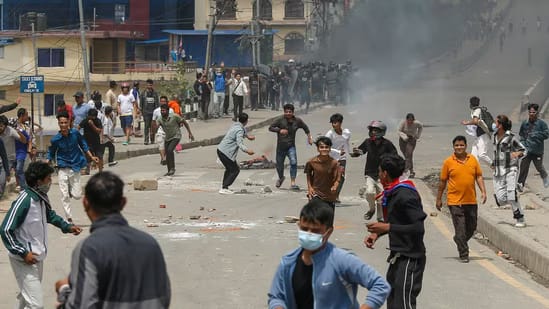
Kathmandu: Nepal is facing a nationwide security crisis after more than 15,000 inmates escaped from over 25 prisons across the country amid violent protests against corruption and the government in the country, The Kathmandu Post reported.
The mass jailbreaks began when angry demonstrators stormed multiple prison facilities, setting administrative buildings on fire and breaking open gates. In several locations, inmates reportedly attempted to seize control of the prisons, leading to clashes with security forces.
The deadliest incident occurred at the Banke Juvenile Reform Centre, where police opened fire to contain the chaos, leaving five inmates dead. Of the 228 children at the centre, 122 managed to flee from the facility.
At Sundhara’s Central Jail, around 3,300 inmates escaped, while another 1,400 prisoners broke out of Nakkhu Prison in Lalitpur. In Kaski District Prison, 773 inmates escaped after protesters torched the administrative block on Tuesday evening.
Other major prison breaks were reported at Jhumka Prison in Sunsari, one of Nepal’s largest facilities, where 1,575 prisoners escaped, and at Jaleshwar Prison in Mahottari, which saw the escape of 575 inmates. Authorities mentioned that 220 inmates later returned voluntarily or were captured by the army.
Families of crime victims have expressed fear as inmates convicted of heinous crimes such as murders, rapes, abductions, and human trafficking have also escaped, the report added.
Meanwhile, the Department of Prison Management stated that it was still compiling final figures from all provinces. Director General Lila Prasad Sharma confirmed that the Nepal Army, Armed Police Force, and Nepal Police have been deployed nationwide to re-arrest escapees and restore order.
“We are mobilising all available resources to re-arrest them as quickly as possible," The Kathmandu Post quoted him as saying.
Let the Truth be known. If you read VB and like VB, please be a VB Supporter and Help us deliver the Truth to one and all.
NCW chief condemns rape-murder of 4-year-old girl in Pune, calls for swift action
New Delhi (PTI): National Commission for Women (NCW) Chairperson Vijaya Rahatkar has condemned the alleged rape and murder of a four-year-old girl in Maharashtra's Pune, calling it "deeply distressing" and a "blot on humanity".
The girl was allegedly raped and killed by a 65-year-old labourer, who has a criminal record, in Bhor tehsil of Pune on Friday. The accused allegedly lured the child to a cattle enclosure on the pretext of giving her food. After raping her, he killed her by hitting her with a stone, according to police.
The accused has been arrested.
In a post on X on Saturday, Rahatkar said the incident in the Nasrapur area in Pune was heartbreaking and has shaken society.
"The brutal torture and murder of a four-year-old innocent girl in Nasrapur (Bhor, Pune) is deeply painful, heartbreaking, and shocking. It is a blot on humanity," she said.
She said Pune Rural police has arrested the accused and noted that Maharashtra Chief Minister Devendra Fadnavis and Deputy Chief Minister Sunetra Pawar have assured strict action in the case.
Rahatkar said the NCW has taken cognisance of the matter and written to the National Commission for Protection of Child Rights (NCPCR), requesting the body to ensure necessary and prompt action.
It has also been recommended that the case be pursued under stringent provisions of the Protection of Children from Sexual Offences (POCSO) Act and be closely monitored from the filing of the chargesheet to proceedings in a fast-track special court to ensure time-bound justice, she added.
Ensuring justice for the victim and stringent punishment for the accused is a collective responsibility, the NCW chairperson underlined.
In a post on X, the NCW said it has taken suo motu cognisance of the extremely "heinous" incident.
"This heinous crime causes profound pain and outrage, and it highlights serious concerns regarding the safety of young girls," it said.
Strongly condemning this grave "inhuman act", the NCW said such crimes constitute a serious violation of children's rights and raise questions about society's security system.