Over 200 dead as heavy rains lash Pakistan, PoK
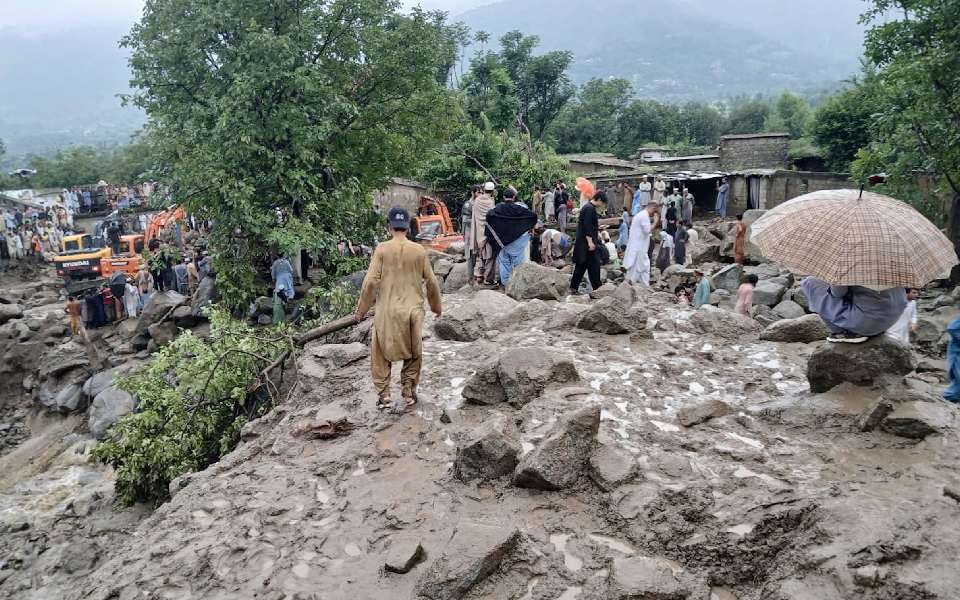
Peshawar/Islamabad, Aug 15 (PTI): At least 214 people were killed and several injured as heavy rains lashed several parts of Pakistan and Pakistan-occupied Kashmir over the past 36 hours, officials said Friday.
Most of the deaths occurred in Khyber Pakhtunkhwa province after torrential rains triggered flash floods in various districts, while floods damaged scores of buildings and blocked major arteries, including the Karakoram Highway and Baltistan Highway in Gilgit-Baltistan in Pakistan-occupied Kashmir (PoK).
Heavy rain in the Khyber Pakhtunkhwa province is likely to continue intermittently until August 21, the authorities have warned.
At least 198 people, including 14 women and 12 children, were killed and several remained missing as flash floods wreaked havoc across Khyber Pakhtunkhwa during the last 24 hours, spokesman for the Provincial Disaster Management Authority (PDMA) said here.
Buner district witnessed the highest number of deaths at 92, according to the PDMA. The other affected districts include Mansehra, Bajaur, Batagram, Lower Dir and Shangla.
The PDMA spokesperson, however, added that the number of those dead or injured is expected to rise further as scores of people are still missing in affected areas. “A total of Rs 500 million has been released for the districts most affected by floods as per the instructions issued by Chief Minister Amin Ali Gandapur,” the PDMA report said.
Two helicopters of the provincial government were working to rescue people. One met with a tragic accident due to bad weather resulting in the death of two crew members and three relief workers in Mohmand tribal district.
A notification addressed to all hospitals in the province ordered the establishment of flood control rooms in order to ensure the availability of medicines and the functioning of medical equipment.
Meanwhile, in Gilgit-Baltistan in Pakistan-occupied Kashmir (PoK), eight people died and two others went missing as flash floods hit Ghizer district, officials said.
The floods damaged more than a dozen houses, several vehicles, schools, and health units, while blocking major arteries, including the Karakoram Highway and Baltistan Highway, at several points.
The northeastern Neelum Valley also faced major disruptions, where tourists were shifted to safety.
More than 600 tourists camping at the Ratti Gali lake base were advised to remain in place after the link road was damaged.
The floods also washed away two connecting bridges over Lawat Nullah, and the swollen Jagran Nullah tore away a bridge in Kundal Shahi.
A scenic riverside restaurant and at least three houses in the area were also swept away.
In the Jhelum Valley, a cloudburst over Palhot unleashed a flash flood that damaged part of the road and left dozens of vehicles stranded.
With the Neelum River rising rapidly, authorities issued a flood warning and plan to relocate vulnerable riverside families.
In PoK's Muzaffarabad district, a massive landslide in Sarli Sacha village hit a home, leaving six members of a family buried and feared dead.
In Sudhnoti district, a 26-year-old man died after being swept away by a stream, while in Bagh district, a 57-year-old woman was killed when her home collapsed.
Since late June, the beginning of monsoon season, torrential rains have wreaked havoc across the country — especially in Khyber Pakhtunkhwa and northern regions — deadly floods, landslides and displacement, particularly in vulnerable, poorly drained, or densely populated areas.
The death toll since then till Thursday had crossed 325, including 142 children, according to the National Disaster Management Authority (NDMA).
Let the Truth be known. If you read VB and like VB, please be a VB Supporter and Help us deliver the Truth to one and all.
Indian startup's 'Drishti' satellite launched aboard SpaceX rocket
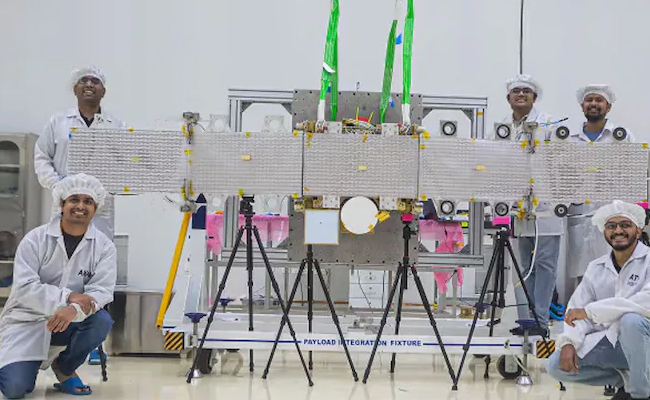
New Delhi (PTI): Bengaluru-based space start-up GalaxEye's Mission Drishti satellite was launched on Sunday aboard SpaceX's Falcon 9 rocket from California.
Mission Drishti is the world's first OptoSAR satellite, integrating electro-optical (EO) and synthetic aperture radar (SAR) sensors into a single operational platform, according to the company.
While EO sensors capture high-resolution images during sunlight and clear skies, SAR sensors provide all-weather and all-time images, using radar pulses.
In a statement, Suyash Singh, founder and CEO of GalaxEye, said, "With the satellite (Mission Drishti) now successfully in orbit, our immediate focus is on completing its commissioning. As we move through this phase, we are already witnessing strong global interest in the differentiated datasets enabled by our OptoSAR payload."
The satellite will help address long-standing limitations of conventional systems and enable more reliable and consistent data acquisition across diverse environmental conditions, the company said.
As a dual-use Earth observation satellite, the mission will support use cases across defence, agriculture, disaster management, maritime monitoring, and infrastructure planning.
The satellite is also expected to complement India's broader initiatives, including the 29 active Earth Observation satellites outlined in ISRO's recent annual report.
The launch came after five years of indigenous research and development, and extensive environmental testing and performance validation of the Mission Drishti.
In a statement, Lt Gen AK Bhatt (Retd), director general of Indian Space Association (ISpA), said, "GalaxEye has achieved what only a few global players have, which is seamlessly combining optical and SAR capabilities on a single platform to enable persistent, all-weather intelligence."
What stands out is not just the technology, but its broader impact on how downstream applications will increasingly define value in the space economy, particularly in Earth observation, where timely, decision-grade insights are critical," he added.
ISpA is the premier industry association of space and satellite companies in the country.
Union Minister Jitendra Singh also took note of the Mission Drishti launch, saying the development marked a significant milestone in India's space journey.
In a post on X, the minister said, "The successful launch of the world's first OptoSAR satellite, and the largest privately-built satellite in the country, reflects the immense potential of our young innovators driving nation-building."
GalaxEye aims to scale up Mission Drishti to a constellation of 10 satellites by 2030, developing a robust and sovereign Earth observation infrastructure for India.