Pakistan closes three aviation routes over Karachi

Islamabad: Pakistan has closed three aviation routes of Karachi airspace from August 28 till August 31, the country's civil aviation authority said on Wednesday after the government's announcement that it is mulling a complete ban on the use of the country's airspace by Indian flights.
The ban will affect all international flights using the three routes above Karachi. It further provides pilots with an alternate route to circumnavigate Karachi airspace. The four-day ban will expire on September 1, the aviation authority said in a Notice to Airmen (NOTAM).
The closure came at the heels of announcement by Minister of Science and Technology Fawad Chaudhry who tweeted on Tuesday that Prime Minister Imran Khan is considering a complete closure of airspace with India.
Pakistan's Cabinet on Tuesday discussed the idea of disallowing India to use the country's airspace for flight and the land route for trade with Afghanistan. The final decision will be taken by Prime Minister Khan.
Pakistan had fully closed its airspace in February after an Indian Air Force strike on a Jaish-e-Mohammed (JeM) terror camp in Balakot. The country opened its airspace for all flights except for New Delhi, Bangkok and Kuala Lumpur on March 27.
On May 15, Pakistan extended its airspace ban for flights to India till May 30. It fully opened its airspace for all civilian traffic on July 16.
Tensions between India and Pakistan spiked after India abrogated provisions of Article 370 of the Constitution to withdraw Jammu and Kashmir's special status and bifurcated it into two Union Territories.
Pakistan expelled the Indian High Commissioner after it downgraded the diplomatic ties with India in protest to India's decision to end Jammu and Kashmir's special status.
Pakistan also suspended its trade with India and stopped the train and bus services.
Let the Truth be known. If you read VB and like VB, please be a VB Supporter and Help us deliver the Truth to one and all.
Guv Gehlot clears bill paving way for Panchayat elections through ballots
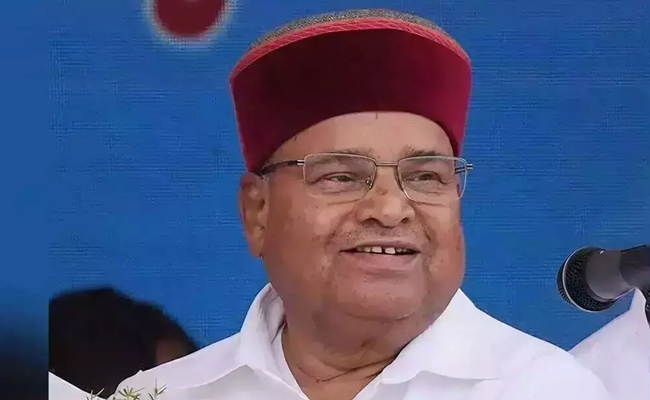
Bengaluru (PTI): Karnataka Governor Thaawarchand Gehlot has given his assent to the Karnataka Gram Swaraj and Panchayat Raj (Amendment) Act that will pave the way for holding the Panchayat elections through ballots instead of Electronic Voting Machines (EVMs).
Following the assent, the Act was notified in the state gazette on Wednesday.
The bill was passed by both houses of the Karnataka legislature in March during the budget session, amid protests by the opposition BJP.
As per the law, the principle of secrecy of the ballot is a cornerstone of free and fair elections, as recognised by the judiciary, which emphasised that the secrecy of the ballot protects voters from coercion, intimidation, and undue influence, thereby safeguarding the sanctity of the democratic process in several judgments of the Supreme Court.
Some concerns have been raised regarding the functioning of EVMs, necessitating a return to the robust secret ballot paper system to restore public trust, according to the Act.
Justifying its decision, the Karnataka government said there is “a growing consensus on the need to strengthen electoral mechanisms that prioritise anonymity and transparency”.