Pakistan foreign minister Qureshi says Indian pilot not released under 'any pressure'
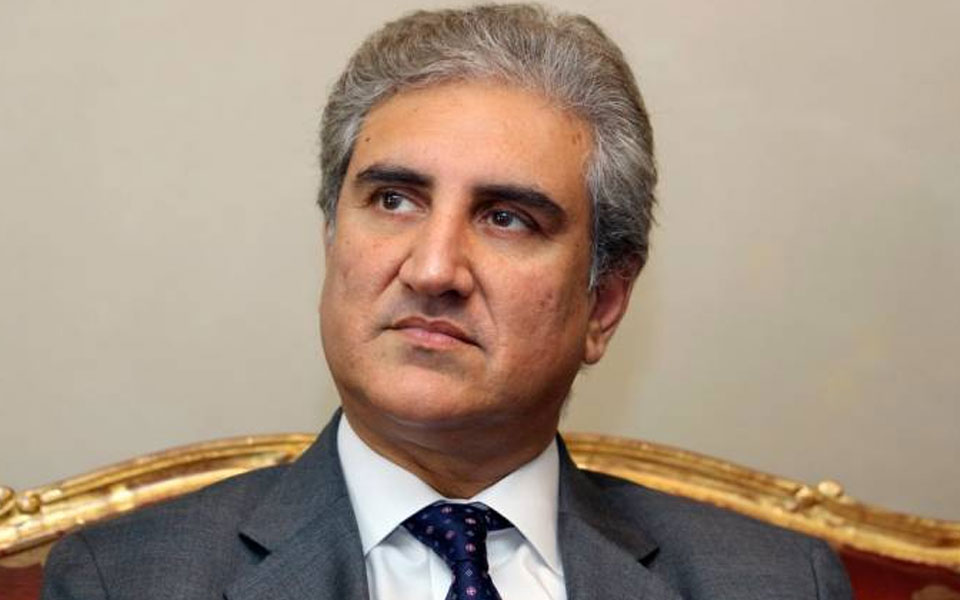
Islamabad : Pakistan was not under "pressure" or "any compulsion" to release Indian pilot Abhinandan Varthaman, Foreign Minister Shah Mehmood Qureshi said on Saturday, a day after the IAF Wing Commander returned home.
India has been maintaining that the Pakistani decision is in consonance with the Geneva Conventions.
Pakistan was under intense pressure from the US, the UAE and Saudi Arabia to de-escalate the tensions with India in the wake of the Pulwama terror attack and release the Indian pilot.
In an interview with BBC Urdu, Qureshi said: "We wanted to convey to them (India) that we do not want to increase your sorrow, we do not want your citizens to be miserable, we want peace".
Varthaman returned to India from Pakistan on Friday to a hero's welcome, nearly 60 hours after he was captured following a dogfight when his MiG 21 was shot down.
Qureshi dismissed the notion that the captured IAF pilot was released owing to pressure or as a compulsion.
"Pakistan will not allow anti-state elements to risk the peace of the country or the region. We plan on taking action against extremist groups," Geo news quoted him as saying.
India has repeatedly told Pakistan to act against terror groups operating from its soil and recently handed over dossier containing "specific details" of the involvement of the JeM in the Pulwama terror attack and the presence of camps of the UN-proscribed terror outfit in Pakistan.
"There was no pressure on Pakistan to release him nor any compulsion," Qureshi told BBC Urdu.
He said that Pakistan does not want the peace of the region to be risked over politics.
"Pakistan does not want to go in the past, but if it goes in the past, then we will have to see how the attack on Parliament, Pathankot and Uri took place and that is a long story," the foreign minister said.
Qureshi reiterated that if evidence is shared against Jaish-e-Mohammed (JeM), then action will be taken. On Friday he admitted that JeM's chief Masood Azhar was in Pakistan.
The IAF pilot's release was seen as a major step towards defusing a tense situation triggered by India's retaliation over Pakistan's continued support for terrorism.
Tensions between India and Pakistan flared up after a suicide bomber of Pakistan-based terror group JeM killed 40 CRPF personnel in Kashmir on February 14.
Amid mounting outrage, the IAF carried out a counter-terror operation, hitting what it said was a JeM training camp in Balakot, deep inside Pakistan on February 26. The next day, Pakistan retaliated with a large air formation, comprising 24 fighter jets, including F-16s.
Varthaman was in one of the eight MiG-21s that took on the invading Pakistan Air Force jets and shot down an F-16, according to Indian officials.
Let the Truth be known. If you read VB and like VB, please be a VB Supporter and Help us deliver the Truth to one and all.
Bridge portion collapses on Jammu outskirts; 3-4 labourers feared trapped, 1 rescued
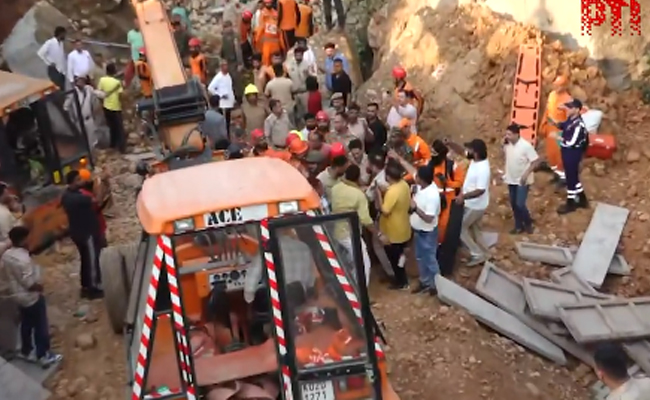
Jammu (PTI): A portion of a small bridge collapsed in the Bantalab area on the outskirts of Jammu city on Friday, trapping at least three to four labourers under the debris, while one injured worker was rescued, official sources said.
Authorities have closed the road link following the collapse of the portion of the bridge.
The incident occurred when labourers were carrying out repair work on a retaining wall near the bridge that was damaged in last year's flash floods, the sources said.
According to the sources, a section of the bridge suddenly gave way, burying workers engaged at the site under the rubble.
Police, Army and State Disaster Response Force (SDRF) teams launched rescue operations to extricate those buried under the debris. They pulled out one injured labourer and shifted him to a hospital, the sources said.
Family members of the labourers present at the site said around six workers engaged at the site at the time of the incident came under the debris when the structure collapsed. The family members said while two of the labourers managed to escape, four got trapped.
The sources said those trapped included the husband of a woman labourer, a mason, an unmarried labourer and a relative of the contractor.
There was no official confirmation on the exact number of persons trapped under the debris till the filing of this report.
The rescue operations are ongoing.