Pakistan PM Imran Khan paying the price for being disobedient to Washington, says Russia
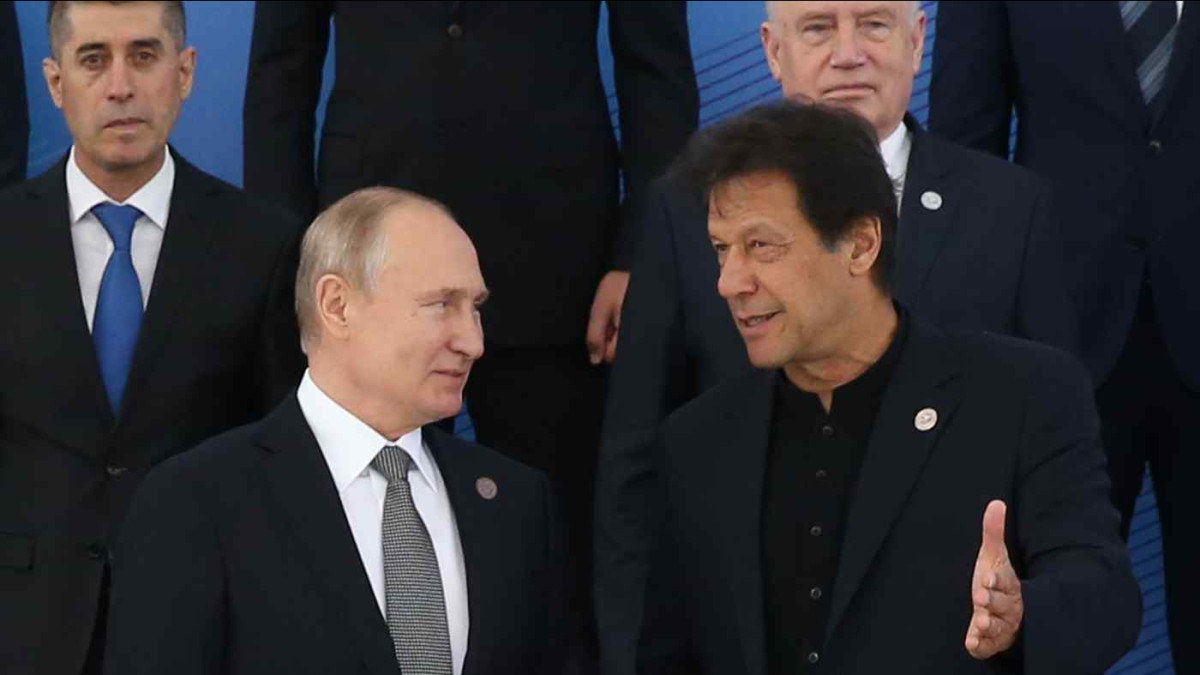
Moscow/Islamabad, Apr 5: Russia has criticised the US for making another attempt of shameless interference into the internal affairs of Pakistan and asserted that Prime Minister Imran Khan was paying the price for being disobedient to Washington and being punished for visiting Russia in February this year.
Khan met Russian President Vladimir Putin in the Kremlin on February 24, the day the Russian leader had ordered a special military operation against Ukraine.
In doing so, he had also become the first Pakistani premier to visit Russia in 23 years after former premier Nawaz Sharif travelled to Moscow in 1999.
On Monday, Russia's Foreign Ministry spokeswoman Maria Zakharova said despite pressure from the US to cancel his visit to Moscow, Khan went ahead with his trip.
Immediately after the announcement of the working visit of Imran Khan to Moscow on February 23-24 this year, the Americans and their Western associates began to exert rude pressure on the Prime Minister, demanding an ultimatum to cancel the trip," Zakharova said in a commentary on the controversy over Khan's allegation that the US was trying to effect a regime change in Islamabad.
This is another attempt of shameless interference by the US in the internal affairs of an independent state for its own selfish purposes. The above facts eloquently testify to this, Zakharova said.
The US-led West has imposed a series of crippling sanctions on Russia since it invaded Ukraine and has been pressing other nations to reduce their dependence on Russian oil and other products.
The senior Russian diplomat said that the sequence of events left no doubt that Washington had decided to punish a disobedient Imran Khan, which also explained why a number of members from Khan's ruling coalition decided to switch sides and shift their allegiances ahead of the April 3 no-trust vote.
Khan, 69, stunned the Opposition on Sunday by recommending snap elections within three months, minutes after a no-confidence motion against him was dismissed by the deputy speaker of the National Assembly.
Khan then got Pakistan President Arif Alvi to dissolve the 342-member National Assembly.
Pakistan's Supreme Court on Monday adjourned the hearing on the deputy speaker's decision to reject the no-confidence motion against the premier, who had lost majority in the lower house of Parliament.
Khan had named senior US diplomat Donald Lu as the person who was allegedly involved in the foreign conspiracy to oust his government through a no-confidence vote tabled by the Opposition.
Pakistan's Opposition leaders have ridiculed Khan's allegation, and the US has dismissed these claims.
Zakharova said Moscow was keenly watching the events unfolding in Islamabad over the last three days as well as the events preceding it.
In her commentary, she exuded hope that the Pakistani voters would be well-informed about these circumstances when they come to vote in the elections that are scheduled to be held 90 days after the dissolution of the National Assembly.
Let the Truth be known. If you read VB and like VB, please be a VB Supporter and Help us deliver the Truth to one and all.
Maharashtra sets up state vaccination task force to strengthen immunisation programme

Mumbai (PTI): The Maharashtra government has set up a State Vaccination Task Force to strengthen the regular immunisation programme and review the progress of related campaigns, a health department official said on Monday.
The State Vaccination Task Force will comprise at least 29 members and will be headed by the administrative head of the health department, he informed.
The government has also constituted separate district-level and municipal vaccination task forces to improve implementation and address challenges at the grassroots level, he said.
Municipal task forces, chaired by respective civic commissioners, have been constituted in view of the vast urban population in Maharashtra and the role of civic bodies in implementing different health programmes.
The district-level task forces will function under the chairmanship of collectors.
"Complete immunisation of children at the appropriate age is an extremely simple, cost-effective and highly effective measure to reduce child mortality and the prevalence of diseases among kids. Immunisation is a powerful tool for reducing illness in children," maintained the official.
To ensure full vaccination of all children, the state government implements various campaigns from time to time as per the central government guidelines, he pointed out.
"Active participation and cooperation of other relevant government departments are essential (in making these campaigns successful)," according to the official.
The state-level body will review the regular immunisation programme, associated campaigns and vaccine-preventable diseases in detail. It will also conduct focused assessments of high-risk districts and municipal corporations, including vacancies at district, municipal and sub-district levels, availability of cold chain equipment, resource gaps and training requirements, he noted.
The state task force will review allocation and utilisation of funds for immunisation and ensure timely action by officers concerned based on reports from district and municipal task forces and state-level monitoring mechanisms, the official said.
It will also ensure active coordination and participation of other government departments in immunisation drives, while district and municipal task forces will carry out similar functions at their respective levels, the official added.