Pakistan ‘relaying messages’ between Iran and US for peace in West Asia: official
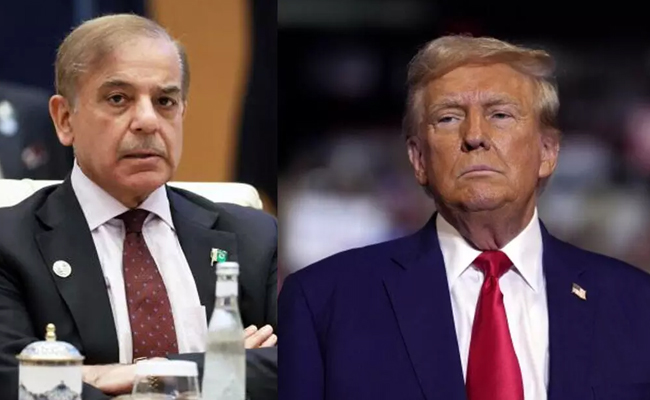
Lahore (PTI): Pakistan is relaying messages between Iran and the US with the aim to help de-escalate the West Asia conflict, a top government official said on Wednesday.
"We are trying to broker US-Iran peace talks and have also offered Islamabad as a venue for the purpose. But it will be possible if Iran agrees to sit at the table with America," a top official in the Shehbaz Sharif administration said on the condition of anonymity.
"At the moment, Pakistan is relaying messages between the US and Iran. Islamabad not only handed over the 15-point proposal of the US to Iran but also Tehran's demands to the Trump administration to ink a peace deal," he said.
The 15-point proposal outlines strict conditions targeting Iran’s nuclear and regional policies in exchange for major sanctions relief, he added.
Under the proposal, Iran would be required to fully dismantle its nuclear programme and commit never to pursuing nuclear weapons. All enriched nuclear material would be transferred to the International Atomic Energy Agency (IAEA) within an agreed timeframe.
Key nuclear facilities, including the Natanz Nuclear Facility, Isfahan Nuclear Technology Centre and Fordow Fuel Enrichment Plant, would be decommissioned and destroyed under the plan. The IAEA would also be granted full access to all aspects of Iran’s nuclear programme, he said, speaking about the proposal.
The proposal further calls on Iran to cease funding, directing and arming allied groups across the region, a longstanding point of contention with both Washington and Israel, he added.
In a move aimed at safeguarding global energy supplies, the plan ensures that the Strait of Hormuz will remain open as a free maritime route, preventing any disruption to international shipping.
As a final decision on Iran’s missile programme has been deferred, the proposal says any future arrangement would impose limits on the range and number of missiles, restricting their use to defensive purposes only.
In return, the United States is prepared to lift all sanctions on Iran and support the development of a civilian nuclear programme, including assistance at the Bushehr facility, the official informed.
The proposal also includes removing the so-called “snapback” mechanism, which allows for the automatic reimposition of United Nations sanctions.
The Iranian regime has hardened its stance and is seeking significant concessions from the United States if mediation efforts lead to serious negotiations, he said.
"In any talks with the US, Iran would not only demand an end to the war but concessions that are likely red lines for President Trump —guarantees against future military action, compensation for wartime losses and formal control of the Strait of Hormuz," the official said and added Iran would also refuse to negotiate any limitations to its ballistic missile programme.
Iran’s president earlier warned that stability in the region is possible only through cooperation and respect for the will of the nations.
“Today we are witnessing the awakening of the people in many countries around the world,” Masoud Pezeshkian wrote on X, claiming that people of Pakistan, Turkiye, Iraq, Lebanon, Egypt, and Arab countries are loudly expressing their rejection of the US, Israel and their crimes.
He said that Iran has also outlined a set of key counter-conditions in response to the 15-point proposal.
Iran has demanded the lifting of US-imposed economic sanctions. It rejected calls for a total halt to uranium enrichment, insisting that its nuclear programme is for peaceful purposes and falls within its sovereign rights, he added.
Another major sticking point is Iran’s defence and missile programme, which Iranian officials describe as essential for national security.
Tehran has refused to accept any proposal that would limit its missile capabilities or weaken its regional deterrence posture.
Iran is also seeking binding guarantees from Washington to ensure that any future agreement will not be abandoned unilaterally, as happened in the past, he added.
Iranian leaders have stressed the need for assurances against military escalation or regime-change efforts.
Iran also wants no presence of US forces in the Gulf and control over strategic waterways, the official added.
Let the Truth be known. If you read VB and like VB, please be a VB Supporter and Help us deliver the Truth to one and all.
Women’s Reservation Bill: K'taka CM accuses PM Modi of adopting 'double standard'
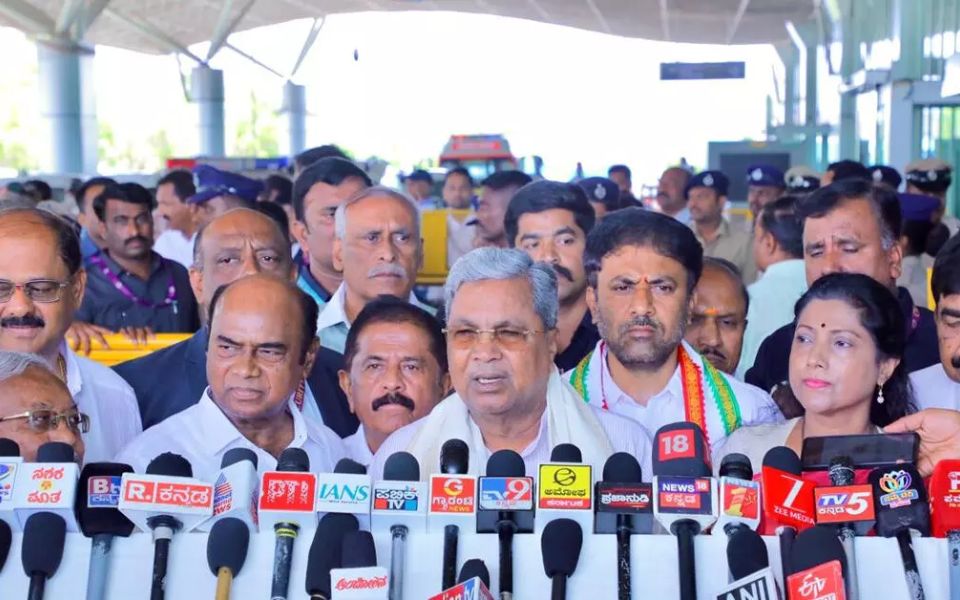
Mysuru (Karnataka) (PTI): Karnataka Chief Minister Siddaramaiah on Monday accused Prime Minister Narendra Modi of adopting a “double standard” on women’s reservation, alleging that the Centre had delayed implementation despite having the opportunity to act earlier.
Addressing reporters here, Siddaramaiah said the BJP and Modi had earlier opposed welfare guarantees and were now replicating them, while also questioning the timing and intent behind the women’s reservation move.
“That’s what I call double standards. Narendra Modi is not for social justice. If he was, this would have been done long ago. How many years has he been in power? It’s been 12 years. Why hasn’t it been done so far?” he asked.
The Chief Minister reiterated that the Congress had consistently supported women’s reservation and accused the Centre of "politicising" the issue.
“We spoke about women’s reservation. The Prime Minister asked me what our stand was. I said we are in favour of women’s reservation,” he said, referring to recent discussions with the PM.
He maintained that delimitation should only be carried out after a fresh Census to ensure equitable representation among states.
“In my view, delimitation should be done after a new census. That is why we opposed it. We have not opposed women’s reservation. We have always supported it,” he said.
Highlighting Congress’ past role, he said, “Who brought the 73rd and 74th amendments? Rajiv Gandhi and the Congress party. Those amendments ensured 50 per cent reservation for women in local bodies. Why would we oppose it?”
Siddaramaiah further questioned the union government’s delay in implementation. “Narendra Modi indulged in politics and got it passed in 2023. Why didn’t he implement it immediately? Then why did he wait so long? He could have implemented it immediately. If he is committed to women’s reservation, he should have implemented it,” he said.
On the linkage between delimitation and reservation, he asked, “Why did the Centre link it with delimitation? Why did it go for a constitutional amendment?” adding that such a move could disadvantage southern states that have successfully controlled population growth.
“Southern states have controlled population well, but northern states haven’t. Naturally, it benefits them and disadvantages us,” he said.
Responding to BJP’s criticism that women would “teach Congress a lesson,” Siddaramaiah said, “They are doing politics. If Modi had brought this earlier, who would have opposed women’s reservation?”
On electoral prospects elsewhere, he said he had no direct information on Tamil Nadu but was optimistic about ruling DMK's victory.
"According to the information I have, DMK and its alliance are likely to win,” while asserting that Kerala would also be won by the opposition.
In a major setback to the BJP-led Central government, a Constitution Amendment Bill to implement 33 per cent reservation for women in legislatures in 2029 and increase the number of Lok Sabha seats to 816 was defeated on Friday, with the ruling dispensation asserting that the struggle to give the rights to women will continue.
While 298 members voted in support of the bill in Lok Sabha, 230 MPs voted against it. Out of 528 members who voted, the bill required 352 votes for a two-third majority.
According to the Constitution (131st Amendment) Bill, Lok Sabha seats were to be increased to 816 from the current 543 to "operationalise" the women's reservation law before the 2029 parliamentary polls, following a delimitation exercise based on the 2011 Census.
Seats were also to be increased in state and Union territory assemblies to accommodate 33 per cent reservation for women.